

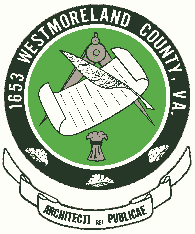

THE QUILL--Represents those signers of the Leedstown Resolutions and the Declaration of Independence who were sons of Westmoreland.
THE SCROLL--Represents the "Leedstown Resolution", adopted and signed in Westmoreland County.
THE DIVIDERS OR COMPASS--An instrument used by architects and navigators; respresent those architects and leaders of the Republic who were sons of Westmoreland; also symbolic of the maritime commerce of Westmorland County.
SHOCK OF GRAIN--In recognition of the major importance of agriculture to the economy of Westmoreland County.
THE OYSTERS--In recognition of the significance of the seafood industry in each of the three Magisterial Districts of the County.
THE DATE--Westmoreland County ws created in 1653.
THE INSCRIPTION--"Architects of the Republic"
The seal sybolizes the virtues and accomplishments of the past, and the promise of the future of Westmoreland County.
The seal was designed by Harry Kirk Swann of Tidwells, Westmoreland County, and was officially adopted by the Board of Supervisors of Westmoreland County, upon recommendation of the County Planning Commission, on May 12, 1971. Westmoreland County is full of history and is rich in culture.
Established in 1653 by the Colonial Government in Jamestown, Westmoreland County was named for a British Shire. The county's most significant contributions to history include its fostering of more statesmen than any other county in the country, and for the Leedstown Resolutions.
Considered the forerunner of the Declaration of Independence, the Leedstown Resolutions were signed in February, 1766. It was the first organized resistance to English aggression on American liberties. Prepared by Richard Henry Lee, the document was signed by 115 patriots who bound themselves together "to prevent the execution of the Stamp Act". They came from all directions to Leeds, a busy seaport town on the Rappahanock. Among those who signed are six Lees, Five Washington's, and Spence Monroe, father of President James Monroe.
Stratford Hall was the home of Richard Henry Lee and Francis Light-Foot Lee, signers of the Declaration of Independence.
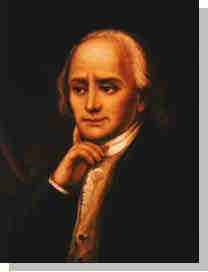
In 1769, Frank, then in his thirties, married a girl of 16, Rebecca Tayloe, one of eight daughters of John Tayloe of Mount Airy. It was a marriage of love, and the letters they exchanged while Frank served in the House of Burgess in Williamsburg reveal how much time with his new wife and the building of their home, Menokin. But as the Revolution neared, Frank cast his lot with the Virginia patriots. He became a close associate of Thomas Jefferson and Patrick Henry, though he preferred library discussions and back-room strategy to the limelight of public debate. Frank's contributions to the formation of the American Republic, though subtle and often overlooked, were nonetheless critical. His staid countenance offered stability to the sometimes fractious debate among the delegates and, importantly, he modulated the fiery and sometimes divisive speech of his brother, Richard Henry. "He was," as his youngest brother Arthur attested, "calmness and philosophy itself."
In September 1776, Frank went to Philadelphia as a delegate to the second Continental Congress. There he joined forces with his brother, Richard Henry, and by all accounts they were well received and respected. "The Virginians," John Adams later recounted, "were the most spirited and consistent of any." In the late summer of 1776, Frank and his brother Richard Henry, along with fifty-four other Delegates, signed the Declaration of Independence.
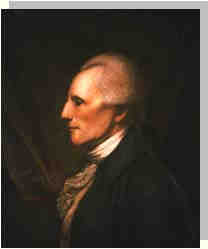
Richard Henry Lee was a born orator. He used his hand, always wrapped in black silk due to a hunting accident, to emphasize the cadences in his remarkably musical voice. His oratory was legend-"That fine polish of language which that gentleman united with that harmonious voice so as to make me sometimes fancy that I was listening to some being inspired with more than mortal powers of embellishment" was how one observer described him.
Confrontational by nature, Richard Henry possessed a fiery, rebellious spirit. These same qualities brought him fame as a leading patriot of the day and incited the wrath of his enemies. At one point, he was "outlawed" by a proclamation of English Governor Dunmore.
As a member of Virginia's House of Burgess, Richard Henry's first bill boldly proposed "to lay so heavy a duty on the importation of slaves as to put an end to that iniquitous and disgraceful traffic within the colony of Virginia." Africans, he wrote, were "equally entitled to liberty and freedom by the great law of nature." Such words, coming as they did in 1759, have been called "the most extreme anti-slavery statements made before the nineteenth century."
In 1765, enforcement of the Stamp Act began. In response, the Lee brothers, led by Richard Henry, rallied 115 men of Westmoreland County at Leedstown on the Rappahannock River, a few miles south of Stratford Hall. All signed the Westmoreland Resolves, co-authored by Richard Henry. The document threatened "danger and disgrace" to anyone who paid the tax. Among the signers were Richard Henry, Thomas, Francis Lightfoot, and William Lee and the four brothers of George Washington. The signing of the Westmoreland Resolves was one of the first deliberate acts of sedition against the Crown and one that placed both Richard Henry and the state of Virginia at the vanguard of the coming revolution.
In 1768, Richard Henry proposed the systematic interchange of information between the colonies. As a result, the Committees of Correspondence were formed and became a major force uniting the Americans in their desire for independence. Receiving first-hand information on the decisions of the King and Parliament from his brothers, Arthur and William, now in London, he served as a communications commander for the colonies.
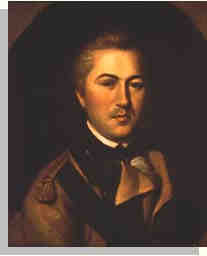
Henry "Light Horse Harry" Lee III, born at Leesylvania near Dumfries, Virginia, was blond, blue-eyed, and full of spirit. He graduated from Princeton in 1773 and returned home to prepare for war. His skill as a horseman, as well as his temperament, made him a natural cavalryman. He soon was commissioned as captain in the fifth group of Virginia Light Dragoons and sent north to join the Continental Army.
Leading his men on lightning raids against enemy supply trains, Harry attracted the attention and admiration of General George Washington and was rapidly promoted. In a surprise attack at Paulus Hook, New Jersey, he captured 400 British soldiers with the loss of only one man. His adroit horsemanship soon earned him the nickname "Light Horse Harry." When the military theater shifted, he enjoyed equal success in the Southern Department.
Resigning his commission after the British surrender at Yorktown, Harry returned to Virginia to marry his cousin, the "divine Matilda" Lee. The wedding took pace at Stratford, and it is said that General Washington contributed several pipes of his best Madeira to the festive occasion. Matilda had inherited Stratford in the division of her father's estate and lived there with her new husband. The dashing young calvary-man, however, was no farmer. His interests in the livelier arena of politics led to Harry's election to the new Virginia House of Delegates. After only eight years of marriage, Matilda died in 1790, leaving three young children and a husband desperate with grief.
Two years later, Harry was elected Governor of Virginia, serving three one-year terms. While living in Richmond, he fell in love with Ann Hill Carter of nearby Shirley Plantation. In 1793 they were married. His governorship behind him, he took his bride to Stratford.
Again, family life was interrupted by his appointment to the Continental Congress in Philadelphia. Upon the death of President George Washington. Harry was asked by Congress to deliver a tribute to his beloved general, describing him for posterity:
First in War, first in peace and first in the hearts of his countrymen...second to none in the humble and enduring scenes of private life.
After the death of his idol, Harry's fortunes began to decline rapidly. The support of a family of six, coupled with disastrous land speculation, reduced him to financial poverty. Then on January 19, 1807, in the large upstairs room at Stratford where so many Lees had come into the world, Ann gave birth to their fifth son, Robert Edward Lee, named after two of his mothers favorite brothers. As Robert was learning to walk, his father was carried of the debtor's prison in Montross.
"Light Horse Harry's" last years were marred by sorrow and pain. Internal injuries, received when he was beaten by a mob as he defended a friend and freedom of the press in Baltimore, kept him in constant physical pain. He sought relief in the warm climate of the West Indies. When his health continued to decline, Harry attempted to return home, but died on Cumberland Island, Georgia, in the home of the daughter of his former commander, Nathaniel Greene.
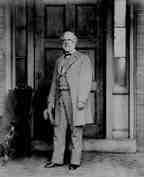
The strong, healthy boy born to "Light-Horse Harry" and Ann Carter Lee on January 19, 1807 was the last Lee born at Stratford to survive to maturity. Though he spent fewer than four years there, his later boyhood visits left an impression that he carried throughout his life.
Ann Carter Lee's gentleness was inherited by Robert, and his loving care of his ailing mother was the mainstay of here life. With his father and elder brothers away, and his mother and sisters in failing health, Robert had become, by age 12, head of household. On cold afternoons, when his mohter was well enough, young Robert would stuff paper in the cracks of the carriage to block the wind and take his mother driving. Years later, when he left for West Point, Ann Lee wrote to a cousin, "How I will get on without Robert? He is both a son and daughter to me."
Robert Lee's choice of a military career was dictated by financial necessity. There was no money left to send him to Harvard, where his older brother Charles Carter studied. Such circumstances led him to an appointment to West Point Military Academy. Robert, who led the Cadet Corps in 1829, graduated second in his class. In four years he received not a single demerit, and he became one of the most popular cadets in his class. When he returned as the Academy's superintendent years later, he won the same respect from the cadets for his compassion, sense of fairness and strong moral leadership.
On June 30, 1831, while serving as Second Lieutenant of Engineers at Fort Monroe, Virginia, he married Mary Ann Randolph Custis of Arlington. Mary was the only daughter of George Washington Parke Custis, the grandson of Martha Washington and the adopted grandson of George Washington. Robert E. Lee shared his father's reverence for the memory of the General and that bond the Father of our Country served as an inspiration throughout Lee's life.
The couple moved into Arlington, the Custis house across the Potomac from Washington D.C., which would later become Arlington National Cemetery.
At the outbreak of the Mexican-American War in 1846, Robert was ordered to Mexico as a supervisor of road construction. His skills as a cavalryman in reconnaissance, however, soon captured the attention of General Winfield Scott, who came to rely on Robert for his sharp military expertise. It was in Mexico that Lee learned the battlefield tactics that would serve him so well in coming years.
In spite of flawless performance as an engineer and his brilliance as an officer, promotion came slowly for Robert Lee. His assignments were lonely and difficult, and he found the separation from his family hard to bear. His love of Mary and his ever-increasing brood of children were the center of his life.
The opportunity that won him enduring fame was one he would have preferred not to have taken. The Army of the United States had been his life's work for 32 years, and he had given it his very best. On April 18, 1861, he was finally offered for his service.
On the eve of the Civil War, President Abraham Lincoln, through Secretary Francis Blair, offered him command of the Union Army. There was little doubt as to Lee's sentiments. He was utterly opposed to secession and considered slavery evil. His views on the United States were equally clear-"no north, no south, no east, no west," he wrote, "but the broad Union in all its might and strength past and present."
Blair's offer forced Lee to choose between his strong conviction to see the country united in perpetuity and his responsibility to family, friends and his native Virginia. A heart-wrenching decision had to be made. After a long night at Arlington, searching for an answer to Blair's offer, he finally came downstairs to Mary. "Well Mary," he said calmly, "the question is settles. Here is my letter of resignation." He could not, he told her, lift his hand against his own people. He had "endeavored to do what he thought was right," and replied to Blair that"....Though opposed to secession and deprecating war, I could take no part in the invasion of the Southern States." He reigned his commission and left his much beloved Arlington to "go back in sorrow to my people and share the misery of my native state."
On June 1, 1862 Robert Edward Lee assumed command of the Army of Northern Virginia in the Confederate capital of Richmond. Not until February 1865 ws he named Commander in Chief of all Confederate forces, but the leadership throughout the war was undeniably his. His brilliance as a commander is legendary, and military colleges the world over study his campaigns as models of the science of war. It ws the result of leadership by a man of exceptional intelligence, daring, courage and integrity. His men all but worshiped him. He shared their rations, slept in tents as they did, and, most importantly, never asked more of them than he did of himself.
On December 25, 1861, in the midst of war and with Arlington confiscated and occupied by Union troops, the lonely Lee wrote to Mary:
Sadly, circumstances preventer them from ever returning to Stratford.
Lee's legendary command of the Confederate forces came to an end at Appomattox, Virginia in April 1865. "There is nothing left for me to do," he said, "but to go and see General Grant, and I would rather die a thousand deaths."
Wit the war now over, Lee set an example to all in his refusal to express bitterness. "Abandon your anomosities," he said, "and make your sons Americans." He then set out to work for a permanent union of the states.
Though his application to regain his citizenship was misplaced and not acted upon until 1975-more that a century late-Lee worked tirelessly for a strong peace. With some hesitation he accepted the presidency of Washington College in Lexington, Virginia, and there he strove to eqip his students with the character and knowledge he knew would be necessary to restore the war-ravaged South. Lexington became his home, and there he died of heart problems on October 12, 1870. After his death, his name joined with that of his lifelong hero, and Washington College became Washington and Lee University.
--Joint resolution of thanks to General Robert E. Lee, and to the officers and
soldiers under his command.
Jan. 8, 1864.
Preamble.
WHEREAS, The campaigns of the brave and gallant armies covering the capital of the Confederate States during the two successive years of eighteen hundred and sixty-two, and eighteen hundred and sixty-three, under the leadership and command of General Robert E. Lee, have been crowned with glorious results, defeating greatly superior forces massed by the enemy for the conquest of these States, repelling the invaders with immense losses, and twice transferring the battle-field from our own country to that of the enemy: And whereas, the masterly and glorious achievements, rendering forever memorable the fields of the "Seven Days of Great Battles," which raised the seige of Richmond, as well as those of Cedar Run, Second Manasas, Harper's Ferry, Boonsboro', Sharpsburg, Shephardstown, Fredericksburg, Winchester, Gettysburg and Chancellorsville, command the admiration and gratitude of our country: And whereas, these and other illustrious services rendered by this able commander since the commencement of our war of independence have especially endeared him to the hearts of his countrymen, and have imposed on Congress the grateful duty of giving expression to their feelings: Therefore,
Thanks of Congress tendered to General Robert E. Lee and to the officers and soldiers under his command.
Resolved by the Congress of the Confederate States of America, That the thanks of Congress are due and are tendered to General Robert E. Lee and to the officers and soldiers of the Confederate armies under his command, for the great and signal victories they have won over the vast hosts of the enemy, and for the inestimable services they have rendered in defence of the liberty and independence of our country.
President requested to communicate this resolution.
Resolved, That the President be requested to communicate these resolutions to General Robert E. Lee, and to the officers and soldiers herein designated.
APPROVED January 8, 1864.
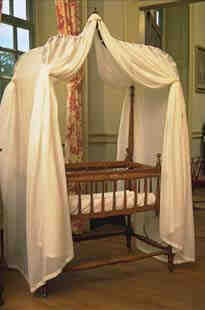
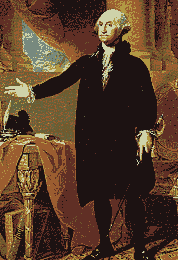
Most notable among the Washington clan of Westmoreland, General George Washington, commander of the Continental Army, Revolutionary War hero and first President of the United States, was born at Popes Creek on February 22,1732. He was the eldest child and when he was two, his family moved from his birthplace, Wakefield on Pope's Creek Farm in Westmoreland County, Virginia, to a new farm about fifty miles north along the Potomac River to a new plantation which later would become part of Mount Vernon.
When he was six, his father, Augustine, decided to move again, to be nearer to the iron works which he had part interest. This time the move brought the family to the east bank of the Rappahanock River at Ferry Farm.
Augustine died when George was 11, leaving an estate of around 10,000 acres and fifty slaves. Most of the inheritance went to George's older half-brother Lawrence Washington. George would receive Ferry Farm as his share when he turned twenty-one. Mary Ball Washington, George's mother, was left to raise George and his five younger siblings.
It is not known how much formal education George Washington had as a child. It is unsure as to whether he was tutored by an indentured servant or if he went to a school in Fredericksburg, across the Rappahanock.
Washington spent much of his time at Mount Vernon, which Lawrence had built. Lawrence wanted George to join the British navy, but George was unable to gain consent to join. At age fifteen, George saw a need for additional family income. Under the management of his mother, Ferry Farm was gaining more debt that income. As a result, George dusted off a set of surveyors tools his father had owned, and became an assistant surveyor. When he was 16 he helped survey the huge landholdings of Lord Fairfax, a relative of Lawrence's wife, in the wilderness of Western Virginia. In 1749, he was appointed official surveyer of Culpeper County. With this new income, George started a practice he would continue throughout his life, the purchasing of land. Through this practice, George would become one of the largest landowners in the country.
When George was nineteen, he accompanied Lawrence to Barbados, a trip which Lawrence took to help his health. While there, George was seriously attacked by smallpox. This would be the last time that he would leave the shores of America.
After returning from Barbados, George fell in love with a 16 year old girl named Betsy Fauntleroy. But to George's dismay, she repeatedly rejected his proposals.
An extremely sad day in George's life came in 1752 when Lawrence Washington succumbed to the fatal effects of tuberculosis. Lawrence made clear in his will, that Mount Vernon should go to George if his only daughter, Sarah, ws to die without any children--an event that occurred two years later.
In an effort to emulate his beloved Lawrence, George applied to the governor of Virginia for an appointment as adjutant in the militia, a post which Lawrence had held. The governor appointed Washington as adjutant to the southern part of the colony. On Feb. 1, 1753, he was sworn in as a major in the Virginia militia.
The same Fall George learned from a friend that Governor Robert Dinwiddle was planning to send a warning message to the French, who had invaded the Ohio River Valley. George realized this as a chance of a lifetime to see the Western frontier and so he hurried to the capital to volunteer his services as messenger and was gladly accepted.
He set out on Oct. 31, 1753, collecting supplies, horses, and a party of six frontiersmen along the way. He made the 1,000 mile round trip to the French Fort Le Boeuf on Lake Erie in the face of extreme cold, snow, and unfriendly Indian's.
Four months after returning from his journey, the twenty-two old Washington commanded a force in the first engagement of the French and Indian War. He was promoted to lieutenant colonel, and lead a small body of Virginia troops when he ran into a French scouting Party in southern Pennsylvania on May 27, 1754. He and his men captured 20 and killed 10 in skirmish, losing only one man. The next month he was promoted to colonel in command of all Virginia troops in the field. He knew the French would attack in retaliation so he prepared for this by building Fort Necessity in Pennsylvania. He was correct about an attack when the French with several hundred Indians surrounded the Fort on July 4. He and his men were allowed to return to Virginia with arms and ammunition.
Shortly after his return, the British government ordered all militia officers reduced in rank so that none would outrank captains commissioned by the British King. Washington resigned as colonel in October 1754 and returned to Mount Vernon. The following Spring, he volunteered to serve as aide-de-camp to British Major General Edward Braddock, who was planning to attack the French at Fort Duquesne.
Although Washington warned Braddock of Indian ambush tactics in frontier fighting, the British Army marched toward the Fort as though on parade before the King. On July 9, 1755, the French and Indians fell on British troops with murderous was whoops, and the terrified redcoats broke and ran. Almost a thousand British soldiers were massacred and Braddock was fatally wounded. With the fear of a French attack on Virginia, Governor Dinwiddle appealed to Washington to resume command of the Virginia militia with the rank of colonel. At first Washington rejected the offer, but after persistent urging he agreed. His command continued until the end of the war.
Meanwhile, George had proposed to and was accepted in marriage by Mrs. Martha Dandridge Custis. At the same time he was apparently involved with his neighbor's wife, Mrs. Sally Fairfax. the authenticity of the affair remains a mystery but he married Martha Custis on January 6, 1759 and remained codial with the Fairfax's. Martha brought to the marriage a fortune in land and money as well as two children by her first marriage. They never had children of their own.
Meantime, he had been elected to the Virginia House of Burgesses. After a short honeymoon, Martha and George went to Williamsburg for the session. He was regularly re-elected, gaining a fine schooling in representative government.
During this time, Washington continued to acquire more land traveling deep into the Ohio Valley looking for more sites to purchase for future development. He rented thousands of acres to tenant farmers, but devoted most of his attention to Mount vernon. He enjoyed experimenting in agriculture, trying new crops, and breeding better livestock, and took pleasure in the social life of the plantation.
Because he was a military man, it was natural that he looked to force when the British government interfered with the rights of the colonists. When the governor disbanded the House of Burgesses in 1769 because its members protested the British Stamp Act, Washington wrote to a friend, saying that America must keep its liberty, even if force was necessary.
As a delegate to the First Continental Congress in Philadelphia in 1774, he impressed his colleagues from the other colonies with his assurance and wisdom.
When the Second Continental Congress met in May 1775, Washington wore his colonels' uniform to dramatize his belief that military force was necessary. On June 15, he was unanimously elected as commander in chief of the armed forces. He accepted, with modesty, but refused any payment, other than to repay personal expense
By July 2, he had taken command of the troops in Massachusetts. He organized the siege of British forces in Boston, despite a serious shortage of ammunition, and succeeded in forcing the British to sail away from Boston in March 1776, leaving the city in the hands of American forces.
Washington guessed the British would attack New York City in order to drive a wedge in between the northern and southern colonies. He was net by them, as expected, in July. Lack of supplies, undisiplined troops, and inexperienced officers brought defeat, forcing Washington to retreat into New Jersey by November.
Desertions and the refusal of soldiers to re-enlist, weakened Washington's army to about 5,000 by December. Many feared the war was lost. Hope revived with Washington's brilliant surprise attack on Hession troops at Trenton the day after Christmas, 1776. He followed this victory with another at Princeton the first week of January, 1777.
He spent that summer waiting for a British land attack on Philadelphia. The turning point of the war came when Horation Gates captured British General John Burgoyne and 5,000 of his troops at Saratoga, New York.
Washington spent the next winter at Valley Forge, Pennsylvania starving and freezing with his troops.
In the spring of 1778 news came that the French had decided to form an open alliance with America. The British abandoned Philadelphia and headed for New York. Washingtonplanned to attack from Monmouth on June 28, but the incompetency of his second in command, Major General Charles Lee, lost him his opportunity. Lee was found guilty of disobedience by court-martial and was discharged from the army.
From that summer to the summer of 1781, Washington kept the main part of the British army sealed in New York City. During this time Washington's army was faced with constant desertions due to inactivity, while Congress had to be prodded to supply the needed money and supplies
His patience paid off when word was sent that the French were sending the main part of their fleet, thousands of troops, and a loan to the Americans. He then decided to take an offensive drive. Washington and French Commander Rochambeau led their armies to Virginia in an effort to cut off Lord Cornwallis's army. they joined with the forces of the young Marquis de Lafayette and the French Fleet, which sealed off the Chesapeake Bay. From the end of September to the middle of October, Washington continually laid seige on Cornwallis at Yorktown. Washington experienced his greatest joy in the military when Cornwallis surrendered his army of 7,000 men. This loss convinced the British that the was was not worth fighting anymore and the war was over.
Washingtons second term was not as smooth as the first. After Jefferson resigned in 1793 and Hamilton in 1795, Washington felt betrayed. He found the positions of thise who retired hard to fill and was deeply wounded by the insults of Democratic-Republican newspapers.
Washington had a difficult task in the area of Foreign Affairs. With the war in Europe Washington had declared the US neutral. He was strictly criticized by the Democratic-Republicans, and this criticism reached a peak when Jay's Treaty, a trade agreement that had been negotiated by Chief Justice John Jay, was signed by Washington. Secretary of State Edmund Randolph resigned after rumor that he was bribed by the French to speak against the Treaty.
Washington had been wanting to show the might of the central government for some time. He finally got the opportunity when a rebellion over whiskey taxes broke out in western Pennsylvania. He sent 15,000 troops to put down the rebellion, which quickly disbanded.
The final years of his administration ws rather uneventful. The economy imp[roved due to the trade stimulated by Jay's Treaty and attackes by the Democratic-Republican respresentatives diminished. Talk of a third term were underway, but when he refuted them when he published his Farewell Address on September 19, 1796.
After handing the Presidency to his Vice-president John Adams, Washington retired to Mount Vernon with Martha. His hope for a peaceful retirement were dashed when war threatened France in 1798. Adams asked Washington to accept a new commission as lieutenant general and take control of the new United States Army to be raised. After several months of choosing officers, the French crisis subsided and Washington returned to Mount Vernon.
On the snowy morning of December 14, 1799 he awoke with a sore throat and could hardly speak due to pneumonia. When the doctors came, they applied the traditional remedy of bleeding. He continually grew weaker and at about 10pm the Father of the United States was dead. He was buried at the family vault at Mount Vernon four days later.
Memorials were held in many towns and cities throughout the country, the most elaborate in Philadelphia. Here "Light Horse Harry" Lee said of Washington, "First in war, first in peace, and first in the hearts of his countrymen, he was second to none...."
In 1978, 178 years after his death, George Washington was promoted by the Army to General of the Armies of the United States so that he would be the senior general officer on army roll calls. This promotion put his above the previous two highest raqnking officers, both presidents, Ulysses S. Grant and Dwight D. Eisenhower.
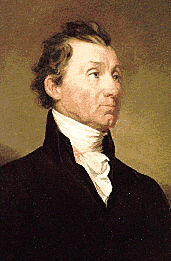
Monroe was born in Westmoreland County, Virginia, on April 28, 1758, the son of a modest planter. He entered William and Mary College in July 1774, but, caught up by the fevor of the revolutionary spirit, he enlisted in the Third Virginia Regiment in the spring of 1776. As a lieutenant he saw action in the battles in New York preceding Washington's retreat into New Jersey, and he distinguished himself in a vanguard action at Trenton, where he was seriously wounded. For Two years he served as an aide with the rank of Colonel to Gen. William Alexander. He was present during the winter of Valley Forge (1777-1778) and participated in the Battle of Monmouth.
In 1780, unable to obtain a field command, Monroe returned to Virginia to study law under Thomas Jefferson, who became a lifelong friend, patron, and major influence on his intellectual development. Monroe was elected to the Virginia House of Delegates in 1782, and his abilities and total dedication to public service won him election in 1783 to the Confederation Congress, where he sat until 1786. Here he organized the opposition to the Jay-Gardoqui proposals, by which the United States would have yielded to Spain its claim to the free navigation of the Mississippi River. He also helped lay the groundwork for territorial government embodied in the Northwest Ordinance of 1787. While in Congress, Monroe joined the advocates of a stronger government, continuing the work of his friend James Madison. Yet as a member of the Virginia Ratifying Convention he joined Patrick Henry and George Mason in opposing the ratification of the US Constitution. He considered it defective in expressive power granted the Senate and in authorizing direct taxes.
In 1789, now a married man, he settled in Albermarle county to be close to Jefferson. Monroe's wife, the former Elizabeth Kortright of New York, was regarded as one of the great beauties of the day. Reserved and rather cold in her manner, she was to bring to the White House a formality not always relished by Washingtonian's. Here in Albermarle their two daughters, Eliza and Maria Hester, were born. A son died in infancy.
Elected to the United States Senate in 1790, Monroe joined Madison (then in the House) in combating Hamilton's domestic measures, which emphazied centralization of powers in the Federal Government. He also opposed Washington's seemingly pro-British foreign policy. Monroe worked with Jefferson and Madison in organizing the Republican Party. His contribution lay the realm of political strategy and in establishing liasion with anti-Hamilton forces in other states. He also ably assisted Madison in defending the Republican position in the press.
In 1794, when Washington dispatched Federalist John Jay on a mission to Britain, Monroe was named minister to France in the hope that this would appease Republican critics of the administration who feared a diplimatic rupture with france. Because Monroe conceived the purpose of his mission as the preservation of Franco-American amity in the face of Washington's pro-British stance, he acted more as a Republican party spokesman than as the representative of his government. Dissatisfaction with his conduct led to his recall in 1796, engineered by the Secretary of State Timothy Pickering, Monroe defended himself by publishing a harsh attack on Washington's foreign policy.
From 1799 to 1802, Monroe served as governor of Virginia, demonstrating great administrative ability and winning praise for his decisive action to suppress a slave uprising(Gabriel's Insurrection) in 1800.
Monroe was chosen by his party in 1816 to run for president. Monroe easily defeated Sen. Rufus King, the Federalist candidate for president, by 183 to 34 in voting of the electoral college.
Monroe's greatest achievements as president lay in foreign affairs. Ably supported by Adams, he made substantial territorial additions and gave American policy a distictly national orientation. Monroe welcomed an opportunity to press Spain to cede Florida and define the boundaries of Lousiana. His chance came when General Andrew Jackson invaded Florida in 1818. In pursuit of hostal indians, Jackson srized the posts of St. Marks and Pensacola, acts that many persons regarded as violations of congressional war powers. In the cabinet, Adams, an expansionist's urged Jackson's complete vindication, while Crawford and Calhoun demanded that he be reprimanded for exceeding his instructions.
Monroe chose a middle course, that posts were restored to Spain, but the administration accepted Jackson's explanation that his actions had been justified by conditions in Florida. The incident led Spain to ccede Florida and difine, favorably to American claims, the boudary of the Louisiana Purchase in the Adams-Onis Treaty negotiated in 1819.
Upon his retirement, Monroe lived on an estate (Oak Hill) in Loudoun county, Virginia. Like Jefferson, he had been left so deeply in debt by his long years of public service that it seemed he might lose all of his property. Because he had never settled his accounts (some dating from his first mission to France) with the government, he now sought reimbursement with accruded interest. Many congressmen considered these claims not only embarrassing but excessive, and President Jackson's hostility toward Monroe blocked an immediate settlement. Not until 1831 did Congress grant him $30,000 (half his claim). His last public service was as a presiding officer of the Virginia constitutional convention.
Monroe died on July 4, 1831, at the home of his daughter in New York City. He was initially interred in New York but was re-buried in Richmond in 1858.

|
This American Colonies Ring site is owned by Orville Ingram |
|
[Next Site]
[Skip Next]
[Previous Site]
[Skip Previous] [Random Site] [List Sites] Want to join the American Colonies Ring? |
