PATTACHITRA
|
|
|
The Pata painting is an important aspect of Orissan painting which originated from the temple of Jagannath at Puri in the 12th century. This has grown and flourished with the spread of Jagannath temple under the patronage of Ganga Kings, Suryavamsi Gajapatis and the Kings of Bhoi dynasty. The Bhakti movement, which swept over Orissa in the 16th century was chiefly instrumental in popularising the theme of Radha and Krishna in pata painting displayed two major themes; one, the temple of Jagannath, the deities of Jagannath, Balabhadra and Subhadra and the second, Radha-Krishna and their Lilas (plays). But these themes are so few that these are not adequate for an evaluation of thematic development of pata paintings.
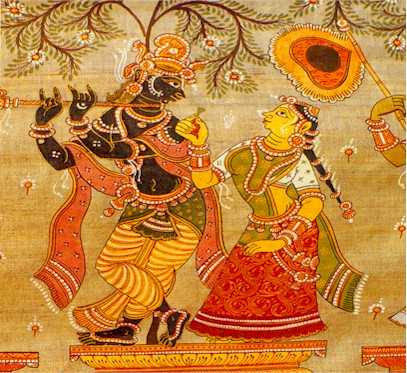
The pata painting was basically designed to popularise the cult of Jagannath through their sale to millions of pilgrims visiting Puri.The word pata was significant relation with the material on which the painting is done and which is known as pati or pata.
The pata painting are also done on different media and on different
formats. The most popular items are Ganjapa, Masks, Toys of Jagannath, Balabhdra,
Subhadra and miniature of Jagannath temple. Although ganjapa is a secular item, the element of religiosity has been added with the introduction of Dasavatara ganjapa and the Ramayan
ganjapa.
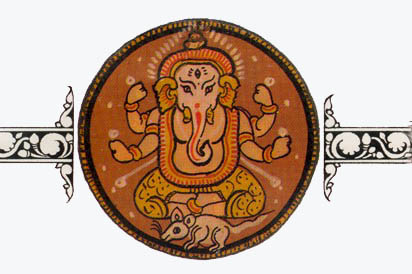
Chitrakaras, Dattamahapatras and Daitapatis are the artisans who execute patta paintings . While Dattamahapatra and Daitapatis are concerned with painting of the deities of the Jagannath, Balabhdra, Subhadra in the Jagannath temple, Puri, chitrakaras are the main community who are involved in patta paintings of various kinds in other places. In addition to these communities there is also another class of people known as patuas in Orissa.