|
Guru Kelucharan Mohapatra
Guru Pankaj Charan Das
Guru Deba Prasad Das
Guru Mayadhar Raut
Guru Harekrishna Behera
Guru Surendranath Jena
Guru Raghunath Dutta
Guru Ramani Ranjan Jena
Guru Gangadhar Pradhan
Guru Trinath
Maharana
|
|
GURU
KELUCHARAN MOHAPATRA
Among the many gems of Orissa has produced in different fields of art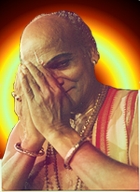 along the centuries, one of the latest is certainly the Odissi dance Guru Sri Kelucharan Mohapatra born on 8th January 1926 at
Raghurajpur, Puri. As it is the case with most of the genius, which emerge from time to time in the history of humanity, the story of his life is one of struggle and unending dedication. The story of his artistic experience touches all the silent features of the cultural life of Orissa of the last sixty years and it becomes the story of the growth and recognisation of the Odissi style as one of the classical dances of India. along the centuries, one of the latest is certainly the Odissi dance Guru Sri Kelucharan Mohapatra born on 8th January 1926 at
Raghurajpur, Puri. As it is the case with most of the genius, which emerge from time to time in the history of humanity, the story of his life is one of struggle and unending dedication. The story of his artistic experience touches all the silent features of the cultural life of Orissa of the last sixty years and it becomes the story of the growth and recognisation of the Odissi style as one of the classical dances of India.
From the traditional expertise of the "Chitrakaras" through the entertaining art of the "Gotipua" and
"Jatra" parties, the "bhakti" oriented "rasa
leela" performances and the innovative attempts of the Annapurna Theatres, Guruji’s artistic journey is one of the continuous learning and growth. Gifted as he is with a highly sensitive, respective and creative nature, he observes and absorbs facts and phenomena of life around mould them into forms of artistic beauty.
The two currents of art present in his family, the traditional painting skill of the
Chitrakaras, and the rich and vibrating music tradition of the percussion players, are happily blended in him. By giving plastic dimension to the
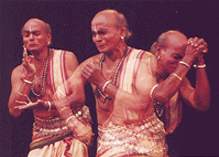 first he infuses life into it through the second. The tradition of ‘ Chitrakaras ‘ is a cultural heritage that is handed down through images; images that convey ancient legends in a Universally understandable medium of communication. But the world of little Kelucharan was not merely populated by visuals, it was also pulsating with the vigorous rhythm of
"Sankirtana" and "Jatra" which used to be regularly performed in his native village
Raghurapur, a tiny hamlet in Puri district. In the evenings the little Kelucharan could be found in one of the two
"Akhadas" in village, watching and imitating the dance movements of the boys under training or trying his hand at reproducing the rhythm of the
"Pakhawaj" on his own buttocks first he infuses life into it through the second. The tradition of ‘ Chitrakaras ‘ is a cultural heritage that is handed down through images; images that convey ancient legends in a Universally understandable medium of communication. But the world of little Kelucharan was not merely populated by visuals, it was also pulsating with the vigorous rhythm of
"Sankirtana" and "Jatra" which used to be regularly performed in his native village
Raghurapur, a tiny hamlet in Puri district. In the evenings the little Kelucharan could be found in one of the two
"Akhadas" in village, watching and imitating the dance movements of the boys under training or trying his hand at reproducing the rhythm of the
"Pakhawaj" on his own buttocks
His father, Chintamani Mohapatra, himself a painter and a "Mrudanga" player, did not like
hi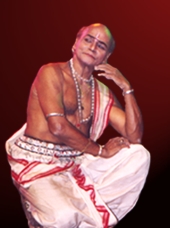 s son’s interest in the effeminate art of "Gotipua" dance, and to stop the son from going any more to the
"Akhadas" of Sri Balabhadra Sahu, he vertually abandoned him with Mohan Sunder Dev
Giswami, the founder director of the famous "Kunja Behari Rasa Leela" party in
puri. Here at the age of nine Kelucharan began to soak up experiences which was going to leave an undelible stamp on his entire life.during the ten years with Guru Mohan Goswami he learnt not only acting, mime and singing but also the art of make up, stage setting and choreography. The working day began early morning with training in singing and rhythm and closed with lessons in the communicative art of "Abhinaya" in the evening. During the day the students, who were living together, were attending to the household chores, like cooking and dedicated themselves to various
"Sevas" to the Guru. s son’s interest in the effeminate art of "Gotipua" dance, and to stop the son from going any more to the
"Akhadas" of Sri Balabhadra Sahu, he vertually abandoned him with Mohan Sunder Dev
Giswami, the founder director of the famous "Kunja Behari Rasa Leela" party in
puri. Here at the age of nine Kelucharan began to soak up experiences which was going to leave an undelible stamp on his entire life.during the ten years with Guru Mohan Goswami he learnt not only acting, mime and singing but also the art of make up, stage setting and choreography. The working day began early morning with training in singing and rhythm and closed with lessons in the communicative art of "Abhinaya" in the evening. During the day the students, who were living together, were attending to the household chores, like cooking and dedicated themselves to various
"Sevas" to the Guru.
The troupe used to keep moving on tour, giving performances in villages and towns for about 6 to 7 months a year and rest of the time was utilised in training and rehearsals for the season. The shows, an amalgam of song, and acting were on the theme of
Krishna-Leela or episodes called from purana. Mohan Goswami’s choreography with music and stage setting planned entirely by his own was a legend in his time. Among the more famous creations of his were
"Balyaleela", "Mana Bhanjana", "Sharada Leela",
"Radha Premamruta" and "Bidagdha Madhava" built on the various poems of
Kavisurya, Upendra Bhanja, Banamali, Gopal Krushna and Jaydev.
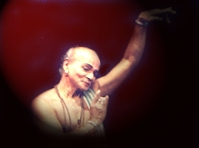 Guru Mohan Goswami played an important role in his life. The Guru was a father and a protector to him. Not only do we find the multi faceted versatility of Mohan Goswami in Guruji but he too has the extraordinary spell over his disciples. Guru Mohan Goswami played an important role in his life. The Guru was a father and a protector to him. Not only do we find the multi faceted versatility of Mohan Goswami in Guruji but he too has the extraordinary spell over his disciples.
For about a year after a leaving the Rasa Leela party he hard to battle hard to earn a bare living. With no fixed source of income he worked as a daily labourer watering and carrying sand for the maintenance of betel grooves. This dim struggle for survival eased when he found a job in Cuttack with the Theatre Company of Mr.Kalicharan Pattnaik for Rs 7/- a month. His job was to help stage setting, act and play percussion instruments.
Kelucharan was under the able tutelage of Shri Agadhu Moharana in " Mrudanga " and Shri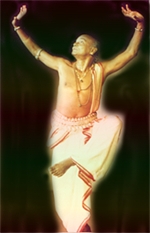 Kshetramohan Kar in
"Tabla" during his days with the rasa-party of Mohan Goswami and he did not stop there. In Cuttack he continued to take lessons in tabla playing from Shri Harihara Rao.Intially contracted as an accompanist for only a month he stayed with the Annapurna ‘B’ theatre of Cuttack for about five years from 1946 to 1952 distinguishing himself as a dancer, percussionist and choreographer. The real break came when a solo piece in a dance-drama on "Devi
Bhasmasura" flashed Kelucharan in limelight. His brilliant performance as the
"Nataraja" under the direction of Guru Pankaj Charan, established him as a mature soloist. In the role of Mohini was Laxmipriya who latter became Mrs Mohapatra.From that day till they married, in all performances either they were partners in a duet dance or Laxmipriya was dancing to the rhythm provide Mrs.Mohapatra.From that day on percussions. Kshetramohan Kar in
"Tabla" during his days with the rasa-party of Mohan Goswami and he did not stop there. In Cuttack he continued to take lessons in tabla playing from Shri Harihara Rao.Intially contracted as an accompanist for only a month he stayed with the Annapurna ‘B’ theatre of Cuttack for about five years from 1946 to 1952 distinguishing himself as a dancer, percussionist and choreographer. The real break came when a solo piece in a dance-drama on "Devi
Bhasmasura" flashed Kelucharan in limelight. His brilliant performance as the
"Nataraja" under the direction of Guru Pankaj Charan, established him as a mature soloist. In the role of Mohini was Laxmipriya who latter became Mrs Mohapatra.From that day till they married, in all performances either they were partners in a duet dance or Laxmipriya was dancing to the rhythm provide Mrs.Mohapatra.From that day on percussions.
Always under the guidance of Guru Pankaj Charan Das and Guru Durlav Chandra singh the pair became famous for their performances of the " Dashavtaara " dance which was dovetailed into the drama of the legendary
"Taya Poi".
During this period he also had the benefit of learning from Guru Dayal Sharan of Uday Shankar troupe, under whose guidance he further enriched his expressive vocabulary.
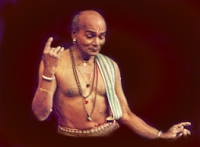 The training comprised the use of the various shastric mudras as well as exercises on physical flexibility and techniques typical of Uday Shankar
ballets. This novel training coupled with his earlier experience found fruition in his maiden directorial production of the dance-drama
"Aloka" with Laxmipriya in the central role. After directing two to three dance-dramas in mixed technique, when he was around twenty eight they both left the Annapurna ‘B’ group, got married and went back to Puri.There he spent a couple of years doing research on both the "Mahari " and "Gotipua" traditions of Odissi dance, imbibing according to his own words, the spirit of devotion from the first and the technique from the other. The toil of this study found creative expression in his first Odissi composition for the role of Kalavati played by Laxmipriya in the
"Upendra Bhanja Nataka" staged by the Annapurna theatres (‘A’ group) of Puri. The training comprised the use of the various shastric mudras as well as exercises on physical flexibility and techniques typical of Uday Shankar
ballets. This novel training coupled with his earlier experience found fruition in his maiden directorial production of the dance-drama
"Aloka" with Laxmipriya in the central role. After directing two to three dance-dramas in mixed technique, when he was around twenty eight they both left the Annapurna ‘B’ group, got married and went back to Puri.There he spent a couple of years doing research on both the "Mahari " and "Gotipua" traditions of Odissi dance, imbibing according to his own words, the spirit of devotion from the first and the technique from the other. The toil of this study found creative expression in his first Odissi composition for the role of Kalavati played by Laxmipriya in the
"Upendra Bhanja Nataka" staged by the Annapurna theatres (‘A’ group) of Puri.
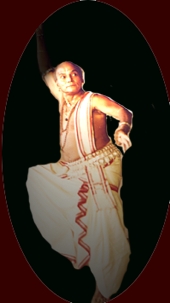 By now Kelucharan was well equipped to teach Odissi dance and in 1953 he joined the Kala Vikas Kendra at Cuttack, the first college of music and dance include a course on Odissi in its curriculum. He was a teacher there for more than fifteen years. Besides working in the Kendra he used to impart lessons privately to some disciples including Sanjukta, Minati and Priyambada and was taking dance classes in some schools and colleges of general education. During these years he choreographed a galaxy of dance-dramas in Odissi style, including
"Panchapuspa", "Krushna Gatha", "Geeta Govinda",
"Urbashi", "Krushna Leela", "Sakhigopal",
"Konark" and "Sri Kshetra". Propped by the Kendra he did research on various folk & tribal dances of Orissa and enriched his repertory of Odissi dance poses through further study of temple sculptures. By now Kelucharan was well equipped to teach Odissi dance and in 1953 he joined the Kala Vikas Kendra at Cuttack, the first college of music and dance include a course on Odissi in its curriculum. He was a teacher there for more than fifteen years. Besides working in the Kendra he used to impart lessons privately to some disciples including Sanjukta, Minati and Priyambada and was taking dance classes in some schools and colleges of general education. During these years he choreographed a galaxy of dance-dramas in Odissi style, including
"Panchapuspa", "Krushna Gatha", "Geeta Govinda",
"Urbashi", "Krushna Leela", "Sakhigopal",
"Konark" and "Sri Kshetra". Propped by the Kendra he did research on various folk & tribal dances of Orissa and enriched his repertory of Odissi dance poses through further study of temple sculptures.
During the process his individual style was gradually taking a distinct shape that at once, systematic and precise. These are the years when the first
"pallavi" in ragas "Vasanta", "Shankaravarana",
"Kalyani", "Mohana", "Saveri" and "Aravi" and the first ashtapadis from Geeta Govinda like
"Lalita Lavanga Lata", "Sakhi He", "Dhira Samire",
"Yahi Madhava" were composed.
In the eighties, after leaving the Kala Vikas Kendra, Guruji intensified his travelling to different cities of India to be able to teach and spread the Odissi dance as far as possible. He became a regular visiting teacher for the Gandharva Mahavidyalaya in Delhi, For the National Centre for the Performing Arts in Mumbai and for the Padatik Dance Centre in Calcutta.The number of his students kept on multiplying and when he was not teaching them in their respective towns, they would come, especially in the summer months and learn from him in his own house in Cuttack.
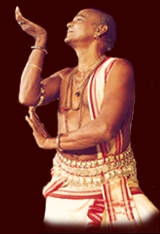 By now Guruji will start again to reappear on stage as a solo performer and to leave the audience spellbound by the sensual beauty and naturalness of his interpretations of the character of Radha from the "Geeta
Govinda", of the fisherman " Kaibarta " from the "Ramayan" and of
"Krushna" from he innumerable oriya songs. By now Guruji will start again to reappear on stage as a solo performer and to leave the audience spellbound by the sensual beauty and naturalness of his interpretations of the character of Radha from the "Geeta
Govinda", of the fisherman " Kaibarta " from the "Ramayan" and of
"Krushna" from he innumerable oriya songs.
Compared with Nijinsky for his " magnificent sinuous torso and arms "and which Chaplin for his" most inspired gestural acting "by the American critics Guruji has by now danced not only in India but all over the world participating to the festivals of India in London, Russia, Germany, France, America and Japan.
His latest compositions in raga Bagesri, Khamaj, Kirwani, are noteworthy for their intricate rhythmic structures which speak eloquently of his choreographic ability as well as his mastery over
"pakhawaj" playing. With his quicksilver vizardry the sound of he
"pakhawaj" is no longer relegated to be a mere support to the dance but comes forth as a leading element.
For the last ten years Guruji was associated with Odissi Research Centre in Bhubaneswar and gave his invaluable cotribution towards the work of codification and systematisation of the Odissi style carried on by the institution. After living the Centre in 1995, he is now fully concentrating on developing " Srjan " the dance academy founded by him and his wife and directed by his son
Ratikant.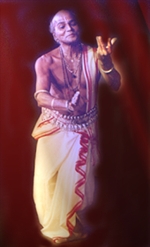
Guruji is equally adept in mundane matters as in the art of dance. His favourite materials are bricks and cement with which between one choreography and another he has built his first house in Cuttack and intends now to build the new Centre for his dance academy. He was infact on a bamboo scaffolding busy plastering a wall of a new portion of his house when the telegraphic message conferring the Central Sangeet Natak Academy Award reached him in 1966.
Unable to decipher the telegram in english, he got a neighbour to read it for him. Thus, he came to know that he had become the first Odissi Guru to get this distinction. The distinction conferred on him, also meant recognition extended at last to Odissi dance as a classical form.
The title of Padma Shree came a few years latter in 1975 and in 1981 he was conferred a Doctorate by the Akhil Bharatiya Gandharva Mahavidyalaya.He won the Kalidas award by the Madhya Pradesh Government in 1987 and the title of Padma Bhusan was conferred to him by the president of India in March 1988.
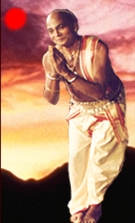 Inspite of the many honours received, the amount of work produced (he has over two hundreds solo compositions and about fifty dance ballets to his credit) and the number of students who are spread all over the world and literally adore him, Guruji has never lost his undemanding simplicity and childlike purity, he lets his greatness sit lightly on his shoulders, carries his genius playfully with him. For him dance is
"Sadhana" and teaching is "Dharm". He says "Hundreds of my students are dancing today and I feel as if I am dancing in all their beings. Only when nobody can take my dance or my art further will I experience sadness". Inspite of the many honours received, the amount of work produced (he has over two hundreds solo compositions and about fifty dance ballets to his credit) and the number of students who are spread all over the world and literally adore him, Guruji has never lost his undemanding simplicity and childlike purity, he lets his greatness sit lightly on his shoulders, carries his genius playfully with him. For him dance is
"Sadhana" and teaching is "Dharm". He says "Hundreds of my students are dancing today and I feel as if I am dancing in all their beings. Only when nobody can take my dance or my art further will I experience sadness".
Devotion and dedication run through the life and art of Guru Kelucharan
Mohapatra. Each action in his life as in dance, is a continuous offering at the lotus feet of Lord
Jagannath.
Odissi dance in the hands of this great master has not ceased to be what it used to be from the beginning; a way through which a soul humbly and sincerely devoted, pay his service to the divinity.
[Go
Top]
Guru
Pankaj Charan Das
Born on March 17, 1925, Guru Pankaj Charan Das was
the adopted son of a Mahari (temple dancer) and learnt the art of
devotional movement from his mother. He was also entranced by the jatras
(the itinerant roving theatre) of Orissa and never missed any that came to
town (Puri).
The highlights of the guru's childhood life consisted of the times he was
allowed to act in school plays and the praises he received for his voice.
His singing got him the honor of Bada Chatta, a service attached to the
temple. He recalls with glee how he was told, "You sang better than a
gramophone [record player]." Young Mahari dancers were often told to
“sing and dance like Pankaj” by their Mahari mentors. Failing his high
school exam three times, he gave up on education. But the theatre of the
road, the people's theatre, thrilled him, and he was finally offered the
role of Nemesis. He wore a saffron costume with a saffron cloth tied
around his head and crossed the stage singing." The life of the young
boy, however, soon took a jolt. The death of his adopted mother caused him
to go hunting for a job to survive. And he did what he knew best. He sang
and danced at the newly formed theatre of Bala Bhadra Hajuri.
After the death of his mother, he joined one of the jatras and acted in
comic roles. Then came Kalibabu's theatre to Puri. And the urge to join
the big-time theatre gained ground. After two ventures from Cuttack to
Balasore, including the one with the New Theatres, Pankaj Charan Das
returned to Puri. He met Kelu Charan Mahapatra. Finally, they both joined
the Annapurna Theatre B, after the split-up of the theatre. Pankaj Charan
Das choreographed Vasmasura as the dance director with Kelucharan as Siva
and Laxmipriya, who was later to become Kelucharan's wife, as Mohini. The
dance was a hit; and the two dancers caused a stir in the minds of the
theatre-going public. As Guru Pankaj Charan Das admits, the Mahari dance
had no stylized hand gestures and postures. It was the outpouring of a
soul to her husband, who also happened to be god himself. There was
devotion, and there was love. The language of the soul and the language of
the entire body inasmuch as it conveyed the non-verbal language of the
soul were significant. The Mahari dance, as imbibed by Pankaj Charan Das,
had to be modified to suit the theatre so that human beings could
understand the language of the soul.
His unique contribution to Orissi dance consists of the blending of
spirituality and theatre. He especially excels in his characterization and
dance portrayal of women, whether it be the Mother Goddess herself or
famous women from the epics of India. He is also brilliant in stage
choreography, well known for dances such as Matribandana and Glani Samhar.
His masterpiece creation, however, is Panchakanya, "Five Women,"
the portrayal of Ahalya, Kunti, Draupadi, Tara, and Mandodari, from the
Ramayana and the Mahabharata in solo dance dramas.
[Go
Top]
Guru
Deba Prasad Das
Guru Deba Prasad Das was trained in Odissi by Guru
Mohan Chandra Mohapatra who was a akhada pila and a gotipua. He was shot
into prominence when Indrani Rehman took him along with her to various
national and international dance festivals.
[Go
Top]
Guru
Mayadhar Raut
Mayadhar Raut was trained in the art of gotipua
dancing bu his elder brother Harihar Raut. He also studied under Durlav
Singh, Yudhishthira Mohapatra, and Mohan Mahapatra. Like other gurus he
too joined theatre companies including the Orissa Theatre of Kalicharan
Patnaik and the Annapurna Theatre, where Guru Pankaj Charan Das taught him
Odissi.
Among his well known students are Aloka Panihar, Kiran segal. For his
contribution to Odissi he has received many awards including the Sangeet
Natak Akademi award in 1985. He has retained in his style delectable
elements of the gotipua techniques and his style is distinctive and has
fluidity and grace. He trained his daughter Madhumita Raut who projects
his style faithfully.
[Go
Top]
Guru
Harekrishna Behera
Guru Harekrishna Behra was trained in gotipua from
the tender age of eight by Ramahari Behra. Like his other contemporaries,
he too joined a Jatra party and toured all over Orissa, performing and
learning various aspects of theatre. From Ram Chandra Dey, he took lessons
in music and other traditional dance styles. In 1957 he joined Kala Vikash
Kendra, Cuttack and was trained in Odissi by Guru Mayadhar Raut and Guru
Kelucharan Mohapatra.
In 1971, Harekrishna joined the Gandharva Mahavidyalaya where he taught
Odissi to several dancers including Madhavi Mudgal, Smruti Mehta and
others.
[Go
Top]
Guru
Surendranath Jena
Guru Surendra Nath Jena had a natural aptitude for
dance and music from childhood. Like his contemporaries he too joined the
Kala Vikash Kendra and studied Odissi under various gurus including Guru
Mayadhar Raut.
After qualifying for the degree course in 1966, he moved to Delhi and
joined Triveni Kala Sangam as an Odissi guru and has trained several
students. His style differs from those of other gurus in that he has
introduced elements of folk forms with various sculpturesque poses. Among
his children he has trained his daughter Pratibha Jena in Odissi.
[Go
Top]
Guru
Raghunath Dutta
Raghunath Dutta began his career with the Annapurna
Theatre in 1940. He studied Odissi under various gurus at the Kala Vikash
Kendra. He has been with the institution for along time and currently
heading the Department of Odissi Dance. He has trained several young
dancers at Cuttack and has travelled extensively in India and abroad.
[Go
Top]
Guru
Ramani Ranjan Jena
Guru Ramani Ranjan Jena was trained by various gurus
including Mayadhar Raut, Kelucharan Mohapatra, and Raghunath Dutta at Kala
Vikas Kendra, from where he obtained a Master's degree in Odissi. He has
given several solo performances and also appeared with other dancers in
duets. When other gurus were migrating to Delhi, Ramani Ranjan moved to
the south and settled in Madras ( now Chennai) where he taught several
young dancers. He taught Odissi at the Kalakshetra for aperiod of three
years from 1977 to 1980 before returning to Cuttack. He has set up his own
institution, the Kamala Kala Pitha to teach dance to local students and
also students from abroad.
[Go Top]
Guru
Gangadhar Pradhan
Guru Gangadhar Pradhan's training began at the age
of six, where he was given to the Balunkeswar temple in the village of
Dhimirisena (Puri district, Orissa) to be trained as a gotipua dancer. The
gotipuas are young male dancer who dress as women and whose history goes
back to at least three hundred years. The main Odissi gurus of today hail
from the gotipua lineage.
Pradhan was trained by eminent gurus like Banchinidhi Pradhan,
Chandrasekhar Patnaik and Mahadev Raut. He later went on to become a
student of Utkal Sangeet mahavidyala, Bhuvaneswar and received further
training under Pankaj Charan Das, Deba Prasad Das, Dr.Minati Mishra and
Dhirendranath Patnaik. After his graduation he received advanced training
from Guru Kelucharan Mohapatra. He also received intensive training in
mardala, under the legendary master Singhari Shyam Sundar Kar and Guru
Banamali Maharana. Guru Pradhan is known both nationally and
internationally for his excellent accompaniment for the famous dancer Late
Shrimati Sanjukta Panigrahi.
[Go
Top]
Guru
Trinath Maharana
At a very early age Trinath Maharana began studying
as a gotipua, dancing with Virkishore Mohapatra and learnt folk dances
from Guru Khageshwar Mohapatra. In 1957 he started taking lessons in
Odissi from Guru Pankaj Charan Das and later on took another training from
Kelucharan Mohapatra. Before coming to Delhi he had various schools in
Orissa.
He is also proficient in playing the pakhawaj and has accompanied many
leading dancers. He has also choreographed dance-dramas and group numbers
[Go
Top] |