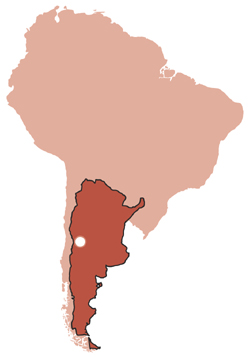
Mendoza is one of the 23 provinces of Argentina, located in the western central part of the country in the Cuyo region. Neighboring provinces are from the north clockwise San Juan, San Luis, La Pampa, R�o Negro and Neuqu�n. To the west is Chile.
Mendoza is one of the 23 provinces of Argentina, located in the western central part of the country in the Cuyo region. Neighboring provinces are from the north clockwise San Juan, San Luis, La Pampa, R�o Negro and Neuqu�n. To the west is Chile.
The geography of the province descends from the 6959 m of the Aconcagua mountain to the semi-flat lands of the east. A series of longitudinal valles such as the Uspallata, separate the Andes from the Precordillera lower mountains. To the east, the Cuyean plains are crossed by tributaries of the Desaguadero River. Other important rivers include Mendoza River, Tunuy�n River, Diamante River and the Atuel River.
Back to the home page
PROVINCIAL PARK ACONCAGUA
By route National N� 7, 180 km to the west of the city of Mendoza. It is acceded to the park by the way of debris to the right of the route.
Created in 1983 and located in the department of the General Las Heras, to the northwest of the province of Mendoza, with a surface of 71,000 hectares, the Provincial Park Aconcagua has the objective hill of the world-wide alpinism.
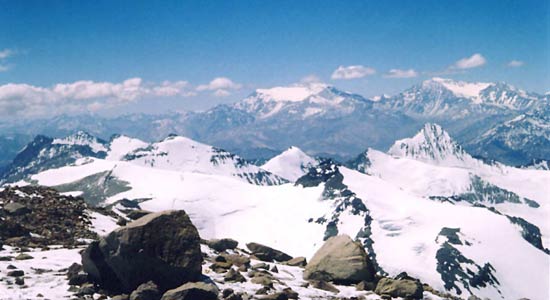
The park includes a mountain linking corresponding to Central Andes and their peak altitude and main attraction: the Aconcagua hill, the highest summit of America with 6,959 meters of height.
Its name derives from the expression quechua Ackon Cahuak that means "stone sentry". First in arriving was the Swiss mountain climber, Mathias Zurbriggen, on 14th January 1897.
The flora is adapted to extreme weather conditions. The most frequent species are the grass known like coirones, strong and stocky shrubs of slowest growth.
Between the fauna, dominating high altitude, the matchless presence of condor.
The park has a Group of Guardaparque and a Patrol of Rescue.
Back to the home page
Different wind fronts affect the landscape, mainly the Zonda wind, but also the mild Pampero, the warm Viento Norte and in winter the Sudestada from the Southeast. Back to the home page
 The main economic activity is the agriculture, most notable the viticulture with the 70% of the national production. Other important crops mainly for the Argentine market are apples, pears, tomatoes, onions, plums, olives, cherries, peaches and quinces. Apiculture, with 30,000 beehives is also a growing activity favoured by the dry weather.
14% of the national reserves of petroleum are in Mendoza. There's also mining of lime and uranium. Mendoza's main industry are the vineyards and the wine production with 1,200 wineries, followed by canned fruits, petroleum refinery (in Luj�n de Cuyo), cement and others.
Tourism has become one of the most important source of incomings of the province, with around 700,000 visitors per year.
The main economic activity is the agriculture, most notable the viticulture with the 70% of the national production. Other important crops mainly for the Argentine market are apples, pears, tomatoes, onions, plums, olives, cherries, peaches and quinces. Apiculture, with 30,000 beehives is also a growing activity favoured by the dry weather.
14% of the national reserves of petroleum are in Mendoza. There's also mining of lime and uranium. Mendoza's main industry are the vineyards and the wine production with 1,200 wineries, followed by canned fruits, petroleum refinery (in Luj�n de Cuyo), cement and others.
Tourism has become one of the most important source of incomings of the province, with around 700,000 visitors per year.
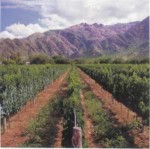
Finally, atracted to the wine-producing region, the Fiesta de la vendimia wine-production festivity receives many visitors in late February or early March.
Back to the home page
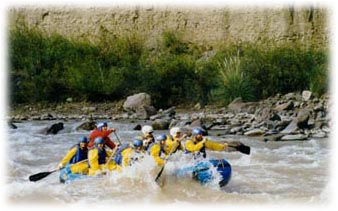
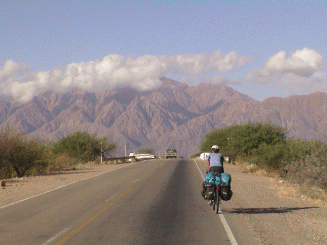
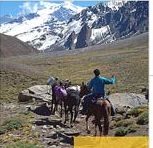
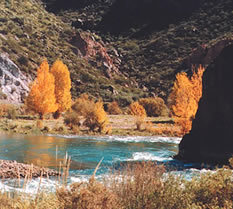 Its proximity to the Andean mountain range turns this city into an unbeatable destination for the adventure tourism: trekking, rafting, mountaineering and astounding landscapes to carry out photographic safaris, among other activities.
Other possibilities for the tourist are the practice of skiing in the winter season and thermalism in any season.
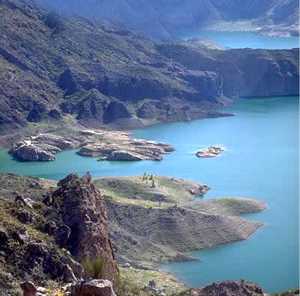
The main attractions are the Las Le�as ski centre, the Aconcagua and the Provinicial Park, Can�n de Atuel, Puente del Inca, Guaymallen and others.
Back to the home page
Its proximity to the Andean mountain range turns this city into an unbeatable destination for the adventure tourism: trekking, rafting, mountaineering and astounding landscapes to carry out photographic safaris, among other activities.
Other possibilities for the tourist are the practice of skiing in the winter season and thermalism in any season.
The main attractions are the Las Le�as ski centre, the Aconcagua and the Provinicial Park, Can�n de Atuel, Puente del Inca, Guaymallen and others.
Back to the home page