| The Unprecedented Discovery of the Dragon Islands, Revisited |
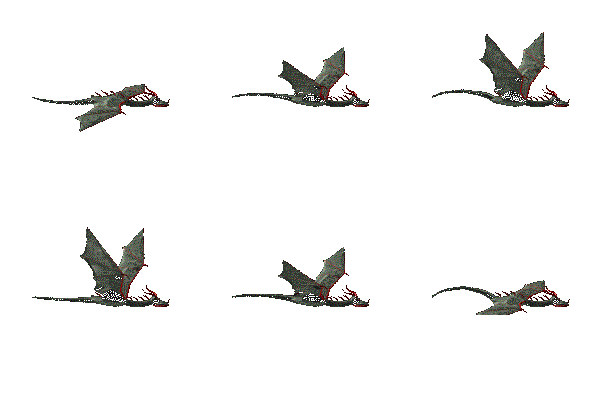 |
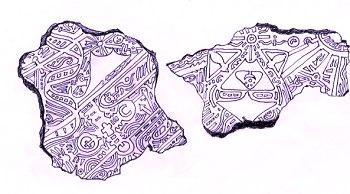
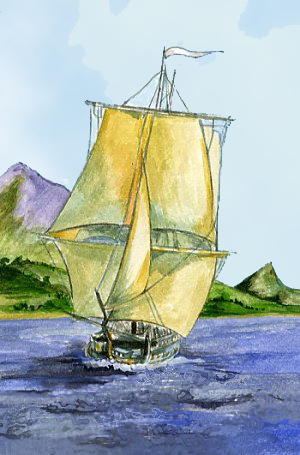
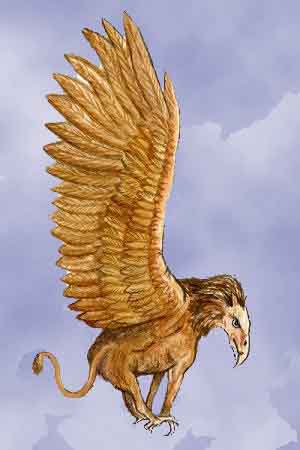
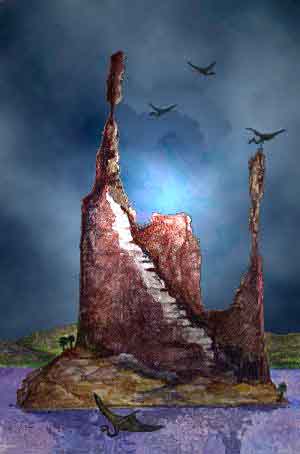
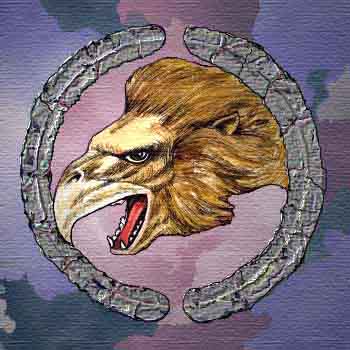
| INTRODUCTION After finding a copy of the 'Unprecedented Discovery of The Dragon Islands' by Lord Nathaniel Parker R.S. unappreciated in a children's library, I surmised that after one hundred and seventy five years, this unique journal of explorations in the South Pacific is still considered to be a fantasy. However as an artist, I am convinced that the life-drawings contained in Nathaniel Parker's extraordinary work of art appear to have been accomplished by actually observing the mythical animals they portray. To fabricate the complex anatomical studies in this work would have required much skill, dedication and a vivid imagination. I cannot imagine what would possess such a prestigious and distinguished gentleman to spend several years at sea contriving an elaborate hoax, which would ultimately lead to his downfall. I have always supposed that the creatures of mythology were real, perhaps in some distant epoch of prehistory and became extinct, but if the tale of Lord Nathaniel Parker's adventure in a previously unknown land is genuine, then they still exist! Mythical beasts are a persistent collective memory from the past, they were prolific in the classics and used allegorically in medieval art and Christian literature. Even now they emblazon heraldic coats of arms. It is a tragedy that after surviving such a perilous voyage Nathaniel was so despicably denounced by the Royal Society, while other explorers of this era were receiving accolades. No credence was given to his claims and so, they were never investigated, but Nathaniel's meticulous journal is a remarkable relic from an age of maritime discovery and he deserves, posthumously, to be recognized for his achievement. He could easily have retracted his story and regained his credibility, instead Nathaniel chose to spend the rest of his life in pursuit of the 'Dragon Islands' (which are closer than you know, as others have discovered) and this novel is an effort to redeem his besmirched reputation, and shed some light on the forgotten realm he so carefully documented. A wonderful world, which our early predecessors were very familiar with. In 1819 Lord Nathaniel Parker, educated in the classics at Oxford and son and heir of the 6th Earl of Saltmarshe Manor in Herefordshire, unwittingly stumbled upon a 'mythological' world, while fulfilling his ambition to circumnavigate the Globe. The sloop he chartered was the HMS Argonaut (surely an augury) and he set sail, to satisfy his wanderlust, with Captain Barnaby Ralph, a Royal Navy veteran and a crew of over fifty sailors, from Portsmouth Harbour in 1817. Nathaniel was a keen naturalist and a fine artist, influenced by Sir Joseph Banks, a friend of his father, who had sailed on the Endeavour with Captain James Cook. Nathaniel expertly illustrated the flora and fauna he discovered, his handwriting was immaculate and he made at least nine journals detailing his voyage, which he addressed to his betrothed, Belinda Sedgewick, whose interest was botany. While exploring the South Pacific west of the Peru-Chile trench, the ship entered a raging tempest, the next entry in Nathaniel's journal was in April, which stated; �We are lost. The desperate storms we suffered during the last week (the worst yet) have driven us finally to islands somewhere in the Pacific. The Captain's navigational skills so far have failed him and he, with all his experience does not recognize our latest harbour.� They were washed up on an unknown archipelago and the damaged sloop limped into a pleasant cove, surrounded by rolling green hills with volcanic peaks in the distance, which they named Salvation Bay. The climate was temperate and they grounded the ship on a wide sandy beach for repairs. Nathaniel, as ever, sketched the activity. Soon, with a warm wind on their backs, the crew set off on foot to explore. Their first experience in this terra incognito was rather alarming. A peculiar roaring sound could be heard overhead... suddenly, Nathaniel and Barnaby were engulfed by flames as a flying creature swooped past! Nathaniel was relatively unscathed but the Captain was quite badly burned and in the panic, he lost the precious sextant given to him by Captain Cook. Mystified, they returned to the camp for first aid. When Barnaby had sufficiently recovered, the men resumed their trek northwards and luckily found the sextant glinting in the sunlight on the plateau where the unfortunate incident had occurred. In a gentle stream, they discovered a species unlike anything they had seen before; Nathaniel described it as a water rat with a shrewish snout and sharp teeth protruding from its lower jaw, and webbed feet! It looked like a cross between an otter and a pike. He made exquisite paintings of these animals and a myriad of insects, including colourful scarabaeus beetles. He also found fascinating spiders with five pairs of legs, all unique to these islands. The next encounter was with gigantic carnivorous plants containing a caustic liquid, which caused a nasty rash. They had a tantalising odour, disguising their deadly intent and Nathaniel recorded all the features of this plant which he knew would interest Belinda. Its seed pods exploded like cannon fire when they hit the ground and small hovering birds, one inch tall, flitted between the spiky foliage. Each step they took exposed more mysteries. Heading along a ridge of volcanic peaks they came across a clutch of huge eggs, one foot across, nestling in warm ash. They marveled at what type of bird this nest could belong to and collected specimens. The men lay in wait all night for a glimpse of the mother, but she never returned. Then one of the crew spotted a strange beast half-buried in sand, they scrambled down the rocks to the beach and were amazed at the sight, it was a sea-serpent whose remains were thirty six feet long! Nathaniel could not estimate its original size. It had both dorsal and ventral fins along its length. Much to the relief of the crew, Captain Ralph informed them that it only eats krill. Noticing sucker marks on it's shimmering flesh which Nathaniel recognized as those of an octopus, he never mentioned the 'kraken' large enough to have killed this enormous serpent. In the Old Testament, God created sea monsters on the fourth day and they occur in the folklore of most native coastal tribes. Since then, serpents have been witnessed throughout the 'Seven Seas,' some are said to reach proportions of ninety feet! That evening as the party sat around the camp fire, eating fresh sea-serpent, which tasted like eel, they felt bewildered by the discovery of an animal believed to exist only in myths. Further bemused, they witnessed a display of fiery lights in the sky. The following day revealed the source of the baffling flames. Dragons! No-one dared move...only Kelly whispered, ��It is a dragon, m'lud.'' With wings outstretched these legendary beasts were gliding with grace and ease, they seemed to be translucent and did not flap their wings but ''appear to tack, beat westwards and run before, making the most of the winds'', as noted by Seaman Savage in nautical terms. They counted fifteen of them and after making observational drawings, Nathaniel did not feel threatened by the dragons, finding them to be docile, rather like cows. They had an elongated neck which they extended to sift the surface of the water when feeding and Nathaniel drew them in detail from every conceivable angle. Later, with the good fortune to find a dead one, scorched by a rival, Nathaniel was able to do anatomical studies and found its bone structure to be honey-combed, which made it strong but light, enabling its humungous bulk to fly. It had inflated sacs on it's underside filled with lighter than air gas, making it buoyant and presumably the source of it's flaming breath, as Nathaniel deduced, ignited by some mineral in it's throat, as Barnaby was made painfully aware! A week later, as they crossed a grassy plain towards a dense forest, they were startled by an ear-piercing shriek. Looking up they saw sinister shapes hovering above, which to their horror landed and encircled them. They were griffins! They began to attack, hissing and slashing at a crew member, fortunately Mr. Pearson Fenn had the presence of mind to discharge his musket, killing the leader and scaring the others off. Taking cover in briary bushes they attended to Miller the afflicted man, administering the juice of an abundant fruit with powerful narcotic properties. As Seaman Miller slept deeply, Nathaniel scrutinized the dead griffin; it was exactly how legends describe it with the body of a lion, the head and wings of an eagle and claws on its feet. Its wingspan was fifteen feet and its weight about that of a large dog, and it ran on its knuckles due to the heavily developed talons, which had so badly wounded the seaman. Needless to say, Nathaniel painted the griffin in his journal. Unicorns were said to avoid capture by their swiftness and could only be tamed by a virgin, thus becoming a symbol of chastity. The ground horn, mixed with water was medicinal and effectively prevented or cured poisoning, but travellers soon confused this creature with another� single-horned� beast, the rhinoceros, which is still being hunted for it's horn, to the point of extinction. As they set up camp beside the forest, a movement in the trees alerted the men, and yet another new species emerged. They came crashing through the campsite. Large flightless birds up to twelve feet tall, (like the extinct giant moa) with no fear of humans, apparently never having met them before. Apart from the havoc they wreaked in the camp, these inquisitive birds were completely harmless, and when Nathaniel had reorganized his materials, they posed for the artist! Nathaniel proceeded island-hopping through the 'Elysian Fields', a group of idyllic isles separated by streams and surrounded with water, keeping to the woods to evade the ever present menace of the griffins. An eerie mist descended in the evening, so they camped out beside a lake. The crew were silent, absorbed in their thoughts... soul-searching... provoked by the ethereal atmosphere. Nathaniel wrote to Belinda that he felt homesick and saddened by their prolonged separation, and he pondered on the magnitude of his discoveries and wondered who would ever believe him. When morning came the mist had cleared and they saw arising from the middle of the lake a ruined tower. It appeared to have been a simple cylindrical edifice, although it may have been more elaborate when complete but the scale was totally overwhelming and it dwarfed the dragons perched on top. It was truly a wondrous sight! This monumental engineering feat is reminiscent of the concentric walls and canals around the Citadel of Poseidon, 'which he turned as with a lathe, out of the centre of the island', with the entrance canal representing the shaft of the 'celtic cross' of Atlantis, and it's construction could only have been executed by a 'super-human' race. At the end of the canal, the crew climbed a flight of stairs to the cliff-top, where there was a stone altar raised upon steps (the symbol of ascent) and Nathaniel assumed it must be a look-out post because of the spectacular view. He also found tablets inscribed with intricate hierograms which he copied into his journal back at camp, because the sea air would soon cause them to disintegrate. Arriving back, the ships doctor, Charles Clifton informed him that the eggs they collected had hatched, and the 'draglings,' as they called them gave Nathaniel a great opportunity to observe the habits of these creatures. He made copious notes and paintings but felt aggrieved that his work did not capture the incandescent and sparkling colours of 'his dragons.' Later, disaster struck the camp when earth tremors caused a fire. Most of Nathaniel's samples, artwork and manuscripts were destroyed and to make matters worse, the draglings flew away! It was almost time to depart and supplies were running low and so was morale, but Nathaniel insisted on one final outing, in a vital attempt to replenish his collection. It was then they encountered a less favourable beast, camouflaged as tree roots! A seaman named Tully stepped on it unaware and it entrapped him like a snare. The men, frozen with fear watched as this ghastly monster with fangs and claws extruding from every orifice impaled their colleague and injected some toxin into his bloodstream. Seaman Yates shot the merciless demon, but it was too late. Nathaniel described it as the vilest of creatures, so prodigiously foreign that he named it the 'gorgon', too hideous to gaze upon, horrible even in hell... but he still retrieved it's corpse to do technical anatomic drawings. Concerned for his shipmates, who were becoming increasingly apprehensive, the Captain was anxious to set sail, so after burying unlucky Tully, they took to the sea once again. Whilst sailing, they caught sight of a vessel, not unlike a Viking dragon-ship, it's sail had a pattern resembling the frescoes and hieroglyphs, but it disappeared before they could reach it... like a ghost ship! Nathaniel was curious to meet the seafaring natives of these uncharted islands, who could exist in harmony with the complexities of this natural world. There was certainly no shortage of subjects to inspire life-drawings and keep the artist occupied. On route he saw a profusion of interesting water rats, some were eight inches tall and looked like mini warthogs, complete with tusks, others could fly with membranous 'wings' and Nathaniel filled several sketch books. But in due course their worst fears were realized when they were ambushed by the dreaded �kraken.� A giant squid lashed the Argonaut with it's terrifying tentacles and the ship shuddered and creaked in it's vice-like grip. Nathaniel was afraid he would never see Belinda again. However they were saved by quick-thinking Mr. Heron who hacked off a tentacle and they cooked it for supper that night. All were agreed it tasted delicious! At this point Lord Nathaniel Parker's story comes to a premature end, as the last few pages of his journal are missing, but the explorers were finally shipwrecked on the banks of the China seas and many of the crew died, including Captain Ralph. Nathaniel survived but with no evidence of his quest, except for one journal. In 1825 he presented his findings to the Royal Society but to his great dismay was laughed at and abused by the members. He was humiliated, ostracised and labelled a raving mad-man, and held up as an example to all others with unorthodox theories. Nathaniel could not accept this and tried again to submit his research, he claimed to have met the inhabitants of these islands, but by this time nobody was listening. He retired to Saltmarshe Manor and became a recluse but continued to write of the unprecedented discovery of the Dragon Islands in books. It became something of an obsession to him and after the death of his beloved Belinda, who had stood by him, Nathaniel chartered another ship, appropriately named, the HMS Odyssey and set sail in 1840. Neither he nor the ship were ever heard of again. He obviously found the company of 'his dragons' more palatable than that of his contemptuous peers back in England! If these creatures were hitherto unknown as myths and no preconceptions were held, they would not be considered any more bizarre than the saurians unearthed by palaeontologists. In fact Nathaniel's depiction of dragons is very plausible (almost identical in every culture) and not dissimilar to pteranodons. In the jungle swamplands of the Congo, a flying reptile called kongamato, which fits the description of a pterodactyl has been observed in recent times by fearful natives, and in 1890, two ranchers shot at an enormous beast on the Mexican border, with leathery bat-like wings, devoid of feathers. It's head was eight feet long with a row of sharp teeth along it's jaws. North American Indians take these 'Thunderbirds' for granted. This creature was seen by Eddie Adkins, a pilot and four of his friends in 1966, gliding above the Ohio river. It had an abnormally long neck and it's head swayed from side to side, and like Nathaniel's dragons, it did not flap it's wings. Eddie and his astounded friends agreed it was ''something prehistoric.'' Maybe these creatures venture from their caves, into the World outside periodically. Apparently modern pot-hollers often hear weird noises, like monstrous breathing or roaring deep underground! Dragons are an important feature in oriental culture and Chinese mythology describes 'flying red dragons, a thousand feet long, flashing fire and lightening from the eyes, tongue and mane,' and the dynastic, imperial emperors had them tamed to perform aerobatic tricks and dances, spiralling through the sky. Ley-lines were called 'dragon lines,' lung mei and to block the flow of this energy was believed to invoke the wrath of the dragons, who guarded them. This is the origin of geomancy which was designed to enhance the yin/yang balance of this subtle force, known as Ch'i or Prana. The blue Heavenly Dragon is the guardian of the celestial mansion of the gods. Nathaniel's only journal, a fragment of his original work, was left to Belinda's nephew, Patrick Sedgewick and passed through several generations, who thought it to be a magnificent joke until it emerged one hundred and fifty years later and the nephew of Paul O'Brian, an ancestor, published it. The irony of Lord Nathaniel Parker's tale is that because of his rejection, the salvaged journal is now available for us all to see but had he presented these findings in the present era, they would be met with the same derision today, as they were then. From such attitudes, valuable contributions to science have been trivialised, ridiculed and suppressed. |
 |
 |
Within the deep these men God's works and his great wonders see. (Psalms, 107, 24) |
 |
 |
| Next, an unusual rumbling sound was heard getting closer and to their utter astonishment, a herd of unicorns galloped by! There was around a hundred of them and Nathaniel wrote ''they are truly glorious, dazzlingly white but not as legends say the size of a horse. They cannot stand more than seven hands high, yet have all the elegance and grace of thoroughbreds.'' These charming creatures looked part horse and part deer, with a goat's head. But the griffins were preying on the unicorns, who bunched together with the horn on their forehead (more like an antler) providing an effective defense, until an injured one was singled out and the others ran towards the trees, leaving the fated unicorn to be rent asunder by the voracious griffins. As Nathaniel quickly sketched the scene, the crew looked on, awestruck by this contest between these 'mythical' animals. |
 |
| Nevertheless we, according to his promise, look for new heavens and a new earth, wherein dwelleth righteousness (2 Peter,3,13) |
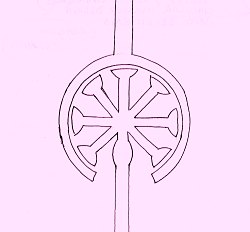
| Between the trees, symmetrical pathways extended from the edges of the lake, and a walled path decorated with frescoes, which they followed due north led to a canal, culminating in a circular harbour. From the centre, seven docks or bays spanned out. This design is symbolic of the Tree of Life on Toltec maps, with seven chambers reached through a vortex by those wishing to tread the path of the gods, in the Afterlife. The canal continued to the coast for two miles, where it had been cut straight through high cliffs for the last half-mile to reach the sea, a Herculean task, creating sheer sides over two hundred feet high! |
 |

|
 |
 |
| Salvation Bay |
| The Dragon's Tower |