| South America 5 |
 |
| Bolivia, Potos� (continued) At 4:20 AM we finally stopped in the streets of Potos� (only 3 hours late) and we had another nice surprise. Our backpacks were taken off here and we (the tourists) were not allowed to stay in the bus, so there we were in the middle of a dark unknown city, a little anxious because of all the nice stories of robberies that you here about Bolivia. However the taxi driver that offered us a ride actually got us to the right destination and we were lucky enough to find a room at the first hostel we tried. When we woke up at 10 in the morning we found out that the hostel 'Maria Victoria' (and Potosi itself for that matter) was a real nice place. The city itself, an old mining city founded in the 16th century when in the nearby mountain (cerro Rico or 'rich mountain') enormous quantities of silver, tin and other metals were found, is extremely nice. Not at all what we imagined to find in Bolivia. It is also the highest city in the America's at 3976 meters. The center houses many beautiful buildings and we spent a lot off time sitting on the main square looking at everything that passed. In Potos� many people (read women) still wear their traditional costumes, which makes the streets a colorful spectacle. The afternoon was spent underground: we took a tour through the mines. Before you enter the mines you are supposed to buy presents for the miners who still work there. In a little shop you can buy bags full of coca leaves, cigarettes, dynamite and detonators! Loaded with explosive material (we are still chemists...) we entered the darkness. The acetylene gas lamps gave a surprising amount of light, but were a bit worrying so close to the dynamite sticks in our pockets. Bent over we scrambled through the small corridors in the mountain, stopping once and a while to talk to the miners (one was 57, and had been a miners for 37 years in the same place!). The mines are co-operations since 1985, when the price for tin crashed. Each miner thus works more or less for himself and when he discovers a mayor artery the money is his' (except for the taxes). |
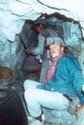 |
| The mountain however is old and depleted, the last success story being from 1994, when a mayor silver artery was found, resulting in 190,000 USD for the miner in only the first week. Now the miners make a meagre 1.25 Euro per 45 kilo's of first class silver ore and much less for second grade. Quite depressing, although the miners didn't look too unhappy. After 2 hours downthere we yearned for the sunlight and we went with a BANG. As planned two sticks of dynamite exploded 100 meters from us. The shockwave extinguished our lamps and we were left in the dark... incredible experience! |
| Potos� miner (internet source) |
| The day after we hung around in the city, listened to Bolivian music in a little shop on the artisan market. The shop owner explained the different kinds of music and played the different instruments for us. For more pictures of Potos� go to this site |
| Sucre, 27 March - ? At 4 we said goodbye to Andrew and took the bus to Sucre. The second capital of Bolivia (La Paz is the actual one, but Sucre has the supreme court is also a nice city full of historical buildings, although more modern than Potos�. After one night in the worst bed we had so far (and they are pretty bad in Bolivia) we found a great apartment, with kitchen and huge balcony shared with a Swiss/Korean couple. On the market nearby we can buy all the fresh vegetables we can imagine (supermarkets don't exist here) and we are preparing excellent dinners with them. After celebrating Easter we will start a week of Spanish lessons in a school. We took a written and oral test (first test in years) and are allowed in the same class...probably just the 2 of us. |
| It� been a while since we updated the site (except for the foto's) due to somewhat slow connections in Bolivia, but here it is: We stayed over 2 weeks in Sucre, spending most of our time improving our Spanish, but next to that we also took a Salsa dance lesson. Interesting experience for J. having to lead Anita...not a complete success. In Sucre we got to know the Bolivian culture a little, which is quite different from Chili and Argentina. Most of the people in Bolivia are from indigineous origin and still dress in the colorful traditional clothes (at least the women do). However, in contrast, most of the architecture in the cities is colonial Spanish: grand churches and buildings. Commerce is a bit (...) underdeveloped in Bolivia. Supermarkets, the few that exist, don't have much more than the local shops and these do not have a lot either. When there are shops there are usually 4 or 5 identical in a row selling exactly the same stuff for the same price. Don't diversify is the motto... Many farmers(wifes) try to sell their meager makings on the market, you wonder what they live from. Telling the truth is apparently not a virtue of Bolivians, when asking for directions they may point you in the oposite direction if they do not know the place. Our guide in the mountainbike trip told us the 3 great lies of Bolivian men: - To friends in a party when the wife calls: I�ll be back in a minute... - I'll pay you tomorrow - Solo el punto (explanation on request) Infidelity is also a great problem, but according to the men has been accepted by the women... During our stay in Sucre we have seen many demonstrations, mostly for better schools, more money and the largest one, according to a local, for a new scoreboard in the football stadium! Easter we celebrated in the nearby town of Tarabuco, where every sunday a big market is held, which attract lots of tourists. We were assured that there would be a market on Easter as well... As was said, telling the truth...there were probably 100 tourist in the village, walking in the rain and about 50 locals! Most of the local went to Sucre... The traditional dance that we went to see, because there wasn't much else to do, was cancelled because the dancers couldn't cross the river (because of the heavy rains). Interesting day... Next weekend we had a better excursion: we were the first (and only) customers of a start-up mountainbike agency (on of the teachers in the school). We went mostly downhill to some villages in the neighbourhood of Sucre. from the last village we, unfortunately, had to bike back uphill, but were rewarded with lot's of beers and and a small lunch (about 2 kg of steak). Next the guide took us to his parents house with swimming pool, where we enjoyed a couple of the local drinks (Pisco sour...). The return to Sucre was fortunately by taxi... The next weekend, after taking a quick look at some the many dinosaur footprints found near Sucre we said goodbye to Sucre and stepped on the nightbus to La Paz. Arriving in La Paz, we took a hostal recommended to us by a religious danish couple and were very surprised when we were woken up from our mid-day nap by bonking and sighing sounds coming from at least 3 other rooms. Apperently the rooms could be rented by the hour... In retrospect: The mirror above the bed should have given us a clue...We didn't stay very long there (although probably longer than most other guests) and changed our hostel. Continue to next page |