| George Frideric Handel |
| Handel's compositions include some fifty operas, twenty-three oratorios, and a large amount of church music, not to speak of his superb instrumental pieces, such as the organ concerti, the Opus 6 Concerti Grossi, the Water Music, and the Fireworks Music.
After his death, Handel's Italian operas fell into obscurity, save the odd fragment, such as the ubiquitous aria from Serse, "Ombra mai f�"/ MIDI; his reputation throughout the 19th century and first half of the 20th century, particularly in the anglophone countries, rested primarily on his English oratorios, which were customarily performed by enormous choruses of amateur singers on solemn occasions. These include Esther (1720); Saul (1739); Israel in Egypt (1739); Messiah (1742); Samson (1743); Judas Maccabaeus (1747); and Jephthah (1752). With the rediscovery of his theatrical works, Handel, in addition to his renown as instrumentalist, orchestral writer, and melodist, is now perceived as being one of opera's great musical dramatists. (Source) |
| The plot is less convoluted than in many operas of the period. It bears a superficial resemblance to that of �Fidelio� in that the hero and heroine are husband and wife and the last act contains a dungeon rescue scene; but in neither respect is it unique among Handel�s operas. Despite a few of the usual opera seria trimmings, generally connected with the subplot, that strike us today as contrived and faintly ridiculous, the libretto offers a clear central conflict and a number of strong situations of which Handel is quick to take advantage. Each act contains one scene -- in a cemetery, a country landscape and a prison -- that allows him to exploit the genius loci by painting a vivid dramatic background. (Source) |
 |
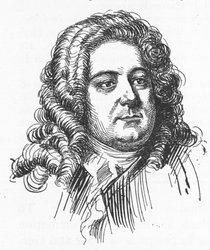
| German-born English composer of the 18th century who wrote some of the best-known music of his age. A musical sponge whose works reflect aspects of many different European traditions, he wrote brilliant theatre, ceremonial and orchestral music, sacred works, and vocal, instrumental and keyboard music.- BBC Artis Profile |
 |
| Operas 1-21 Almira (1705) Rodrigo (1707) Agrippina; (1710) Rinaldo (1711. rev. 1731) Il pastor fido (1712) Teseo (1713) Silla (1713) Amadigi di Gaula (1715) Radamisto (1720) Act 3 of Muzio Scevola (1721) Floridante (1721) Ottone (1723) Flavio (1723) Giulio Cesare (1724) Tamerlano (1724) Rodelinda (1725) Scipione (1726) Alessandro (1726) Admeto (1727) Riccardo Primo (1727) Siroe (1728) |
| Operas 22-42 Tolomeo (1728) Lotario (1729) Partenope (1730) Poro (1731) Ezio (1732) Sosarme (1732) Orlando (1733) Arianna (1734) Ariodante (1735) Alcina (1735) Atalanta (1736) Arminio (1737) Giustino (1737) Berenice (1737) Faramondo (1738) Xerxe/ Serse (1738) Imeneo (1740) Deidamia (1741) The Alchemist (1710) Comus (1745) Alceste (comp. 1750) |
 |
 |
|
| 1685 -1759 |
| This site is is for entertainment and reserch and contains information that anyone can get by using a search engine, such as Google./ This site is a sub-site of SF ART World // Creative Commons Attribution-Noncommercial-No Derivative Works 3.0 License. |