Tweed Fire District (Tower History Notes)- Formed in 1922 (some of these towers were taken over by the Lindsay District in about the 1940s):
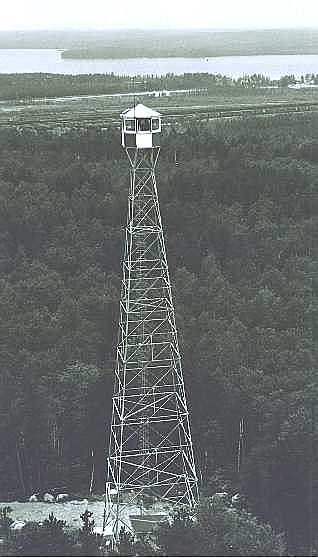
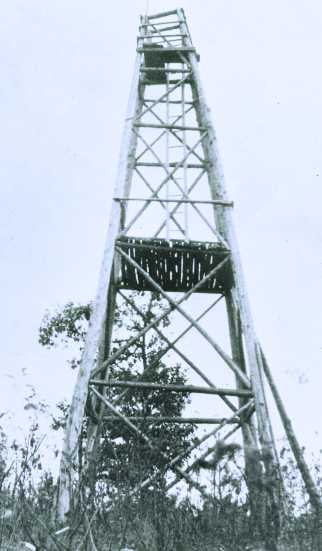
* Cashel (80 ft. light steel), Wicklow (80 ft. light steel), Mt. St. Patrick (80 ft. light steel), Myer's Cave (80 ft. light steel), Methuen (wooden) and Matawatchan (80 ft. light steel) Towers were built in 1922.
* Raglan (80 ft. light steel) and Faraday (80 ft. light steel) Towers were built in 1923.
* Grimsthorpe (wooden) Tower was built in 1926.
* Ompah (80 ft. light steel) Tower was built in 1930.
* Cardiff (80 ft. light steel) and Dungannon (80 ft. light steel tower relocated from Faraday) Towers were built in 1931.
* Ashby (80 ft. light steel), Bancroft (100 ft. heavy steel-1st of its kind built in Ontario), White Mtn. (80 ft. heavy steel), Gull Lake (now known as Mississauga Lake- 80 ft light steel), Bruton (80 ft. heavy steel) and Tudor (80 ft. light steel tower relocated from Dungannon) Towers were built in 1938.
* Grimsthorpe (80 ft. heavy steel) and Lyndoch (100 ft. heavy steel) Towers were built in 1950.
* Limerick (80 ft. heavy steel), Olden (80 ft. heavy steel) and Kaladar (80 ft. heavy steel) Towers were built in 1956.
* Bangor Tower (80 ft. heavy steel) built in 1957.
* Hungerford (100 ft heavy steel) and Bedford (100 ft. heavy steel) Towers were built in 1958.
* Tudor (new 100 ft. heavy steel replaced 80 ft. light steel tower), Marmora (100 ft. heavy steel) and Hinchinbrooke (100 ft. heavy steel) Towers built in 1959.
Lindsay Fire District (Tower History Notes)- Formed in the 1940s:
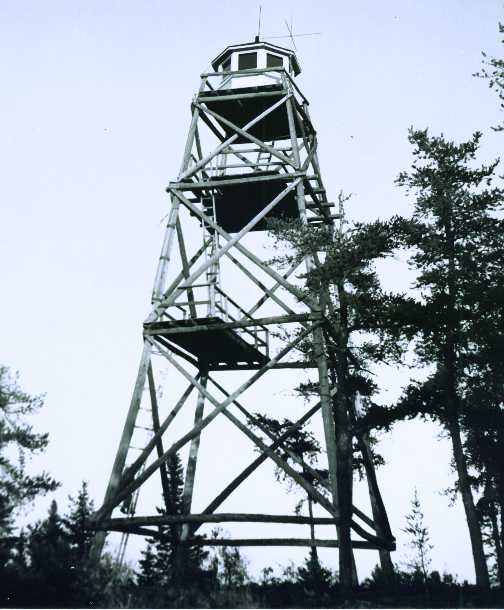
Methuen Tower- built in 1928, 80 ft. light steel, replaced a wood tower that was built in 1922.
Harvey (Gull Lake) Tower- built in 1938, 80 ft. light steel, replaced wood tower that was built there 1st in 1922. This tower was blown over by a hurricane and rebuilt in 1927.
Glamorgan Tower- built in 1940, 80 ft. heavy steel.
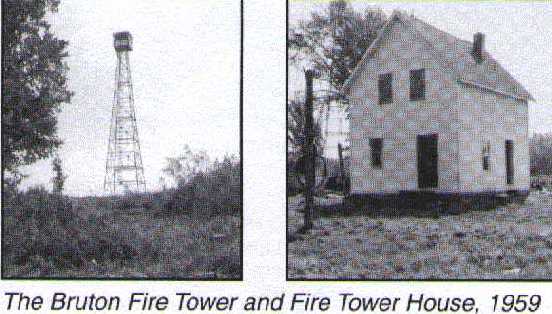
Bruton Tower- built in 1940, 80 ft. heavy steel.
Harburn Tower- built in 1950, 80 ft. heavy steel.
Sherbourne Tower- built in 1950, 100 ft. heavy steel.
Lutterworth Tower- built in 1950, 80 ft. heavy steel, replaced wood tower built there 1st in 1922.
Eyre Tower- built in 1953, 100 ft. heavy steel.
Dysart Tower- built in 1956, 100 ft. heavy steel.
Cardiff Tower- built in 1959, 100 ft. heavy steel, replaced 80 ft. light steel tower 1st built there in 1931.
Haldimand Tower (aka Northumberland)- built in 1960, 80 ft. heavy steel.
Clarke Tower (aka Durham)- built in 1960, 80 ft. heavy steel.
Digby Tower- built in 1957, 100 ft. heavy steel, replaced wood tower built there 1st in 1922.
*Special Note: There were 2 wooden cabins built in the 1920's as fire towers and were part of the Gull Lake phone line tower system. They were situated on Dewdney Mountain and Parker's Mountain in the area just north-east of Bobcaygeon. Archie Henderson (the forest ranger)'s job was to man the towers part time and travel through the forest from Dewdney Mountain, to Parker's Mountain, to Green's Mountain, to Gull Lake tower (now Mississauga Lake) every so often to make sure the bush phone line was still intact. The 8 ft x 8 ft cabin at Dewdney Mountain still exists. I discovered this info. in July 2007. To this day the bush phone line is still there, running in the exact same line, from one end to the other. It started at Henderson's old log cabin (also still there) on Bass Lake Rd just north of Nogies Creek.
Parry Sound Fire District: as of 1969 there were 18 towers listed in the district. These were: Pickerel River CPR (a 60-80 ft. open steel tower with a bunkhouse beside it), Byng Inlet, Still River, Pointe au Baril, Ardberg, Spence, Parry Sound, Go Home, Loring, Stormy Lake (Restoule), Nipissing, Boulter, Lount, Laurier, Strong, Proudfoot, Stisted and Draper. At that time (1969) there remained only 4 actively manned towers: Ardberg, Go Home, Stormy Lake, and Boulter. These would also be fazed out shortly after. It was truly the end of an era.
Ontario Tower's Footings Dimensions:
80 ft. light steel towers- footings measure 21'8" across.
80 ft. heavy steel towers- footings measure 18'5" across.
100 ft. heavy steel towers- footings measure 22'2" across.
|