|
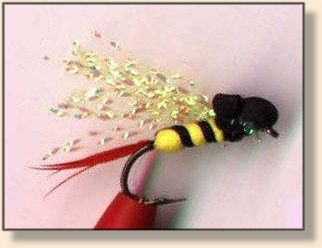
Foam/Flash Wasp Tied by Jason Tinling |
||
|
|
Hook: #10-14 2XL Dry Thread: Black 6/0 Tail: 4-6 Red hackle fibers Body: 2mm yellow foam, black floss Wing: Pearl K-Flash Head: 2 mm black foam |
|
|
|
|
||||||
|
Tying Instructions: 1. Tie in thread and wrap to bend. Tie in hackle fibers, sparsely, about 1/3-1/4 body length. 2. Tie in floss. Lay foam so that it covers the back half of the hook, extending back over the tail. 3. Wrap tightly with thread to bind foam to hook. Pull foam tight and wrap forward to thread. Tie off foam and counter wrap floss forward. Tie off. 4. Tie in black foam just ahead of floss tie off. Wrap to eye and back, leaving a tag projecting in both directions. 5. Cut flash, and tie in a flat, fan shape on top of rear tag of foam. Trim foam tight below wing, and trim flash to length of body. The foam tag under the wing will help push up and splay the flash wing. 6. Pull the tag of foam over the eye back to the wing and tie off. Trim 1/8" from thread. Whip finish, cement tie off and underside of head, where exposed thread is. Notes: In theory, the foam for the body portion of the fly should be compressed enough that it remains neutrally buoyant or sinks very slowly. The foam of the head should float above the water, leaving the K-Flash splayed across the surface, much like a tired insect's wing. Mine do that for about 4-5 fish. But they keep catching fish under the water, so I'm not too worried. As you can see from the picture above, I have, for the sake of expediency, tied the F/F Wasp with chartreuse K-flash with no noticeable difference in fish catching ability. When the fly goes sub-surface, the chartreuse wing may even assist in visibility. Tie some up, go find a local farm pond with a good panfish population, and have a blast! |
|
Jason Tinling Lancaster, Pennsylvania USA Email: [email protected] |