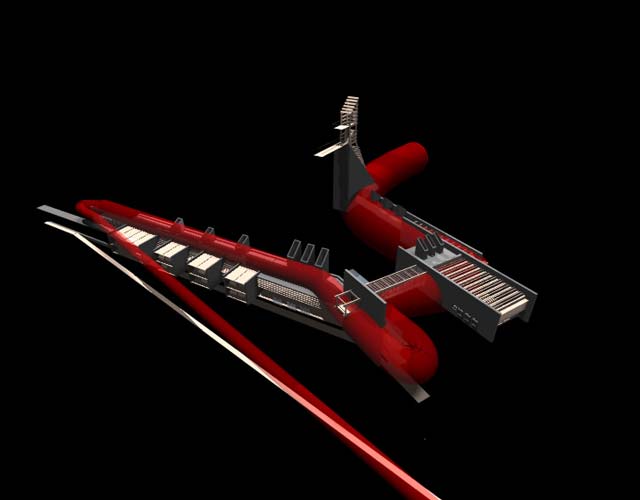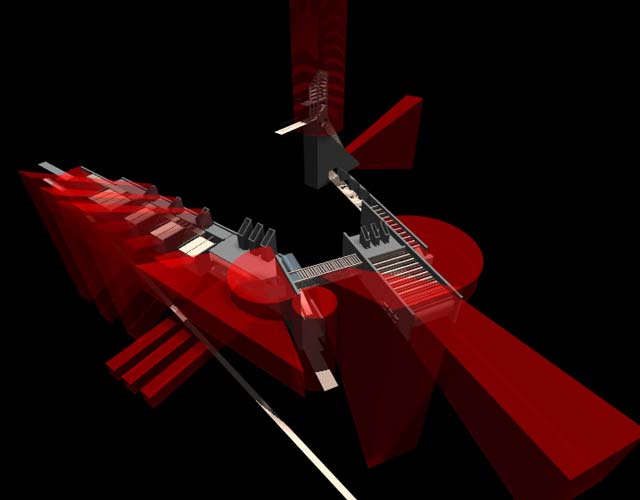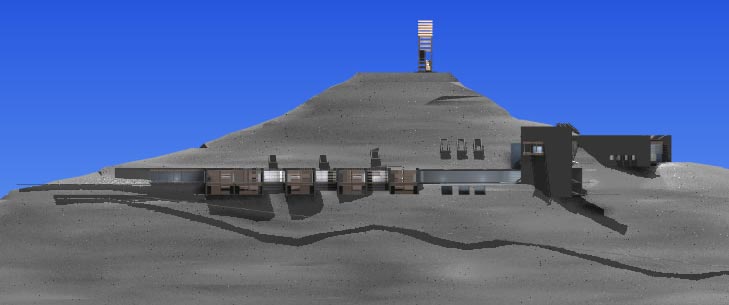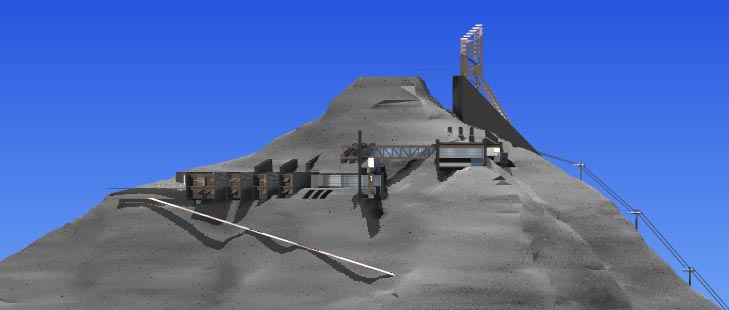
The experimental and original character of this project gives
us the opportunity to investigate the impact that the design may have on the
landscape, as well as the ways in which design manages to extract a meaning
from a specific landscape. We firstly started by investigating the hypothesis
that landscape could be considered as a 'human-made space', this is to say
a space that gets its meaning through every kind of human effect on it. Even
more we thought about the concept of 'artificial space' as a means and tool
for the interpretation of the 'physical space' -the landscape. As an 'artificial
space' we define not only the space that has been constructed by man, but
every kind of humanly produced space through the use of every technique that
human culture possesses: Memory, Legends, religious tradition, the culture
in general of a nation, through which people can create ('construct' in different
ways) their own particular 'landscape'.
Cultural history of this specific place (Cusco and Peru in general) can give
a lot of examples that reveal a continuous human effort to intervene in physical
space. Efforts to appropriate it and bring it to human scale, to extract from
it a meaning or even impose a meaning to it. This is clear either through
the long tradition of technical works of large scale that Incas have, for
the inhabitation, the rural exploitation of land, and their spirited interventions
on the landscape for ceremonial and religious reasons. Either through their
original way to impress nature and interpret it through their own traditional
arts and crafts.
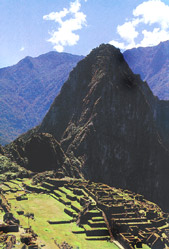
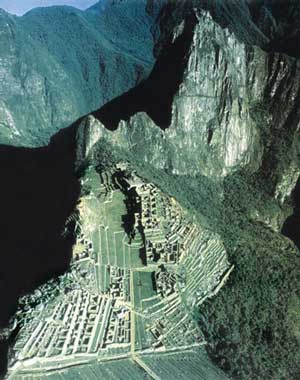
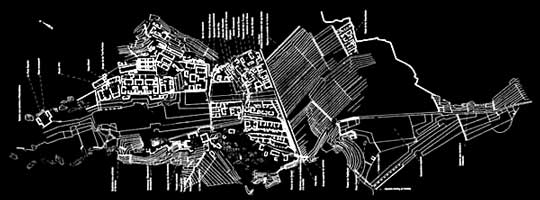
At any rate we consider the archaeological site of Machu Pichu as a human
intervention that for as keeps a value not only historical. More than that
Machu Pichu can keep a value of a 'key', a key for the understanding of the
meaning that this culture has given to its surrounding physical space, but
also a key for the interpretation that all the following generations are and
will be giving to the same landscape through the ages. Most of all a key for
every further human intervention in this area (such as the lodge). This kind
of human construction was and still is the human way to convert a landscape
into place (by 'place' we mean a space which contains memories, history of
common life). The 'artificial space' is the means that charges the 'physical
space' with meaning and renders it to a place of memory, worship, a 'sacred'
place. This kind of 'artificial space' is the site of Machu Pichu. The way
in witch a human intervention in the landscape and much less the design can
convert a neutral space into a place, a space charged with meaning is for
us decisive question.
2. The programmatic choices for the lodge
The concept of the landscape as a 'culture construction' led
us to the programmatic choices for this lodge. The landscape can be considered
as an environment that people need to 're-create' as they inhabit and appropriate
it. In this way they are giving to it a meaning and converting it into a 'place'.
So, more than designing a building we had to 'reorganize' the landscape, most
of all to set a new man-constructed landscape for the use of people. The parts
of the lodge should be mixed with the relief of the landscape in an unbreakable
whole, and in this way re-compose it and not just stand neutral or in distance
from it. On the other hand the lodge as a space, beyond its practical value,
should be itself an opportunity (a means) for the visitor to deal with the
landscape and the archaeological site, it should provoke him/her into personal
thoughts, help the visitor with the task of analyzing and recomposing the
images, the experiences that gets from the landscape, and in this way help
him/her to produce its own personal meaning for the specific physical surroundings.
So we consider that this building could be a 'machine for contemplation and
interpretation' of the landscape. Taking advantage of the opportunity of a
short-time visit (1-2 days) in the lodge, the visitor can use the building
not only for the practical reasons for which we usually need a hostel (rest,
security) but also as a helpful tool in his/her hands for the construction
of a personal and original meaning for the specific area. This lodge should
suggest a way of acquaintance with the landscape and a gradual acquaintance
with the archaeological site.
That is why we choose to work on the idea of an inhabitance that will offer
a temporal 'prolonged visit', a prolonged acquaintance with the place and
with all its aspects, rather than giving all the attention only in a 'comfortable
residence'. This means that the visitor of the complex by moving in this space
will be gradually discovering the landscape and the archaeological site, with
alternate experiences and various sensations. For this, the most important
element of the idea becomes the movement and its combination with the interruptions
of the movement. Through his/her movement and physical presence the visitor
will be accepting various stimulus from the landscape, according to the part
of the landscape and the manner that design focuses at it (f.e. a framing,
showing off different parts of the landscape either whole panoramic views,
changing orientation of view)
So we can say that more than the practical value of the lodge we have worked
on its use as a tool in the hands of the visitor for the composition of his/her
own personal or collective experience- interpretation of the area. We believe
that design for this lodge can offer to the user at first this interpretation
and this manner to decipher the landscape and further on to caver his/her
physical needs for protection and accommodation. Thus the main things that
occupied us end have been guides for our design are: the view of the visitor
and the quality of the experience that accepts in the different parts of the
building (according to what is being revealed or hidden from him/her and in
which part of the complex), the use of the suitable design principles and
the suitable materials (the trace, the permanent or the ephemeral, the transparent
or the compact, the covering or the revealing, the obstacle or the natural
movement within the landscape).
3. Design principles
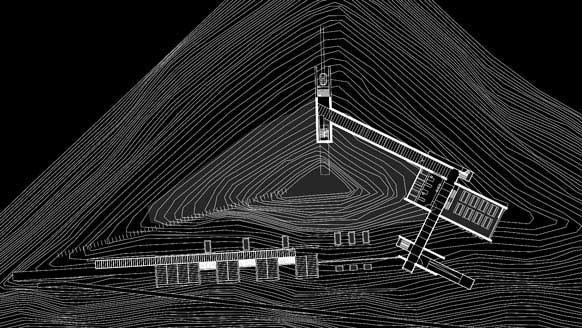
(a) Our main design principle is the movement -route into
the space. We consider that the movement is a way to join different spaces
with different functional and notional contents, but as well the main way
we have as users to experience the physical space and its parameters. And
through this property movement can achieve our initial design choices. Through
motion the visitor may have different kinds of experience and various 'readings'
of the landscape and of its cultural contents. The movement has been designed
to be natural, free, smooth and functional, to follow the natural flow of
the landscape. Has been designed in such a way as to give the feeling of the
primary movement into the landscape, as a natural walk, as a friendly show
round. At last the movement has been designed in such a way as to compose
the 'backbone' of the complex, on which the different parts of the complex
are joined in a whole. The movement is in this way the primary trace on the
place. The trace of this movement is mixing with the natural relief, as the
movement is being detached from it or runs into it. A movement that various
between becoming a part of the landscape, being imprinted on it as a trace
or stands off the landscape, is a movement that becomes a vehicle of experience.
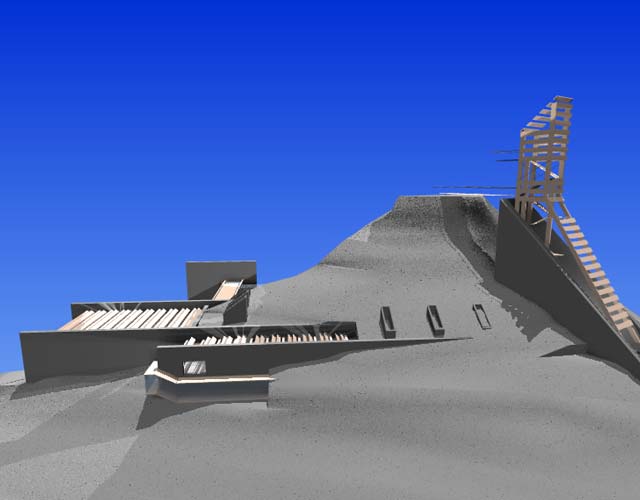
The movement designates a gradual route of discovering the landscape and the
archaeological site, beginning from the entrance (terminal station of the
cable car), to the reception and the dining room, then to the living room
and the bedroom area, and finally it gives the option of continuing in the
form of a footpath towards the archeological site of Machu Pichu, for the
natural approach of the visitor-guest from his place of residence-his room-
to the archeological site whenever he wants to do so, as a natural continuation
of the visit.
During the route there are some spaces that direct the view or spaces that
open the view panoramically, spaces protected or exposed, spaces for rest
or of intense exercise, spaces of personal isolation or collective gathering.
Design has embodied ways for experiencing all the different elements of the
landscape, such as the height and the distance, verticality or horizontality.
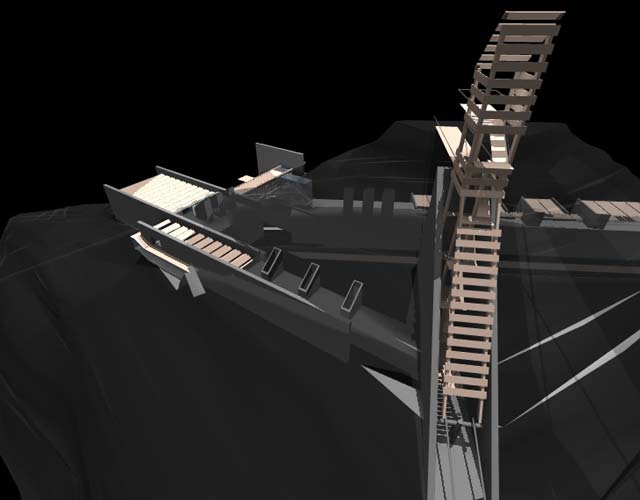
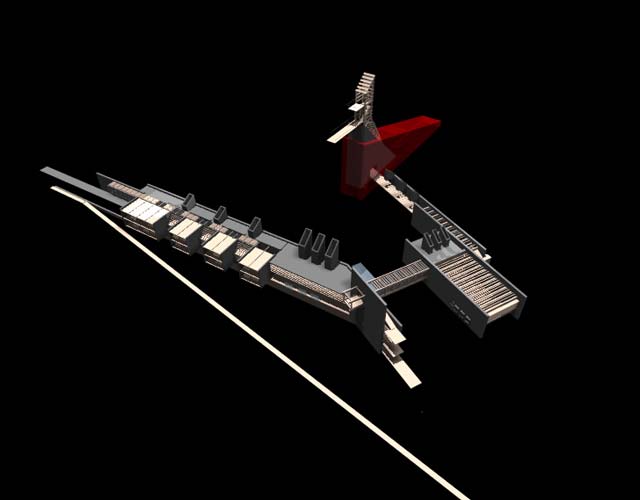
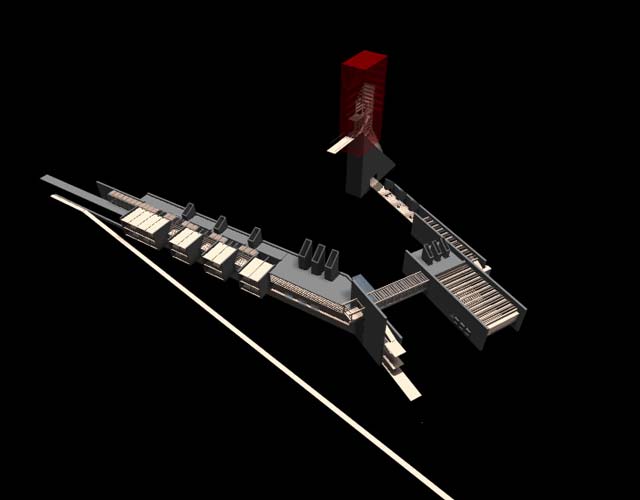
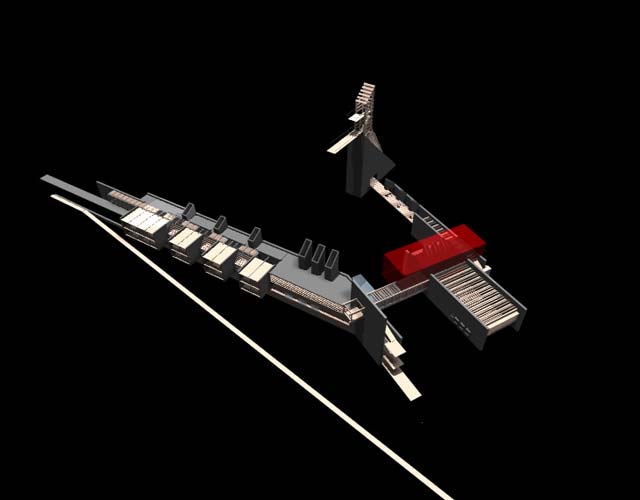
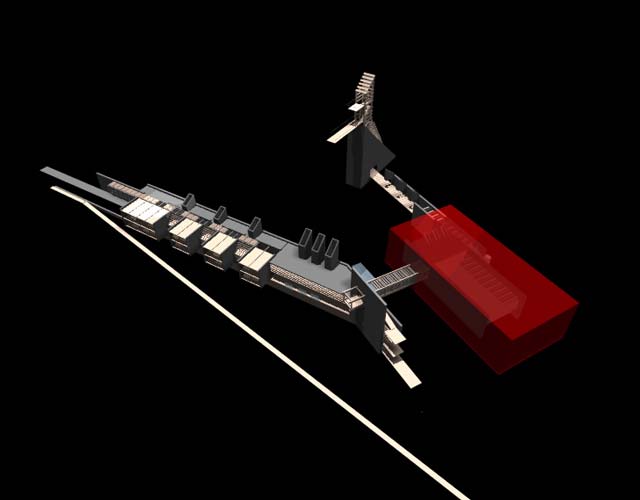
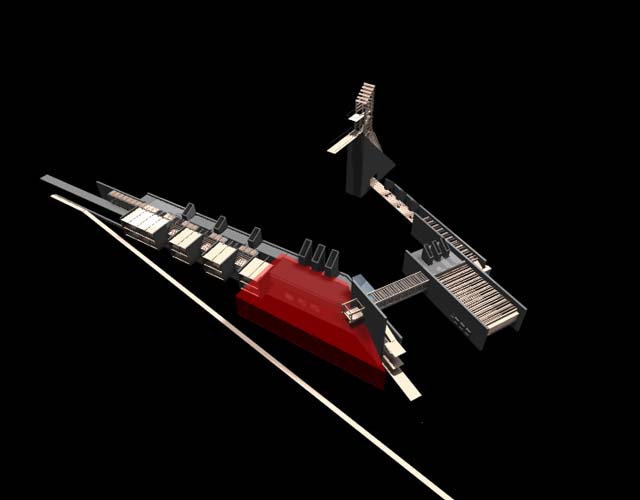
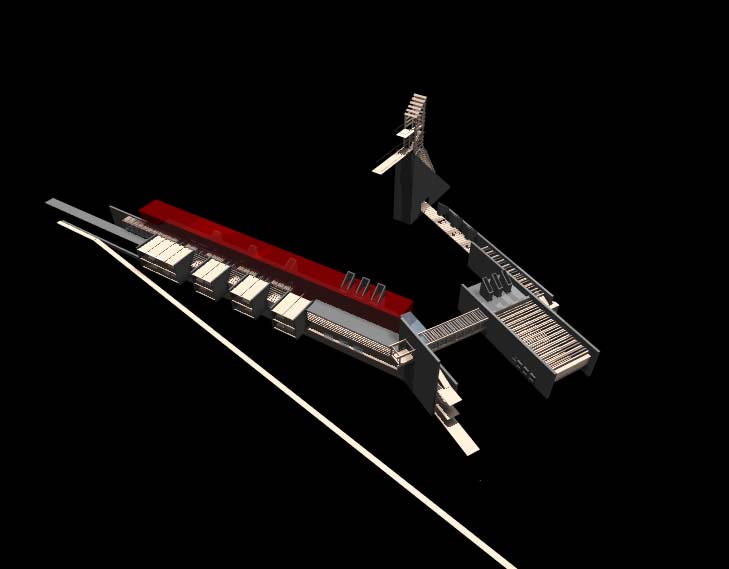
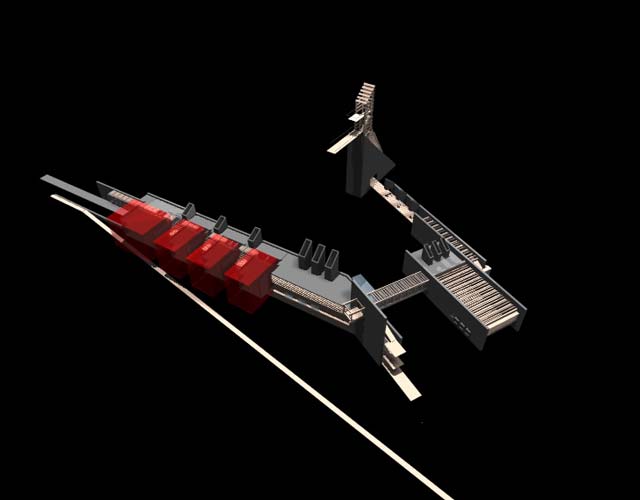
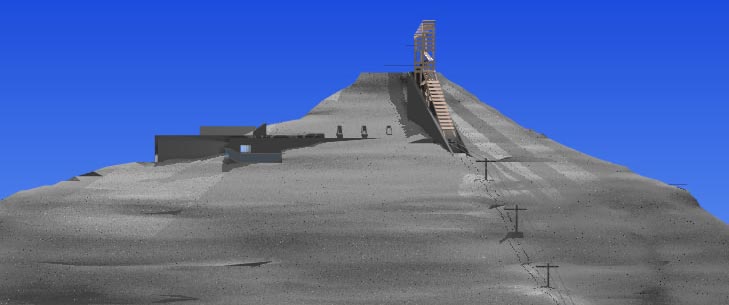
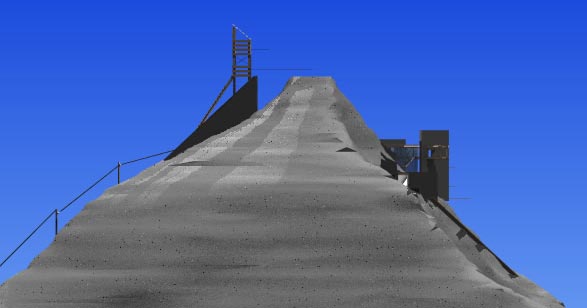
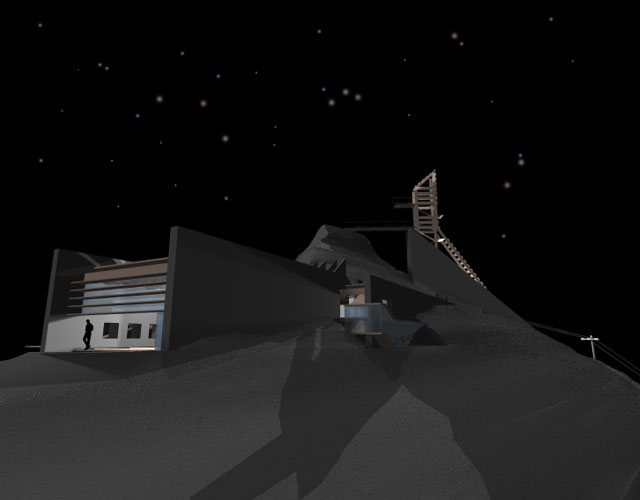
(b) An important choice of the design is the fragmentation of the block, the division of the complex in functional units that are joined by the movement-route through the building. We didn't believe that a centralized building, a building that imposes itself to the landscape, would be at one with the principles that we had put from the beginning. We rather choose a complex that will be unfolded friendly in the landscape, which will be defined by the 'forces' of the landscape, which will give the sensation that cooperates with it, that coexists and joins forces with the landscape. This smooth coexistence is 'broken' only at chosen points (which are predefined from the beginning according to their importance) in order to create an elevation or a 'rupture' in the landscape (as for example the look-out tower, or the stairwell that joins the level of the reception +dinning room with the level of the living room +the rooms). We consider these elevations very important for a clear understanding of the space, for an easy orientation and as symbolic signs for a distant observer. The fragmentation of the complex in functional units also gives us the opportunity to show clearly the different character of each function, and to give the separate significance that each of them deserves. Reception and dinning room as more public spaces and of easier access can function independently from the spaces for sleep and rest or from the places for contemplation that have to be more isolated.
(c) The choices for the forms and the materials that we made were defined
by our previous basic choices. That is the concept of the "trace' in
the landscape, the concept of 'redesigning' the landscape and the well- balanced
relationship between man and nature. So the lodge tries to imitate the environment
in some parts since in others tries to show clearly its function (the public
spaces are being recognized during the entrance in the lodge, and the rooms
as divided rest areas in the other side of the entrance). We mainly used the
idea of the 'variation of materiality'. By the variation of materials, the
combination of more light or heavy building materials, transparency and opacity,
we obtain a dialogue between the permanent and the ephemeral (both qualities
that coexist in nature) and we keep diversity and a plurality of references
and conceptions.
(Special thanks to Maro Ioannou for the translation of this text)