|
|
|
|
|
|
|
|
|
|
|
|
|
|
|
|
|
|
|
|
|
|
|
|
|
|
|
|
|
|
|
|
|
|
|
|
|
|
|
|
|
|
|
|
|
|
|
|
|
|
|
|
Milling Lumber From Timber I Jacked |
|
|
|
Click the picture to see a larger version (as if you've never done that before <g>). |
|
|
|
 |
|
|
|
 |
|
|
|
 |
|
|
|
|
|
|
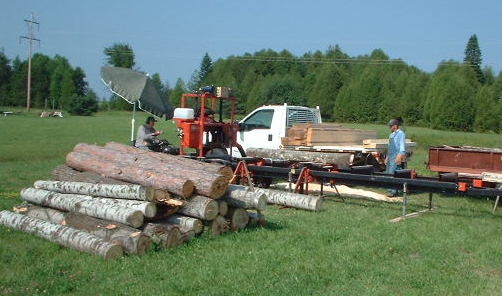
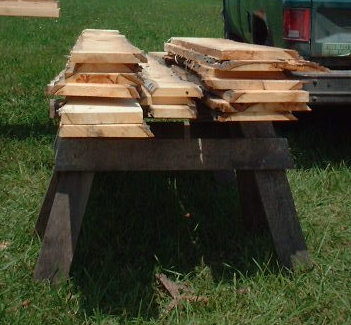
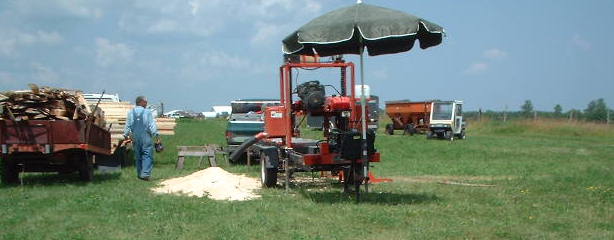
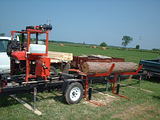
The bandmill is between the logs and the truck. The lumber goes on the truck for delivery to the drying barn where it will be stickered and stacked. The scrap goes on the trailer where it will dry. It will be cut shorter and burned for heat in winter. |
|
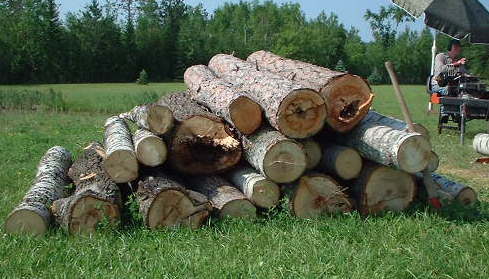
This log stack contains three red pine logs on top over quaking and bigtooth aspen (popple) logs. Eight oak logs and one red pine log have already been milled. |
|
|
|
|
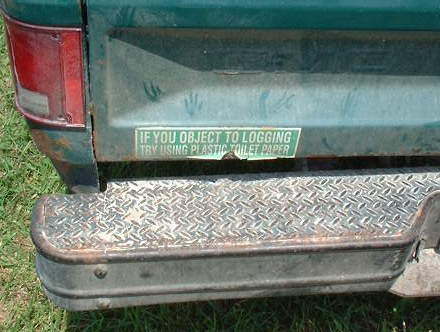
A little logging philosophy. |
|
|
|
|
|
|
|
|
 |
|
|
|
 |
|
|
|
|
 |
|
|
|
|
 |
|
|
|
|
|
|
|
|
|
|
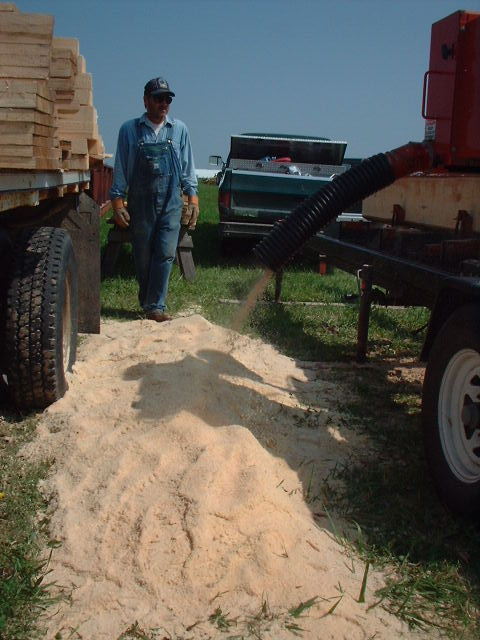
The sawdust mostly blows out the side and becomes a big mess. If we were smart, we would have laid down a tarp or some plastic to make cleanup easier |
|
|
|
|
|
|
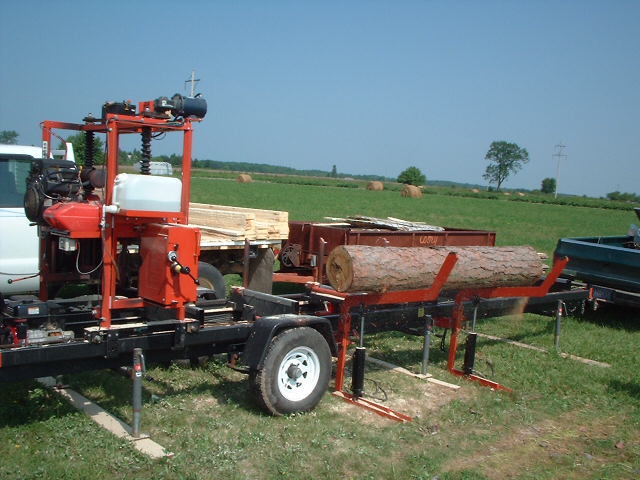
A log is rolled from the pile onto two lift arms, which then hoist it up to roll onto the sawing deck. This log is still on the lift arms. |
|
|
|
|
|
|
|
|
|
The log roller is up in this view after just rolling the fourth side of the bark up. At this point, the cant is typically dogged down low and boards are cut. |
|
|
|
|
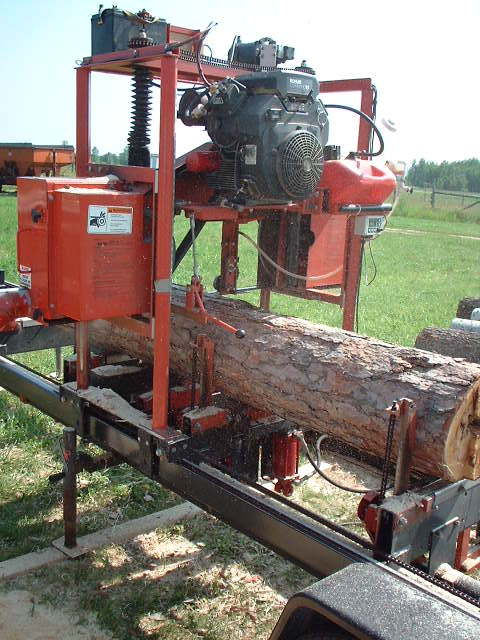
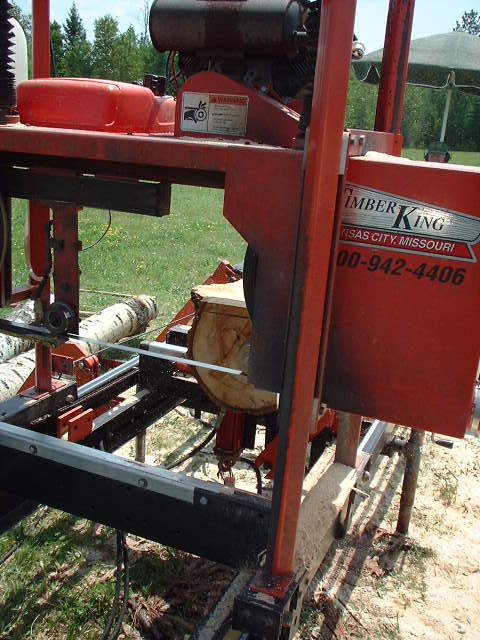
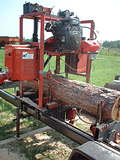
This is the first cut on a red pine log. Four cuts minimum are typically used to "square off" the log, which then is called a cant. |
|
|
|
|
|
|
|
|
|
|
|
|
|
|
 |
|
|
|
 |
|
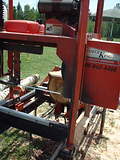 |
|
|
|
|
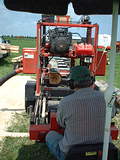 |
|
|
|
|
|
|
|
|
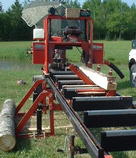
These boards are waiting for resaw. They have bark and wain on one or both sides that will be squared off. |
|
|
|
|
|
|
|
|
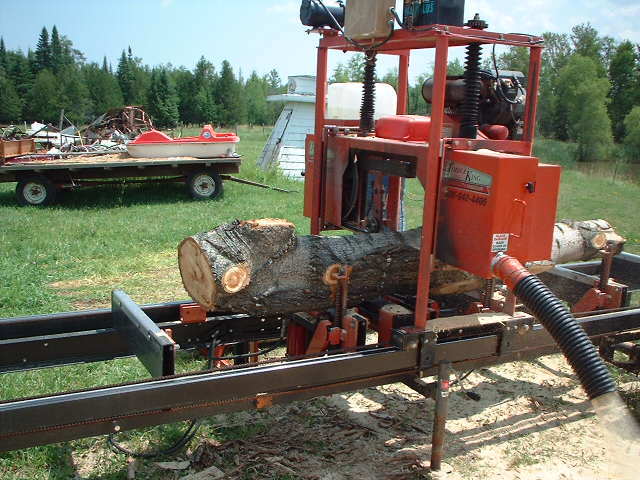
This is one ugly log. It is small on the right end and wide on the left and large branches were cut from it. Much of it will end up in the scrap pile, where it becomes firewood. |
|
|
|
|
|
|
|
|
|
|
|
|
|
|
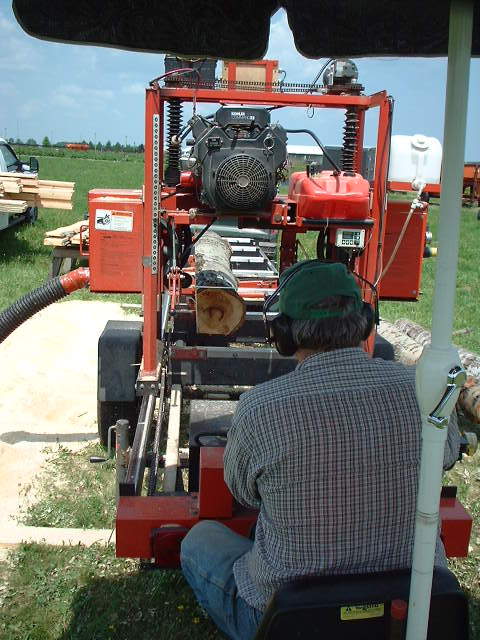
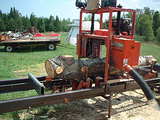
The sawyer tilts and rolls the log and then dogs it high before sending the trolley down the rails to saw a slab off. It usually takes two cuts to make a flat side. |
|
|
|
|
|
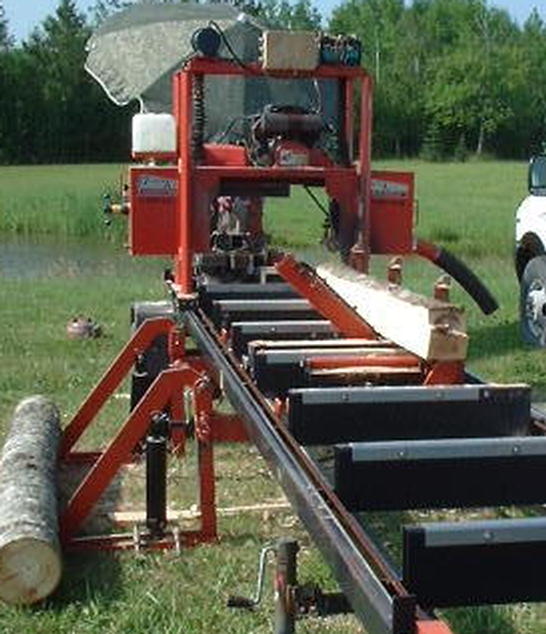
This is the far end of the log just after the band blade has emerged from it.The slab puller waits for the band to clear before moving the slab to either the scrap heap, the resaw deck or the finished lumber deck. |
|
|
|
|
|
|
|
|
|
|
|
 |
|
|
|
 |
|
|
|
|
|
|
|
|
|
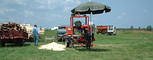
The logs and resaws are all cut. 1100 boardfeet of lumber was produced in 6.5 hours. The mill was ready to be trailered away in less than another half hour. The finished lumber was then taken to a flat level space for drying. |
|
|
|
|
|
|
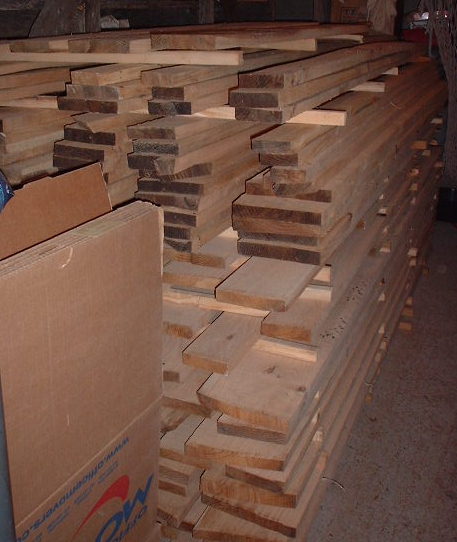
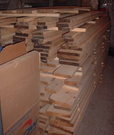
These are the new oak boards on the bottom. They are "stickered" with 1X1s between the layers and space between the boards on each layer for ventilation. Since these are in my basement. I also use a fan to transport the moist air away. It makes the whole house smell like sweet red oak for about two weeks. After that, the fan isn't required. |
|
|
|