ENC1101 Group Presentation:
MLA Format

Section I: In-text Citations
ENC1101 Group Presentation:
MLA Format
Section I: In-text Citations
In “Escapes,” the title story of one contemporary author’s book of short stories, the narrator’s alcoholic mother makes a public spectacle of herself (Williams).
In “Escapes,” the title story of one contemporary author’s book of short stories, the narrator’s alcoholic mother makes a public spectacle of herself (Williams 11).
Williams, Joy. “Escapes.” Escapes: Stories. New York: Vintage, 1990. 1-14
In Central Africa in the 1930s, a young girl who comes to town drinks beer with her date because that’s what everyone does (Lessing 105).
In a realistic portrayal of Central African city life in the 1930s (Lessing), young people gather daily to drink.
At a popular Sports Club, Lessing’s heroine finds the “ubiquitous glass mugs of golden beer” (135).
Martha’s new attempts at sophistication in town prompted her to retort, “Children are a nuisance, aren’t they?” (Lessings 115).
Biographer Paul Mariani understands Berryman’s alcoholism as one form of his drive toward self-destruction.
Biographers have documented alcohol-related upheavals in John Berryman’s life. For example, when he learned that Dylan Thomas was dying in an alcohol-induced coma, Berryman himself drank to escape his pain (Mariani 273).
Biographer Paul
Mariani describes how Berryman, knowing that his friend Dylan Thomas was dying
in an alcohol-induced coma, himself began drinking to escape his pain (273).
The story graphically portrays the behavior of Central African young people gathering daily to drink:
Perry sat stiffly in a shallow chair which looked as if it would splay out under the weight of his big body […] while from time to time—at those moments when laughter was jerked out of him by Stella—he threw back his head with a sudden dismayed movement, and flung half a glass of liquor down his throat. (Lessing 163)
One theory claims that the alcoholic wants to “drink his environment in” (Peris, Hefferline, and Goodman 193-94).
Some researchers trace the causes of alcohol dependence to “flawed family structures” (Stein et al. 318).
She shows drinking at parties as a way of life in such stories as “Escapes” and “White Like Midnight.” Thus it is matter of course that Joan pours herself a drink while people talk about whether or not they want to survive nuclear war (Williams, “White” 129).
It is no coincidence that a new translation of Euripides’s The Bacchae should appear in the United States (C.K. Williams) at a time when fiction writers portray the use of alcohol as a means of escape from mundane existence (J. Williams).
Studies that confront the alcoholism of literary figures directly are on the increase (Mariani; Dardis; Gilmore).
Among publications that discuss how to help young people cope with family problems, A1-Anon Faces Alcoholism, put out by Alcoholics Anonymous, has been reissued frequently since 1974 (117-24).
Drunkenness was such a problem in the first decades of the eighteenth century that it was termed “the acknowledged national vice of Englishmen of all classes” (Trevelyan 3:46).
Shakespeare’s Falstaff bellows, “Give me a cup of sack, rogue. Is there no virtue extent?” (1 Henry IV 2.4. 118-19).
Without the editor’s footnote in the Riverside Shakespeare explaining that lime was sometimes used as an additive to make wine sparkle, modern readers would be unlikely to understand Falstaff’s ranting: “[Y]et a coward is worse than a cup of sack with lime in it. A villainous coward!” (1 Henry IV 2.4. 125-26n).
Psychoanalyst Otto Fenichel included alcoholics within a general grouping of addictive personalities, all of whom use addictive substances “to satisfy the archaic oral longing, a need for security and a need for the maintenance of self-esteem simultaneously” (qtd. In Roebuck and Kessler 86).
People who do not suffer from addiction often can be thoughtless and insensitive to the problems of those around them. That is the message of an emotional and thought-provoking pamphlet (Hidden), whose author writes anonymously about the pain of keeping his alcoholism secret.
Section II: Works Cited Page
Part A: Books
1. Book with One Author
Mariani, Paul. Dream Song: The Life of John Goodman. New York: Morrow, 1990.
2. Book with Two or Three Authors.
Mariani, Paul, and Raymond Kessler. Dream Song: The Life of John Goodman. New York: Morrow, 1990.
3. Book with Four or More Authors
Mariani, Paul, Raymond Kessler, Mark Twain, and George Kwon. Dream Song: The Life of John Goodman. New York: Morrow, 1990.
or
Mariani, Paul, et al. Dream Song: The Life of John Goodman. New York: Morrow, 1990.
Book that has been reprinted / reissued
Mariani, Paul. Dream Song: The Life of John Goodman. 1990. New York: Dell, 1990.
4. Edited Book
Mariani, Paul. “The Early Years of John Goodman.” Dream Song: The Life of John Goodman. Ed. Tom Smith et al. New York: UP, 1990. 158-77.
5. Dictionary or Encyclopedia
Tate, Tom H. “Alcoholics Anonymous.” Encyclopedia Britanica. 1950 ed.
6. Two or More Works by the Same Author
Mariani, Paul. Dream Song: The Life of John Goodman. New York: Morrow Books, 1990.
---. Balance of Power. New York: Universal, 1991
7. A Corporate Author
Nuclear Energy Institute. Nuclear Power and the Media New York: NEIP, 1999
8. Missing Author, Date of Publication, Publishing Firm
Missing, Andrew. Things I Forgot or Never Knew. N.p.: n.p., n.d
9. A Book in a Series
Brown, Mark, Alcohol Patterns Series in Alcohol Problems 6. New York: Rutgers UP, 1985.
10. An Introduction, Preface, Forward, Afterword: Commentary in General
Smith, Karen. Forward. The Good, the Bad, and the Completely Ridiculous in American Life By Bill O’Reilly. New York: Broadway Books 2002.
11. Unpublished Works
Doe, John A. “Patterns of Light.” Diss. Boston U. 1990
Part B: Periodicals
12. A Journal with Continuous Pagination
Kling, William. “Measurement of Ethanol in Spirits” Journal on Studies of Alcohol 50 (1999): 456-78
13. A Journal Paginated by issue
Latessra, Edward J. “Pizza to Go” Monthly Pizza Journal 54 (1999): 38-39.
14. A Monthly Magazine
Hungry, Iam V. “Food for Thought” Food Magazine. May 2002: 30-45
15. A Bimonthly Magazine
Hungry, Iam V. “Food for Thought” Food Magazine. 28 May 2002:20-35
16. Daily Newspaper
Kornheiser, Tony. “The Good, The Chad And the Ugly.” Washington Post 19 Nov. 2000: A2
17. Daily Newspaper Late Edition
Kornheiser, Tony. “The Good, The Chad And the Ugly.” Washington Post 19 Nov. 2000, late ed.: A2
18. Weekly Magazine or Newspaper
Smith, Bob “Ha Ha Ha!” New York Times 13 Jan. 2000: C2
Part C: Other Sources
19. Government Publication
United States Cong. Senate. Subcommittee to Investigate Juvenile Delinquency of the Committee on the Judiciary. Juvenile Alcohol Abuse: Hearing. 95th Cong., 2ne sess. Washington: GPO, 1978.
20. Unpublished Interview
Smith, John. Personal Interview. 5 Nov. 1997
Smith, John. Telephone Interview. 5 Nov. 1997
21. Unpublished Letter
Smith, John. Letter to Santa. 5 Nov. 1997
Smith, John. Letter to Santa. 5 Nov. 1997 The Santa Archives. Northern College, Northampton.
22. Film or video
Star Wars: Episode II: Attack of the Clones. Film. Lucasfilm. George Lucas. 2 hrs 22 min.
23. Television or Radio Program
“All Good Things.” Patrick Stewart, Jonathon Frakes, Brent Spiner. Star Trek: The Next Generation. Exec. prod. Rick Berman. United Paramount Network. 23 May 1994
24. An Interview that is Broadcast, Taped, or Published
“The Broken Cord.” Interview with Louise Smith. Dir. and prod. Catherine Page A World of Ideas with Bill Moyers. Exec. Prod.
25. A Live Performance or Lecture
Wilson, Bill “Alcoholics Anonymous: Beginnings and Growth.” Presented to the NYC Medical Society. New Yourk, 8 Apr. 1958.
26. A Work of Art
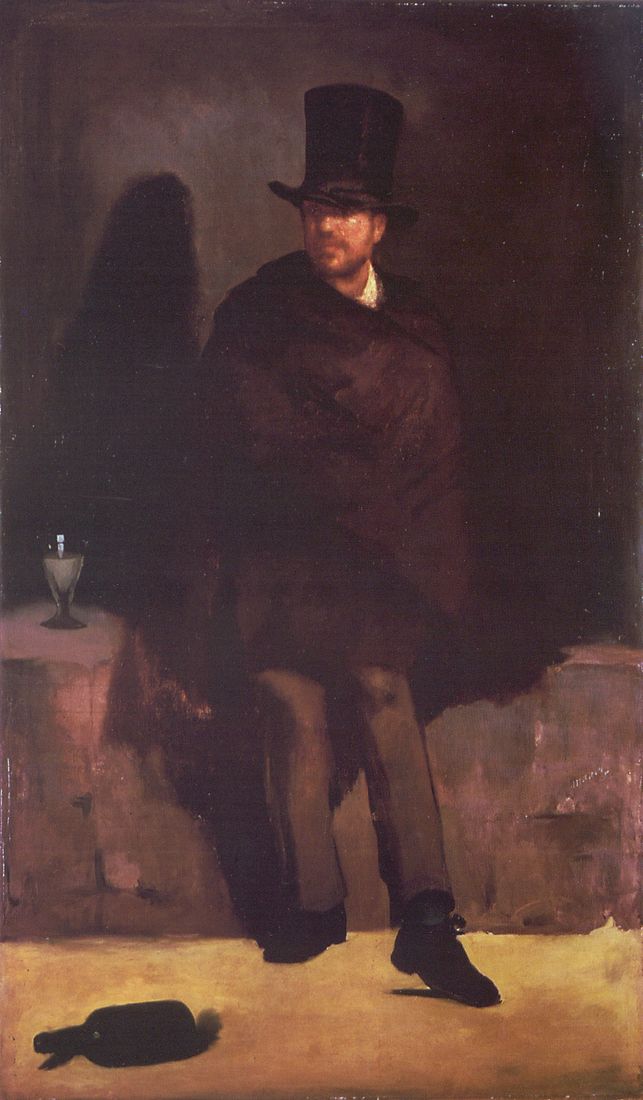
Manet, Edouard. The Absinthe Drinker. Ny Carlsberg Glyptotek, Copenhagen.
27. Map, Poster, or Graph
Roads in France Map. Paris: National Tourist Information Agency, n.d.
Section III: Electronic Sources in the Works Cited Page
1. Scholarly project
Independence Day. John Madden. 10 June 1999. 26 May 2002 <http://www.independenceday.com>
2. Short work within a scholarly project
Levy, Ralph. “The First Day.” Independence Day. John Madden. 10 June 1999.
26 May 2002 <http://www.independenceday.com>
3. Online book published independently
Right, Cliff. Independence Day. Internet Wiretap. 1997. 26 May 2002
<http://www.independenceday.com>
4. Online book within a scholarly project
Right, Cliff. The Truth Behind Independence Day. Internet Wiretap. 1997.
Independence Day. John Madden. 10 June 1999. 26 May 2002
<http://www.independenceday.com>
5. Personal or professional site
Liszt, Zach. Independence Day Website 26 May 2002
<http://www.independenceday.com>
6. Article in a scholarly journal
Right, Cliff. “The Truth Behind Independence Day.” African American Review 29.4 (1997):
26 May 2002 <http://www.independenceday.com>
7. Article in a magazine
Right, Cliff. “The Truth Behind Independence Day.” Time 1 May 2002.
26 May 2002 <http://www.timemagazine.com>
8. Article in a newspaper
Right, Cliff. “The Truth Behind Independence Day.” Miami
Herald 1 May 2002.
26 May 2002 <http://www.miamiherald.com>
9. Unsigned editorial
“The Truth Behind Independence Day.” Editorial Miami Herald 1 May 2002.
26 May 2002 <http://www.miamiherald.com>
10. Signed editorial
Right, Cliff. “The Truth Behind Independence Day.” Editorial Miami Herald 1 May 2002.
26 May 2002 <http://www.miamiherald.com>
11. Letter to editor
Right, Cliff. Letter. Miami Herald 1 May 2002. 26 May 2002 <http://www.miamiherald.com>
12. Review
Warrick, John, “Independence Day?” Rev. of The Truth Behind Independence Day, by Cliff Right. Time 1 May 2002. 26 May 2002 <http://www.timemagazine.com>
13. Electronic email
Right, Cliff. “Re: Independence Day.” Email to John Warrkick. 26 May. 2002.
14. Computer Software
Q-Notes for Windows XP. Vers. 1. Nov. 2001. Brookline: Q-Corp, Inc. 1997