 |
|
|
|
|
|
|
|
|
|
|
|
|
|
|
|
|
 |
|
|
|
Throughtout the whole vast shadowy world of ghosts and demons there is no figure so terrible, no figure so dreaded and abhorred, yet dight with such fearful fascination, as the vampire, who is himself neither ghost nor demon, but yet who partakes the dark nature and posses the mysterious and terrible qualities of both.
~ Reverend Montague Summers, 1928
If there is in this world a well-attested account, it is that of the vampires. Nothing is lacking: official reports, affadavits of well-known people, of surgeons, of priests, of magistrates; the judicial proof is most complete. And with all that, who is there who believes in vampires?
~ Rousseau |
|
|
|
Ghost, Ghouls, Werewolves and Vampires, were all these creatures just figures of someones imagination to make up stories to tell children so they would listen? I think not. History is riddled with such records of beings. The writers of past times would look at these facts, twist them to fit their own characters in a novel, this making the vampire more then it was. The argument still remains as to weather vampyre had fangs or not. Some say that it was Bram Stoker that put fangs on the vampyre. But history has accounts and reports telling what some looked like. There are many names for this creature and tales from long ago. I will outline some of these things here for you. Trying to give all the facts, I will do what I can to bring you up to date on the Vampyre straight into modern times.
~ Ombres De Nuit |
|
|
|
I saw the Count laying within the box
upon the earth, some of which the
rude falling from the cart had scattered
over him. He was deathly pale,
just like a waxen image, and the red
eyes glared with the horrible
vindictive look which I knew too well.
As I looked, the eyes saw the sinking
sun, and the look of hate in them turned
to triumph.
But, on the instant, came the sweep
and flash of Jonathan's great knife.
I shrieked as I saw it shear through the
throat; whilst at the same moment
Mr. Morris' bowie knife plunged
in the heart.
It was like a miracle; but before our
very eyes, and almost at the drawing
of a breath, the whole body crumbled
into dust and passed from our sight.
~ Bram Stoker, Dracula |
|
|
|
 |
|
|
|
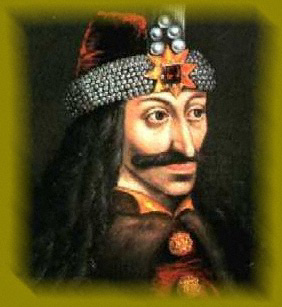
Dracula: The name of both the Transylvanian ruler Vlad Tepes ( Vlad the Impaler) and the infamous vampire of the 1897 novel by Bram Stoker. Dracula was based on the titel "Dracul", given to Vlad's father, Vlad II meaning the "Devil" or the "Dragon". (Dracula means simply "Son of Dracul". Its more proper spelling is Draculea.) Dracul was used to discibe Vlad II's activities, although there are two historical views as to why it was adopted in popular usage. the first argues that the enemies of Vlad used the term to mean "Devil", thus associating him with evil and diabolism. another theory postulates that the name came from Vlad's dragon-stamped currency and his membership in the Order Of the Dragon, which included the wearing of the dragon symbol on his clothing and on his banners. His son, Vlad II, who became known locally as Tepes, the "Impaler," apparently earned the name by being his father's son and not for any conspicuous crimes. Dracula is a name was probably not used locally, as it did not appear on the documents intended for Romanian consumption, even though Dracula was Vlad's preferred signature, Dracul having potentially evil connotations among his people. The name was expedited by foreigners, such as the Venetians, who knew Vlad as Dragulia, in an effort to attach his name to cruelty and wickedness. Virtually forgotten by the West, Vlad came to the attention of Bram Stoker, who was researching Romanian legends for his novel. Bram Stoker found Vlads name perfectly suited his vampire given the ruler's reputation for bloodthirstiness. there is however no link in romanian folklore between Vlad and vampirism. |
|
|
|
|
|
 |
|
|
|
 |
|
|
|