
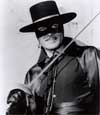
(Yah-�u Nahkts)
Epilogue
Some thought him mad, others, who knew vaguely of the tragic circumstances of this man�s appearance in Edinburgh, pitied this poor old vagabond. Whatever the case, though, no one really minded him coming there. In fact, most had already gotten used to the sight of his pitiful figure staggering onto the pier every morning just to sit pointlessly on the bench, until the bright diamonds of the stars would sprinkle across the black carpet of the night sky. He would then walk away, shoulders stooping in grief, only to come back the next morning. Nobody knew where he stayed the night or what he ate all this time, and, frankly, nobody cared. He was just � there.
This day was no different. The old man came in, perhaps a bit later than usual, and settled down on his bench, turning his dead look into the sea. There were two ships standing at the pier at that time. One, a small merchant vessel under a tricolor flag of Russian Empire that was getting ready to sail back to its port of origin � Latvia; and another, a much mightier ship, clearly equipped for cross-Atlantic sailing, was preparing to set sail toward the shores of Mexico.
The prospective passengers were slowly arriving from different parts of the city. One carriage stopped only a few feet away from the old man, and a handsome young man, dressed in linen pants and a long, free-flowing shirt bound by a hand-made belt, stepped down from the coach, turning to give a hand to a woman who followed him. She was dressed in equally simple clothes, her dress decorated only by a delicate-looking, warm-color necklace that glistened softly on her tender skin, reflecting the sunlight.
To any person, observing that young couple, it would have been clear that neither one was of simple birth � both clearly had the bearing of upperclassmen, as they walked hand-in-hand toward the Mexico-bound ship.
The old man watched them also, at first, with a kind of a dull, unseeing stare. And then his dead eyes brightened with sudden recognition. �Annabelle,� his lips moved noiselessly, as if reluctant to accept his happiness. Then he jumped off the bench with the vigor of a twenty-year-old and screamed as loud as his lungs would allow him: �Annabelle! Don Diego!�
They turned, and the time froze momentarily, as the whirlpool of feelings caught all three of them in a dizzying wave.
The sun smiled from its celestial plane, elucidating the small group on the pier with its warm, happy rays.
The J??u Nakts had passed, but the cloak of magic it wove for the two young lovers did not disappear. It remained behind, wrapped protectively around them. And it will endure, for it was borne of the greatest magic of them all � the magic love.
***
Perhaps, some would say, magic never dies. Perhaps, all one has to do is to never stop believing in it.
�Love � is an ever-fixed mark,
That looks on tempests and is never shaken;
It is the star to every wandering bark
Whose worth�s unknown, although his height be taken.
Love�s not Time�s fool, though rosy lips and cheeks
Within his bending sickle�s compass come:
Love alters not with his brief hours and weeks,
But bears it out even to the edge of doom.�
(Shakespeare, Sonnet 116)
The end