Growing
Summer Squash
|
|
 Squash
ranks among the easiest vegetables to grow, so it's perfect for the
beginning gardener. All varieties are heat lovers, but because summer
squash matures in 50 days or so, you can grow it anywhere in USDA zone 3
and warmer. Squash
ranks among the easiest vegetables to grow, so it's perfect for the
beginning gardener. All varieties are heat lovers, but because summer
squash matures in 50 days or so, you can grow it anywhere in USDA zone 3
and warmer.
|
|
|
|
|
|
|
|
|
|
|
|
|
|
1.
|
Buy squash plants at
your local nursery for planting after all danger of frost has passed;
otherwise sow seeds directly in the garden two to three weeks after the
last expected frost, when the soil temperature has reached at least 60
degrees F. (See the seed packet for depth and spacing.)
|
|
|
|
|
|
2.
|
Choose a site that gets
full sun and has moderately fertile, well-drained soil with a pH of 5.8 to
6.8. Work plenty of organic matter into the soil in early spring.
|
|
|
|
|
|
3.
|
Harden off the
seedlings, then move them to the garden when the
soil temperature is between 75 and 85 degrees F and the air temperature 70
to 85 degrees during the day, 65 to 75 at night.
|
|
|
|
|
|
4.
|
Plant the seedlings in
hills spaced 3 to 4 feet apart, two plants per hill. Set the plants into
the ground at the same depth they were growing in their pots.
|
|
|
|
|
|
5.
|
Cover young plants with
cloches or floating row covers to protect them from cold winds. Remove all
coverings when temperatures rise and, above all, as soon as flowers appear;
squash rely on insects to pollinate their flowers.
|
|
|
|
|
|
6.
|
Mulch established plants
with organic matter to deter weeds and conserve moisture.
|
|
|
|
|
|
7.
|
Give plants an inch of
water each week, and feed every two weeks with compost tea or seaweed
extract. Avoid fertilizers that are high in nitrogen; they'll encourage
lush foliage at the expense of fruits.
|
|
|
|
|
|
8.
|
Start picking zucchini, cousa and yellow squash as soon as they're large enough
to be used - usually about 6 inches, depending on the variety. Harvest
scalloped varieties when they're about 4 inches in diameter and before they
turn cream-colored.
|
|
|
|
|
|
|
|
|
|
|
|
|
|
|
|
|
|
|
|
|
|
|

|
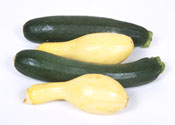
Summer squash are picked
when they're immature and their skins are tender, normally about 50 days
after planting. There are four basic types: cousa
or Mid-East, scalloped or pattypan, yellow
summer, and zucchini. Most summer squash grow on bushes (whereas most
winter squash form vines).
|
|
|
|
|
|
Summer squash perform
well in containers. Choose a bush variety and use at least a 10-gallon
container. (Half whiskey barrels are perfect.) Fill the container with
potting soil enriched with compost, keep the plants well-watered, and feed
with compost tea or seaweed extract every two weeks.
|
|
|
|
|
|
According to traditional
wisdom, radishes planted among summer squash will repel all sorts of pests.
Don't pick the radishes; just leave them in place to do their work.
|
|
|
|
|
|
|
|
|
|
|
|
|
Unless you plan to feed
the whole neighborhood, restrain yourself at planting time. Summer squash
rank among the most productive members of the vegetable patch, and they
don't store well. Six plants will easily feed a family of four.
|
|