 |
|
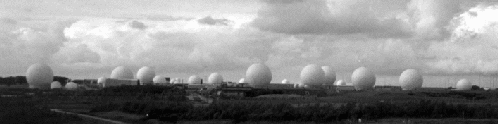
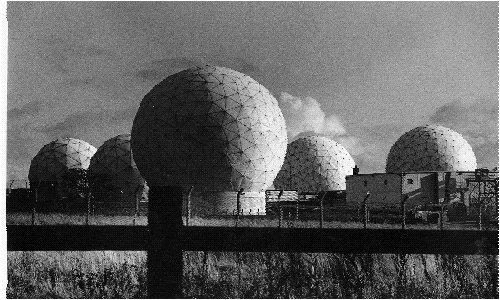
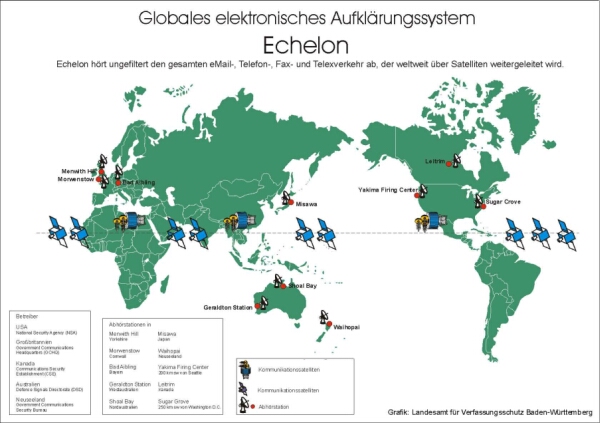
Exactly three months before I visited this exhibition, terrorists crashed 4 hijacked jetliners into targets in the USA. As a consequence of these actions we are now at war in Afghanistan. It is the political context of the work that I intend to use as the basis for my critique. It is my contention that art practice cannot, and should not, be separate from the socio-political context within which it is made. My own position is from what can perhaps best be described as a �revolutionary ecological� one. Drawing influence from Marxist, Situationist, Anarchist, Environmentalist and Primitivist critiques. The material with which I have constructed my critique of this work is primarily drawn from my interpretation of the images exhibited, the texts accompanying the work and my own experiences, as the viewer, of the context within which the work is located. I have treated Ravi Deepres� work to the same political contextualisation that I attempt to locate my own practice within. That is within a constant engagement (conscious or not) with the political and economic forces (i.e. Capitalism) that shape our surroundings and society. The work exhibited by Ravi Deepres focuses upon military installations. It is my contention that such work cannot be separated from the current political-military situation, which in turn cannot be separated from the wider socio-political context of the war and the military-industrial complex in general. Deepres has chosen to engage with an explicitly political subject matter. His work therefore contains an inherently political position. In this case failing (or choosing not to) link his work with the current context is in itself a political decision. Ravi Deepres� section of the exhibition consists of a series of large c-print photographs of military equipment. I am concentrating on his photographs of the geo-desic domes at RAF Fylingdales and his photographs of sound mirrors. In addition I will examine how the text that has been published to accompany the exhibition and distributed as part of the gallery�s �information pack� contributes to the overall political stance of the work.The text accompanying the exhibition states: �These incongruous and redundant relics have a residual presence, suggestive of an obsolete and displaced military threat.� Indeed the photographs displayed would seem to confirm this appearance; there is visible rust, and debris and waste lie scattered around the Fylingdales domes. Yet, as we can witness from the daily footage of old Soviet hardware in use in the war in Afghanistan - which appears equally rust bitten and debris strewn - such superficial decomposition need not inhibit its capacity to remain lethally �viable�. Indeed the Soviet Navy, now literally rusting into the sea, perhaps poses a more real threat than ever. Whilst the geodesic domes at RAF Fylingdales were due for demolition in 1995 when these photographs were taken, elsewhere in Yorkshire very similar domes at Menwith Hill were becoming increasingly active. Enabling the American military to monitor telephone and electronic communications as part of its global �Echelon� network. The Broken Channel exhibition sets out to examine �the theme of surveillance both personal and institutional� yet Deepres is either unaware, or chooses to ignore the continued surveillance use of structures that are both visually and geographically adjacent to his own subjects. The implication of both his images and the accompanying text is that military hardware such as the Fylingdales domes has been consigned to the dustbin of history. The information included with the exhibition describes the function of this equipment during the 1930s and 1940s. Deepres� has described his practice (on his website) as �military archaeology�, further emphasizing his belief that his subject are firmly rooted in the past, but not today. Given the daily media barrage of war and rumors of war, such an assertion is at best na�ve, at worst negligent. Whilst Deepres was arrested taking some of the photographs he exhibited, he was later invited back by the military authorities to complete his work. During the same period protests at the domes nearby at Menwith Hill were becoming increasingly common. Only months after he took these photographs four women were arrested for causing �1.5 million damage to a Hawk jet. Also during these months both Special Branch and MI5 were paying such military sites concerted attention. Attempts were made to infiltrate the �Ploughshares� group who were taking non-violent direct action at military sites. It has also been alleged that MI5 were using agents provocateurs to try and incite UFO researchers into also invading RAF and USAF bases in the UK. �Opposition to the base has been active since the 1950s. Most of what we know about the base has been put together from various sources by Duncan Campbell. One important source of information has been that obtained from within the base by peace campaigners and from their continuous observation and vigilance. There have also been demonstrations, peace camps, non-violent blockades, trespass, questions in parliament, letters to the press and radio and TV coverage. And the protests continue�." Information, quotes and pictures from the Menwith Hill Campaign website: www.gn.apc.org/cndyorks/mhs/ None of this (which it should be reemphasized was happening simultaneously to Depres� work) is mentioned, even in passing, in the images or accompanying texts. Yet, a link to the website of Duncan Campbell (a journalist instrumental in publicizing the activities at Menwith Hill) is provide at a website (www.blackout.org.uk) that is advertised in the gallery text as containing Deepres� work. It therefore seems barely credible that the contemporary controversy over these military sites has been ignored through ignorance, rather its seems likely to be a conscious omission by the artist. This is, whether intentionally or not, a political omission. Indeed this theme is echoed throughout the work. Deepres seems eager to decontextualise his subjects. Stressing their existence in the past tense to perhaps give him the historical space necessary to accomplish this. His work is claimed to �evoke the pathos of other disused surveillance systems� an emotion surely only obtainable if the continued, indeed increased, use of such hardware is ignored. Would it be possible to evoke the �pathos� of �disused terrorist systems� (such as good old fashioned sky-jackings)? I think not. Such historical distancing seems particularly dangerous in the light of the �Emergency Anti-Terrorist Legislation� that is being rushed through by the Government. Powers that would no doubt be exercised at sites such as Menwith Hill. Particularly galling is the way that this military hardware is described as �containing a sense of secret influence which (is) both beautiful and unsettling�. Again, only if such are completely stripped of context can such a statement be made. Throughout the exhibition the work evokes such technology as somehow alien to our society. Certainly the imagery of these sites connects with our experience of similar dystopian technology in sci-fi films. Yet, it was very real, and remains very real. The military-industrial complex is an integral part of western economies (as it was equally in the Soviet economies). The end of the cold war has not changed this. Deepres� photographs of sound mirrors particularly evoke this sense of the alien intruder in British society, that somehow it is quite �cricket� to have military surveillance. The accompanying text claims: �these structures sit uncomfortably upon a changed suburban landscape� Perhaps, but only if one accepts certain received ideological assumptions about the �British Way of Life� (another dominant theme in the media at the moment). Somebody has to work within the military-industrial complex; technicians, operators, designers, clerical staff etc. These people are not going to be living in �the slums of workers districts�, as Ulrike Meinhoff put it, nor in the grand country homes of the ruling class. As archetypal members of the middle classes they are likely to live in middle class housing � precisely the sort of suburban houses that Deepres attempts to contrast with the �alien� military technology. Deepres� had no control over the fact that his work was going to be exhibited during a state of war, and during a period where this meant an increased focus upon military hardware, surveillance etc. The current situation provides an unwelcome reminder that we do not live a time of peace now that the cold war is over, but rather the continued existence of military technology that Deepres� suggests is long gone. I would rather Deepres� assumptions were correct and we could experience such sites as merely historical curios that denuded of their oppressive function can be appropriated as art subjects. Sadly he is wrong. |
 |
 |
 |
| Broken Channel(Ravi Deepres) Cornerhouse Gallery, Manchester |