| When the water is about 55 degrees or warmer, a heavy feeding binge occures to prepare for the spawning period. Bait fish are seldom plentiful this time of year,so bass spend a lot of time cruising in shallow water in search of food.The sun is at a low angle, so light penetration does not force the largemouth deep. All this adds up to a real opportunity for the angler hoping to connect with a trophy fish. Even so, it's important to know where to look for bass. Big bass are the easiest to find in farm ponds or small lakes where depth seldom exceeds 10 ft. In these situations, fish move shallow very early in the yaer, since small volumes of water warm quickly. Small impoundments make fish accessible even from shoreline. Boats and fancey equipment aren't needed for this kind of fishing, and best of all, it is readily availible.Look for largemouth on the windy banks of these smaller waters. Several days of wind from a given direction tends to pile up an area of warm water that increases the activity of microorganisms and draws bait fish. This in turn attracts bass. Largemouth tend to congrigate along the "mud line area," an area where wave action roils water over shallow bottoms. There is often a visible distinction between clear, deeper water and this murky area. Bass hide along this muddied water to dash out and grab a passing meal.The mud line is an important casting zone. In reservoirs,finding late winter bass is harder. Largemouth leave wintering areas in deep channels to migrate toward spawning locations in creeks or coves. Durring this process, they often "stage" on primary or secondary points that connect deep and shallow water. Best areas to look are on the northwest side of a lake where there is protection from sharp cold fronts.Points having cover along an abrupt drop off are ideal, since bass will school in the cover during nasty weather cycles. In moderate weather, they will follow the point into shallow water to feed. A boat and electronic fish finder are essential for this type of fishing. Topographical maps are also helpful in identifying potental largemouth migration routs. Look for offshore humps and islands near coves or creek channels. Bass will often stage on points of these structures where access to deeper water is available. Water warms along the island shallows first, making them prime largemouth feeding sites. Submerged grass beds or weedy points next to deep channels are also ideal. In stable weather,late winter bass tend to follow predictable daily patterns. Find them one day and exspect to find them the next. Cold water bass are not prone to chase food. Because of this, slow enticeing presentations are best. Late winter bass fishing is a great way to start the new year. oklahoma city times author, n/a |
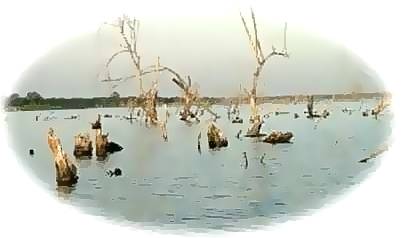 |
| Late-Winter conditions provide a Prime Time for Big Bass. |
 |
|
 |
|