Visual communication can include many different forms. These include posters, advertisements, charts, graphs, television and computer graphics. The Internet also makes use of graphics in order to communicate with it's users.
POSTERS
Posters can be flyers or large billboards. However they all have the same objective of getting across a simple, yet clear message.
Posters are used extensively because:
-
They are cheap to produce
-
They convey their message immediately
Posters, however are sometimes referred to as junk mail and are often not read.

ADVERTISEMENTS
Adverts are used extensively in magazines, television, newspapers and radio.
Advertisements fall into one of three categories:
-
Informative Adverts.
These
attempt to inform the potential customer about a product.
-
Persuasive Adverts.
These are used with the aim of persuading the potential customer
to buy a certain product.
-
Generic Adverts.
These are used to promote a common product or service, not a
specific product. For example, 'Buy Northern Ireland Products' or
'British Beef is Best'. These adverts are sent out by an industry
rather than a particular firm.

CHARTS AND GRAPHS
Charts and graphs are an excellent way of presenting numerical data.
TABLES
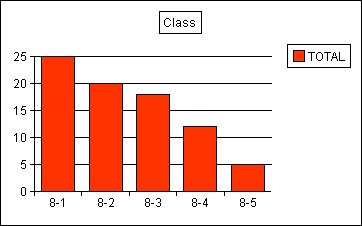
The following table shows the number of pupils in each class who have full attendance from September to December
|
Class |
Boys |
Girls |
TOTAL |
|
8-1 |
10 |
15 |
25 |
|
8-2 |
18 |
5 |
23 |
|
8-3 |
9 |
15 |
24 |
|
8-4 |
5 |
8 |
13 |
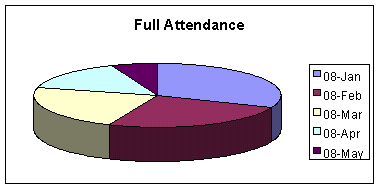
Graphs can now be created using spreadsheet programs and provide the computer user with a very professional method of visual communication.
Most spreadsheet programs provide the user with a variety of graphs:
-
Line graph
-
Scatter graph
-
Pie chart
-
Bar chart