Electronic communication is playing an increasing role in business.
For example, the Internet provides vast amounts of electronic information which can be of use to a business. It may be that an employee has a direct Internet address of a supplier and uses it to access prices, delivery times, etc. Naturally they may look at other information which is not needed, e.g. what’s on TV that evening
Some people use electronic mail (E-mail) on a regular basis, this is an informal electronic form of communication. They may use it to communicate with suppliers quickly and efficiently, but may also send personal messages, again wasting the businesses time and resources.
Electronic Communication includes the following:
-
Pagers,
-
Electronic Mail, (email),
-
View Data,
-
Facsimile, (FAX),
-
Video Conferencing.
Electronic Communication is a reliable, efficient and effective way in which individuals within business can communicate.
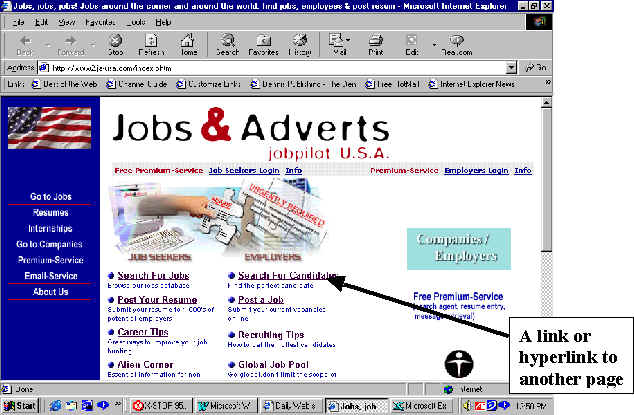
Each Web page contains links to other pages of the Web. Each page has a unique address called a URL, (Universal Resource Locator). A URL looks like this: http://www.belfasttelegraph.co.uk
Information sent can include text, sound, video and pictures such as photos or diagrams.
How can the WWW benefit the Electronic Office?
-
Businesses can site up their own web site to advertise their products. This automatically makes the world their potential market. More sophisticated web sites allow customers to order online where they can place their order on the web.
-
Businesses can view their competition.
-
Businesses can order products or gain required information from the vast number of pages.
Drawbacks of using the WWW in the Electronic Office.
-
Networked computers can pass on viruses which can result in the loss of information and/or the failure of some computer systems.
-
The WWW contains undesirable and unsuitable information. This can lead to the misuse of the WWW.
Benefits & Drawbacks Of Email
How can email benefit the Electronic Office?
-
Email is less expensive than ordinary post.
-
Emails can be sent and received in seconds, even to the far side of the world.
-
Emails can include text, pictures, diagrams, voice and even video files.
-
A standard email can be sent to a group of users, rather having to address and print out separate letters to each individual user.
Telephone or Email?
It is difficult to see the telephone being replaced totally by electronic mail no matter how much its use increases. The telephone provides direct one-to-one contact, its personal and feedback, (i.e. answers to questions you may have) is direct.
The use of the telephone is also on the increase with the rapid rise in mobile phone use. The benefits that are provided by both the telephone and email facilities would seem to make it pretty much essential that both services are available in the electronic office.
How can the WWW benefit the Electronic Office?
-
Businesses can site up their own web site to advertise their products. This automatically makes the world their potential market. More sophisticated web sites allow customers to order online where they can place their order on the web.
-
Businesses can view their competition.
-
Businesses can order products or gain required information from the vast number of pages.
Drawbacks of using the WWW in the Electronic Office.
-
Networked computers can pass on viruses which can result in the loss of information and/or the failure of some computer systems.
-
The WWW contains undesirable and unsuitable information. This can lead to the misuse of the WWW.
Benefits & Drawbacks Of Email
How can email benefit the Electronic Office?
-
Email is less expensive than ordinary post.
-
Emails can be sent and received in seconds, even to the far side of the world.
-
Emails can include text, pictures, diagrams, voice and even video files.
-
A standard email can be sent to a group of users, rather having to address and print out separate letters to each individual user.
Telephone or Email?
It is difficult to see the telephone being replaced totally by electronic mail no matter how much its use increases. The telephone provides direct one-to-one contact, its personal and feedback, (i.e. answers to questions you may have) is direct.
The use of the telephone is also on the increase with the rapid rise in mobile phone use. The benefits that are provided by both the telephone and email facilities would seem to make it pretty much essential that both services are available in the electronic office.

|
VIEWDATA
Viewdata has been available for many years. It is probably better known as Teletext. Viewdata has been available to users on special television sets. Viewdata systems provide users with electronic pages of information. These can be on a range of subjects such as, sport, news, horoscopes, etc. |
|
Advantage Regularly updated and is therefore up-to-date and accurate. Disadvantage Not interactive, (i.e. the user cannot interrogate it or ask it questions).
FACSIMILE, (FAX). A fax is the transmission of a printed or written message from one fax user to another using the telephone network. Disadvantage The quality of the transmitted document is quite poor. ADVANTAGES Portable and cheap to use.
DISADVANTAGES They are not interactive and therefore there is no confirmation that the recipient has received their message. ELECTRONIC MAIL, (EMAIL). Email is becoming a more popular method of communication. As more businesses have the facility to send and receive email the opportunities for businesses to communicate via email increases. To send and receive email you must have: a modem or ISDN line a computer email software such as Microsoft Outlook Express
|
|
DISADVANTAGES
They are not interactive and therefore there is no confirmation that the recipient has received their message.
|
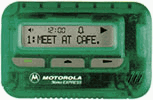
PAGERS A pager can be carried around in a bag or pocket and can be used to send and receive short messages. ADVANTAGES Portable and cheap to use. |
|
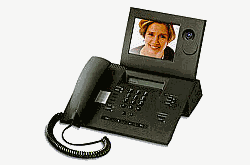
VIDEO CONFERENCING Used mainly by large companies with nationwide branches. Video conferences can link up company employees in different locations. Users can see, hear and interact with their colleagues via a television set.
|