The Theology of the Secular
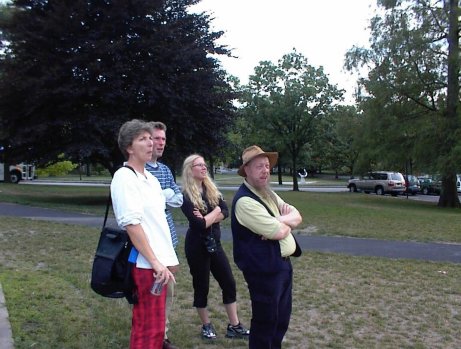
A part of our orientation for our Odyssey was naturally to explore the spatial location of our origin. Thus we undertook an exploration of the Cornell University campus. Here we are orientating ourselves:
In wandering the contours of the campus we were struck by the strong semiotic signals emitted from carefully stylised buildings. For us as business school academics we were naturally especially interested in the Johnson School of Management.
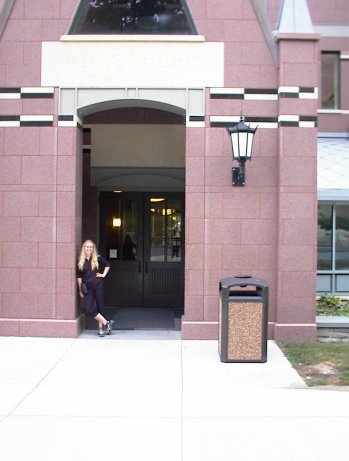
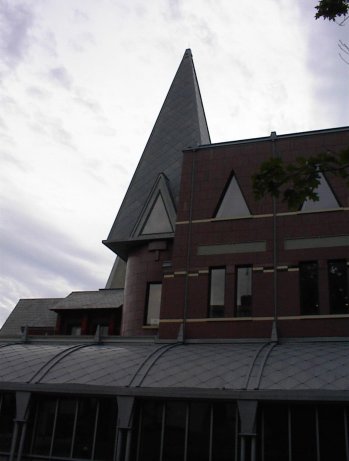
Every epoch has its cathedrals to house the dominant theology of its time: the pyramids of ancient Egypt, the Renaissance cathedrals, Fort Dunlop and Canary Wharf. In the secular post-industrial age the cathedral of knowledge is the business school. At Cornell the aesthetisization of space creates a semiotic of the business school, designed to incorporate all religions and cultures within the global economy:
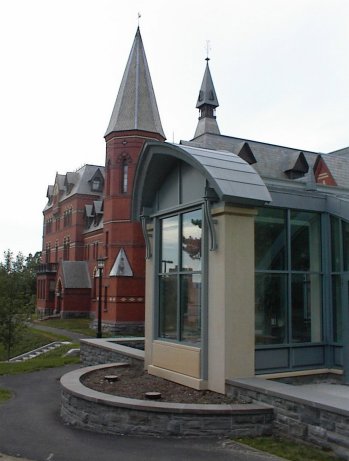
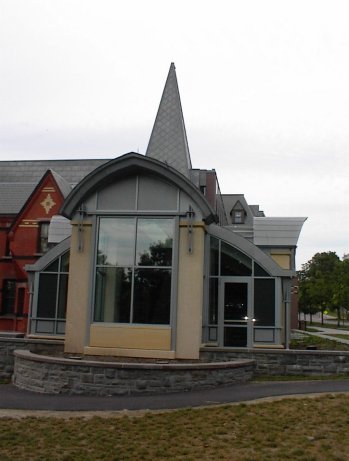
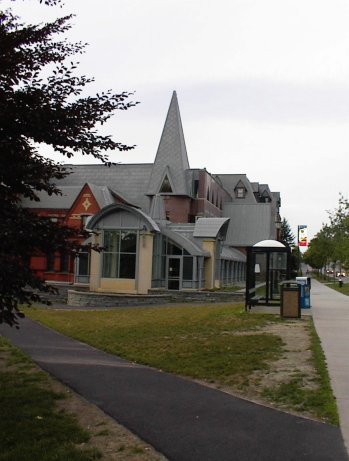
This is extended through the buildings around the school:
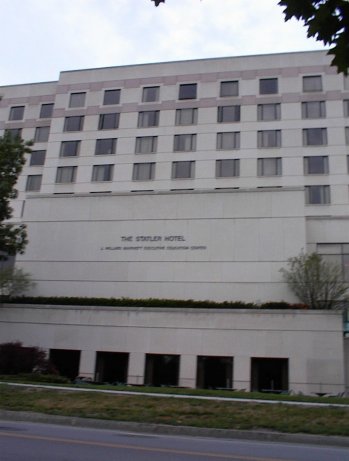
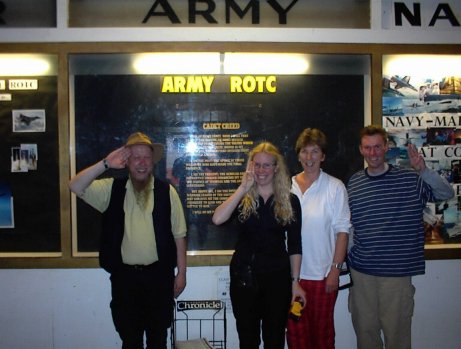
In continuing our journey of exploration and interpretation, we were next struck by the semiotic of the Military Science building: a huge, solid, austere edifice the machine metaphor:
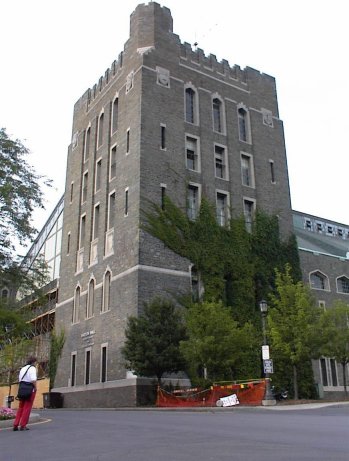
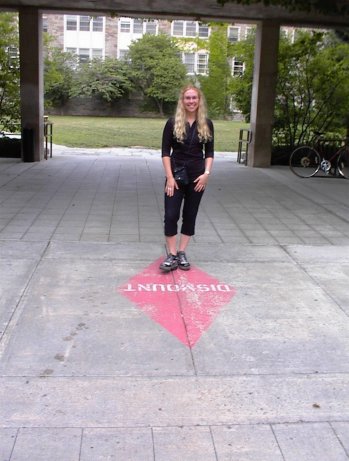
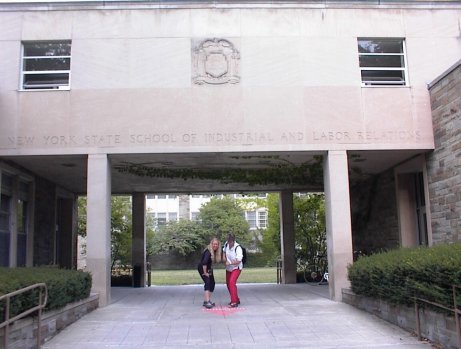
For Anne-Marie and Di, in particular, the Industrial Relations building was important:
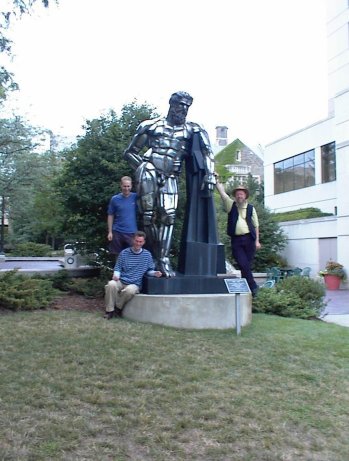
Whereas, for the �chuckle brothers� Hercules was symbolic:
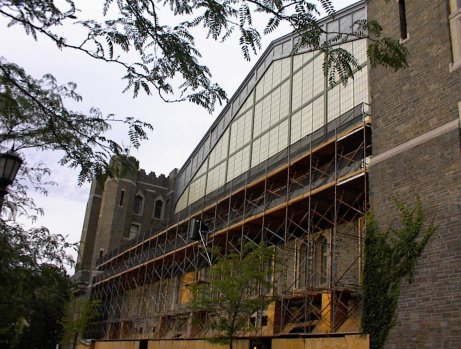
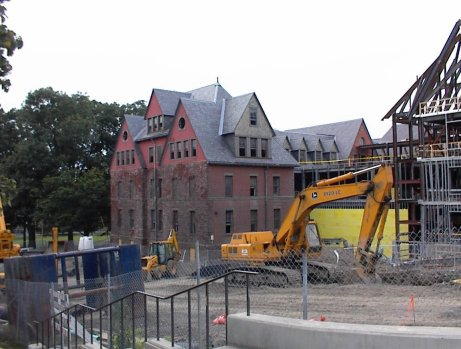
The Cornell campus is a pastiche of different architectural styles. Modern steel constructions act as the shell for architects to carefully create the Ivy League imagery:

This orientation fuelled our interest in the uses of imagery and space on a university campus. It has provided the impetus for further work in this area