Brought to Istanbul in 1555 by two Syrian traders, coffee became known as the milk of chess players and thinkers. By the mid 17th century, Turkish coffee became part of elaborate ceremonies involving the Ottoman court. Coffee makers with the help of over forty assistants,
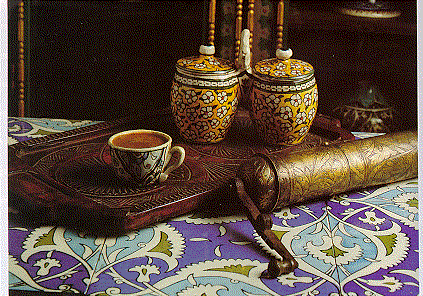
Although many of the rituals are not prevalent in today's society, coffee has remained an integral part of Turkish culture. Today, Turkish coffee houses continue their role in society as a meeting place for both the cultured citizen and the inquisitive traveler.
Derived from the Arabica bean, Turkish coffee is a very fine, powder-like grind. Turkish coffee has six levels of sweetness ranging from very sweet to black. As the coffee begins to heat, it begins to foam.
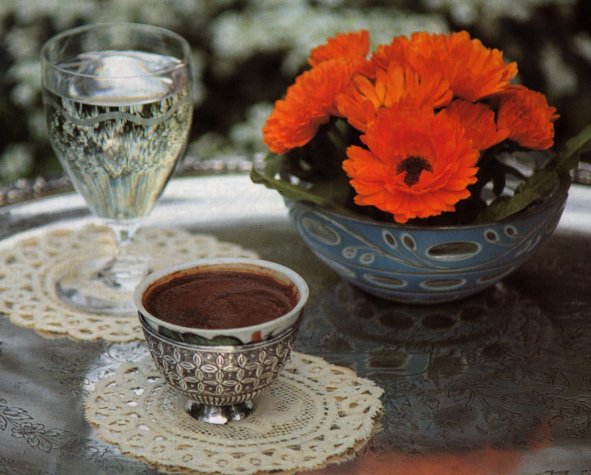
Turkish coffee is served hot from a special coffee pot called cezve. Tradition states that after the guest has consumed the coffee and the cup is turned upside down on the saucer and allowed to cool, the hostess then performs a fortune reading from the coffee grounds remaining in the cup. Rich in tradition and flavor, Turkish coffee remains a favourite today.
Fortune Telling with Turkish Coffee
Symbols and their meanings:
Angel: Good news and happiness aproaching.
Ant: Determination in an activity will bear fruit.
Baby or Cot: Minor worries will occupy you.
Ball: Someone known to you involved with sport or short periods of luck and misfortune.
Beans: Financial difficulties.
Bear: Think careful about new decisions.
Bee: You will make new friends and hear good news.
Beetle: A difficult task will test your mettle.
Bell: Surprising news.
Candle: Another person will help you succeed.
Chain: A legal union,a marriage.
Chair: An unforeseen guest.
Circle: Success coming around.
Claw: Enemy.
Knife: Danger ahead.
Devil: Danger approaches.
Dog: Good, reliable friends.
Eagle: Great improvements in your life.
Ear: Surprising news.
Earring: Error. Careful explanation needed.
Egg: Wealth and success.
Eye: Envy, jealousy.
Face: Concern for you by a loved one.
Fish: Life will become richer, happier and more attractive to you.
Fruit: Prosperity in your endeavours.
Gate: Opportunities for success.
Hand: Friendship and family.
Heart: Love, faith and trust.
Horse: Strength, independence.
Key: Doors opening for you.
Letter: Good financial news coming.
Lines: Difficult progress.
Man: Visitor.
Owl: Disreputable person. Scandal.
Pear: Financial security.
Ring: Marriage.
Scissors: Arguments at home.
Spider: Unexpected money on its way.
Sun: Power, success.
Sword: Enemies will fall.
Tree: Changes for the better.
Triangle: A change coming.
Wheel: Fortunes will change.