BACK TO HOME
Coastal
upwelling and the development of hypoxic dead zones are not removed from the
effects that climate change is having on the Earthís dynamic climate
systems. In fact, it has become
increasingly evident that in light of climate change they may be inextricably
linked. The relevance of climate
change in considering the development and implications of hypoxic dead zones was
only first suggested in 1990 by Andrew Bakun. The important insight he made almost 20 years ago was that
the increase of atmospheric stocks of CO2 and other greenhouse gases
could lead to increased coastal upwelling. If increased greenhouse gas emissions forced increases in
temperature, the continents would warm, increasing the onshore-offshore
atmospheric pressure gradients.
This would then result in stronger winds and accelerated upwelling
(Bakun, 1990).
Since then, the link between climate change and coastal
upwelling (and thus, dead zones) is being more rigorously looked at.
Much
of what Bakun and others has suspected has come to fruition, and some things
are worse. Anoxia has not been limited
to deeper waters. The increased
rate of water renewal due to stronger upwelling prevents herbaceous zooplankton
from maintaining populations.
Phytoplankton populations, already benefiting from the nutrient-rich
waters provided by the intensified upwelling systems, now grow unchecked by
their traditional predator; herbaceous zooplankton (Bakun, 2004).
So
whereís the anoxia? Well, H2S,
aside from being extremely poisonous, has the ìeffect of stripping the
dissolved oxygen from the water column as it moves upward through it,î (Bakun,
2004, p1016). Anoxia caused by
such means is blamed for, ìthe loss of 80% of the regional stock of Cape hake
(Merluccius capensis), normally the basis for Namibia's most valuable fishery,î
(Bakun, 2004, p1016).
The diagram below illustrates the chemical and biological dynamics of a coastal upwelling zone under conditions of moderate and intensified upwelling (the diagram also illustrates a scenario stipulating a healthy sardine population; see Solutions):
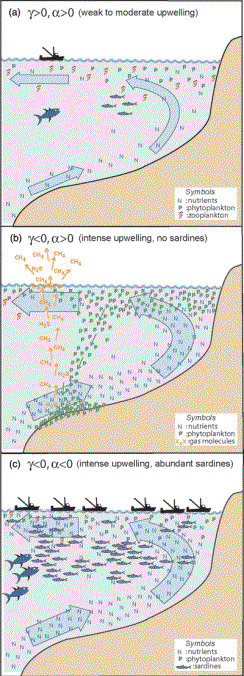
(Graphic taken from Bakun, 2004, p1019)
In addition to this, the CH4 released eventually finds its way into the atmosphere to serve a very important role; as a greenhouse gas.
The
upwelling region off of Namibia currently has the highest known rate of water
renewal of all of the worldís major upwelling regions.
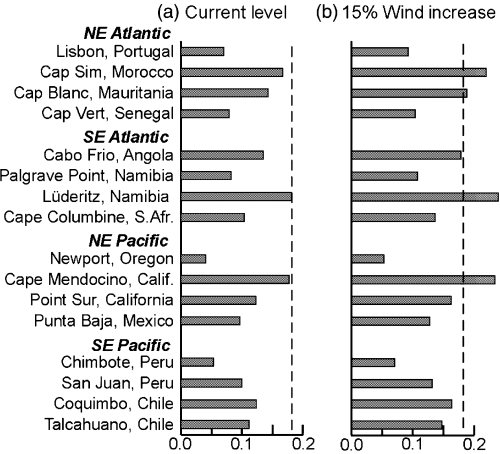
(Graphic taken from Bakun, 2004, p1018)
In conclusion, global climate change and its resulting temperature increases pose a very real risk of enhancing current productive upwelling zones and converting them into deoxygenized dead zones.