| Front | ||||
Offaly Anti-War Movement |
||||
|
|
||||
| Today's Main Developments 17/3 | ||||
|
Baghdad quietly braces for war (BBC World News)
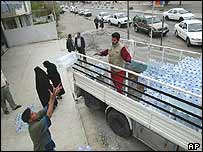
Enormous queues have formed at petrol stations as thoughts turn to escaping the city, which is likely to be the stage for some of the fiercest fighting. People are also reported to be mobbing pharmacies for medications - an indication of the rising level of panic. Shops and schools remain open, as if Baghdad's citizens are hoping daily routines will guard against war. But the sense of normality that Iraqis have maintained over the past few months is starting to evaporate, correspondents say. Sand defences Military preparations, meanwhile, appear only half-hearted. Soldiers have laid sandbags outside government buildings and road junctions, but no tanks or anti-aircraft artillery are visible on the streets. Our correspondent, Andrew Gilligan, says despite driving out to the city limits - the furthest he has been allowed to goo - he has seen little sign of military preparations.That could indicate that authorities are trying to keep their planned response to the attack a secret, or that equipment is being kept further outside the city. Rising prices With the last Gulf war still vivid in many memories, ordinary citizens are readying themselves as best they can. The price of water has risen from 2,000 to 4,000 dinars a bottle as demand rises, reports the French news agency AFP. But many are not bothering to buy perishable items, such as meat, which will rot as soon as power cuts render refrigerators useless.
Government ministries meanwhile have moved computers, faxes and other valuable equipment out. Embassies have reduced or evacuated staff - or are about to - and the UN has cut back staff from 1,000 to 200, notably affecting the humanitarian programmes on which Iraqis depend. The state system of food rationing is particularly vulnerable to attack, giving Iraqis out stockpiling provisions an added urgency.
|
||||