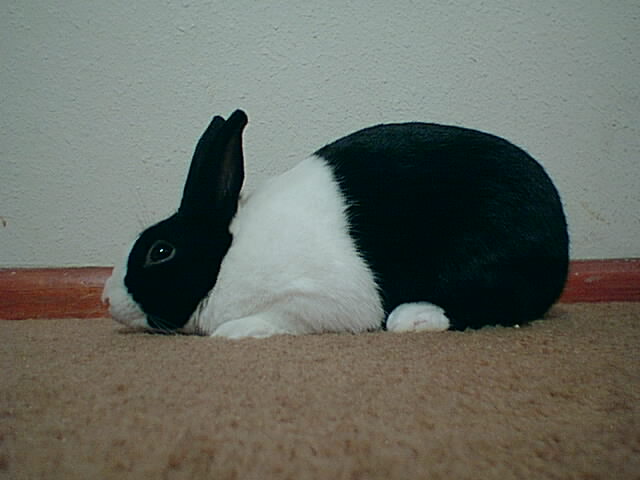
| An ideal marked Dutch |

|
 |
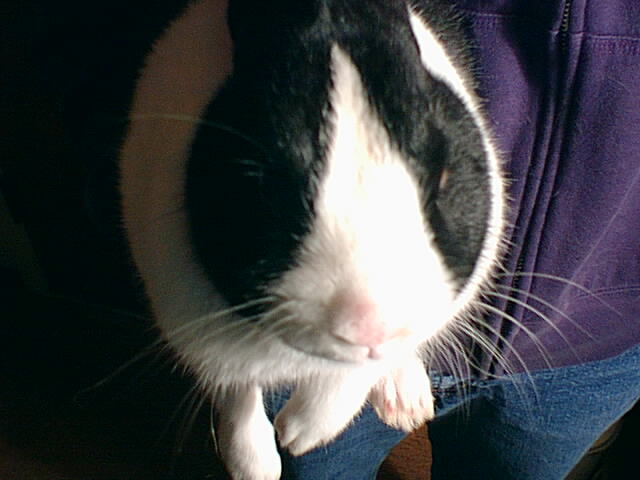 |
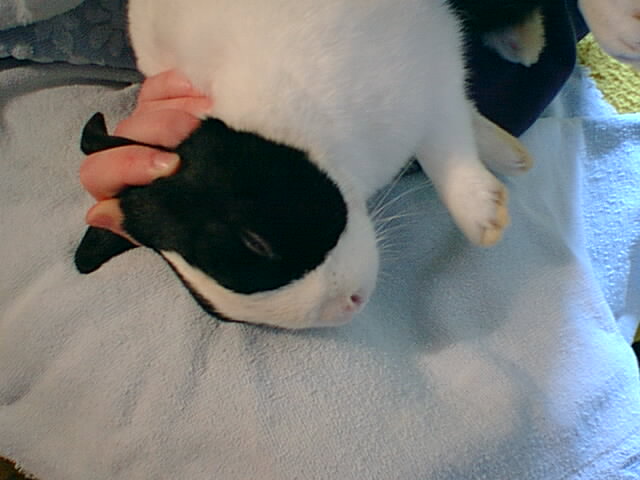
| Blaze The Blaze is the white portion of the head. It should be medium wide and wedge shaped, covering the nose, whisker bed, and tapering up to the ears, where it joins the hair line. The blaze is to continue to the cheeks and should be well rounded and follow the jaw line after passing the whisker bed. |
 |
 |
 |
 |
| Cheeks Cheeks are to be full, even, and well rounded, not angular or ragged. Cheeks are to be carried to the whisker bed, but not into it. They are to follow the jawbone, meeting the line of the neck, and to be free from drags into the throat or mouth. |
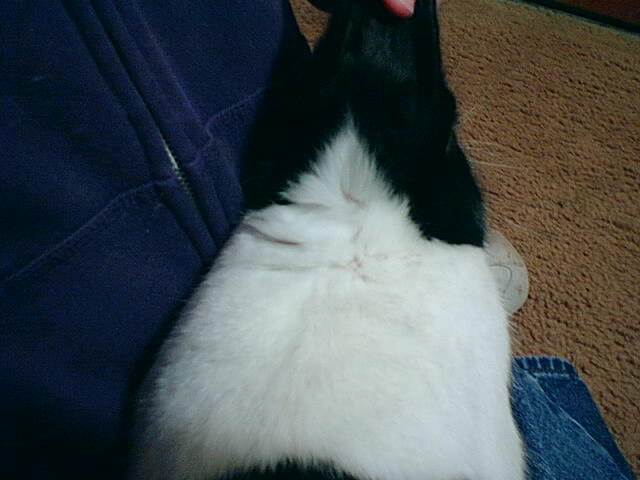
| Neck The neck is that portion of the collar behind the ears. It should be wide, wedge shaped, clean, and even. Neck is to be free from drags of the ear color into the collar, or white of the collar running into the base of the ears. Animals possessing a full neck will not receive the 5 points allotted for the neck marking. Dirty necks will be faulted according to the seriousness of the fault. |
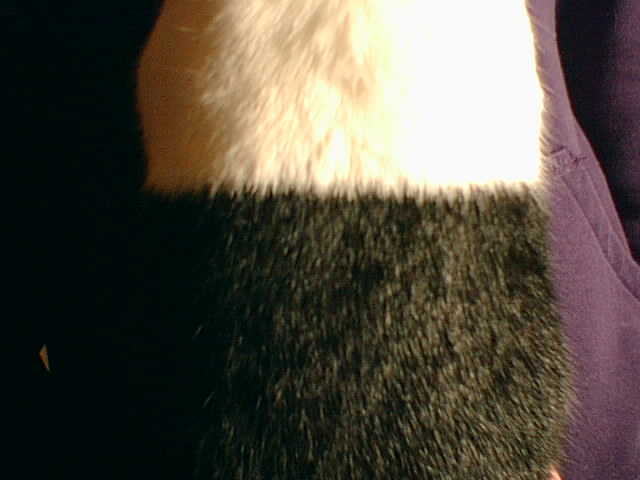
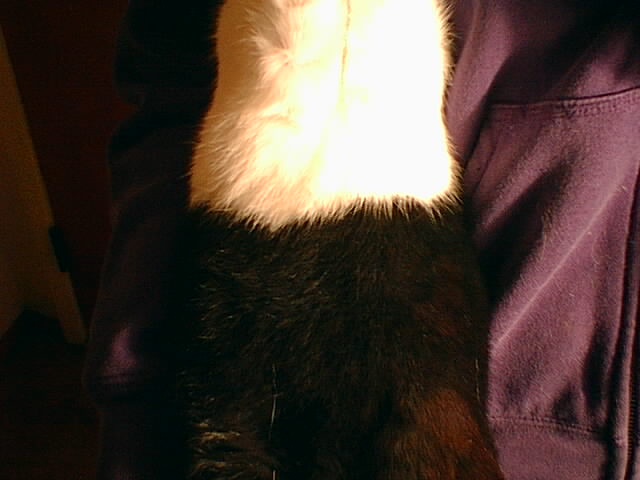
| Saddle The saddle is the point on the upper body where the white fur ceases and the colored fur begins. The division should be just behind the shoulders and form a perfect circle around the body, with the undercut. |
| Undercut The undercut refers to the under part of the body. This is a continuation of the saddle marking and it should run in an unbroken line close behind the forelegs, but not touching them. |
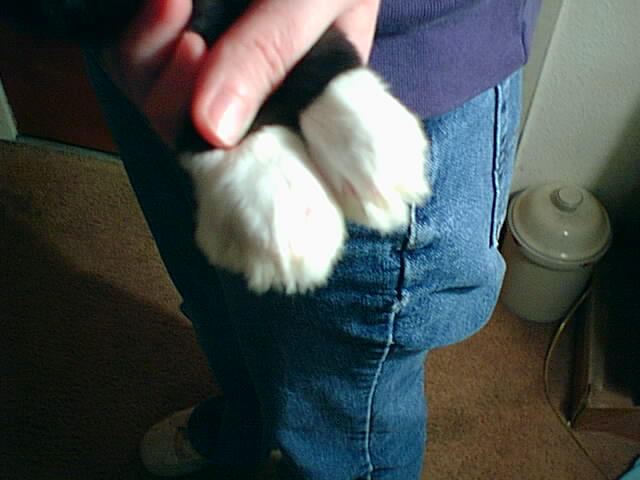
| Stops The hind feet are to have white markings from the toes to a point one third the length of the foot, as measured to the point of the hock. They should be equal in length, clean cut on both feet, and form perfect circles around the feet where the white of the stops meets the body color of the leg. Hind toes may be separated to identify a split stop. |
| (Source: Standard of Perfection) |
 |
 |