|
|
THE VW TRANSPORTER - A BRIEF HISTORY |
|
|
NICKNAMES: |
THE BULLI OR BULLY / THE KOMBI / BREADLOAF |
|
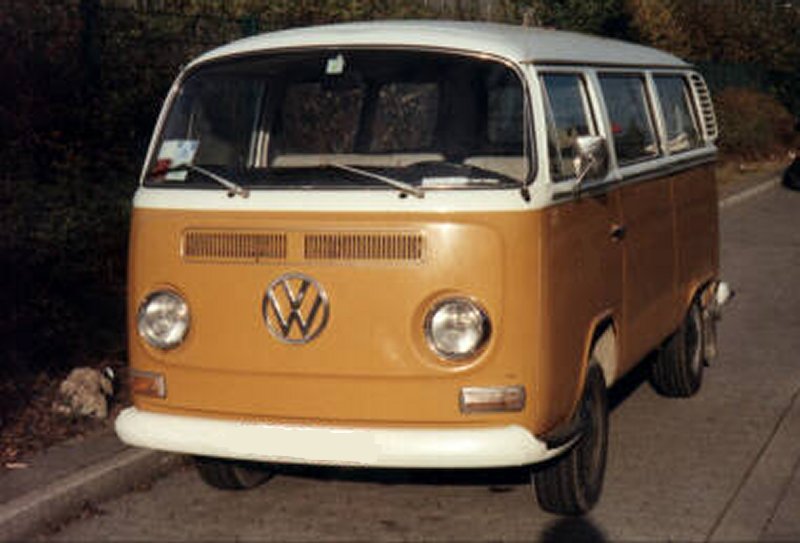
The first drawings of the Transporter were done in 1947 by a Dutchman called Ben Pon. It took three years from drawing to production. But in 1950 in Wolfsburg West Germany a Type 2 rolled off the production line. The Transporter evolved over the years and was constantly improved on. These were named the T1 to the T5. The "T" stands for Transporter and not Type as many people think. The Transporter was one of the first commercial vehicles to place the driver above the wheels. This was like many things on the Transporter, copied by other manufacturers. Another concept the Transporter had a hand in developing was the people carrier. Converting a commercial vehicle into neat trimmed mini bus. Even the Hippie era took the Transporter on as a symbol of everything not American, boxy and cheap to buy. Nowadays the the 1950-1967 Transporter has became hot property and sell for a small fortune. The first generation with the split front window which nowadays is commonly known as the Microbus, was produced up until 1967. From 1950 to 1956 the T1 was built in Wolfsburg. Since then it has been built in Hannover. But the Americans being Americans spell it with one N. The T1 started off with a 1.2lt , 25 horsepower engine. The 36 horsepower started in 1955 and the troublesome 40horsepower in 1959. This engine was discontinued and part availability is virtually zero. If you have a running 40 hp engine its gold dust. In 1962 a successful launch of the 1.5lt, 42 DIN engine Transporter saw the 1.2lt being discontinued. German production stopped after the 1967 model but the T1 was in production in Brazil until 1975.
1968 saw the introduction of the Type 2. This model was built in Germany up to 1979. However, Mexico took over production in 1980 and Brazil in 1996. Model before 1971 are often called T2a and after this, T2b. The T2 lost its split screen and was larger and heavier than its predecessor. It had a 1.6lt engine and 47 DIN HP. Changes were also made to the rear suspension and transfer box lay out. The T2b was gradually introduced over three years. Changes such as Disc Brakes, Wheels, Brake ventilation holes and flatter wheel rims. The most significant change was the 1.7 to 2.0lt engines and the redesigned rear end to house it in 1972. This engine is commonly known as the Type 4 engine as it came from the type 4 car. Don't look for a Type 2 or 3 engine as there isn't one. 1973 and if you got the Type 4 engine you could opt for an Automatic Transmission. 1973 also saw the transition to the T2b complete. The Type 4 engine was enlarged to 1.8lts in 1974 and 2.0lts in 1977. The engine were engineered for low end torque and not horsepower. This is the same with all Transporter development. Late in the T2 design life a Four Wheel Drive version was built and tested but this never went into production until 1985 as a T3.
The T2c with its slightly higher roof was still being built in Mexico until 1997 and Brazil up until this day (I think). The Mexican market requires water cooled engines but the Brazilian market has air cooled engines. |