

contributed by Nancy Driscoll
Before 1922 and the influence of Tom Slick, there was no one school which all the area children could go. The little farmhouses and the oil field shotgun houses were scattered in all directions and far apart. Parents were eager for their children to attend school and the only solution to this problem was the setting up of small schools wherever there were enough children to make this plan worthwhile. So, before 1922, when increased population required and made feasible a centralized school, the best that could be done was the setting up of small, neighborhood schools.
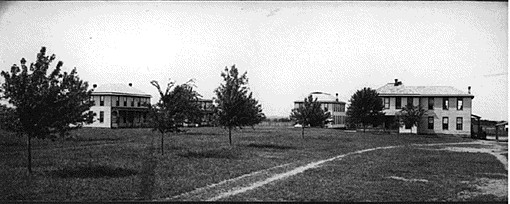
The first school in this area was, of course, the Presbyterian Boarding School or Nuyaka Mission, but it admitted only Creek Indian children. So actually, the first neighborhood school for white children was Lone Home School, which was a frame building, probably built originally for the school, on the forty-acre section just west of Park Wheeler�s ranch. Only about a dozen children (including Ruth Wheeler) attended this school.
The third school was the Youngstown School, which became a necessity because of the vastly increased population around the large Youngstown Oil Field. It was established around 1929 when this field was discovered and enough oil workers rushed in to drill and care for around two hundred oil wells.
The fourth school was the Prairie Home School, established for the same reason as the Youngstown School. It was located near both the Phillipsville Oil Field and the Phillipsville Refinery, parts of which can still be seen from the road on the west side of Crossland Ranch.
The fifth neighborhood school was located almost in the center of Nuyaka. The Methodists of Nuyaka had built a frame building to be used as their church. But, since it was not used during the week, it was used then as a school. It was located about a block or two east of Main Street.
The sixth school had to be formed because the children who lived across Deep Fork River had no way to get across the river and attend any school on the east side. For a while a ferry carried goods and people across, but the charge was twenty-five cents and often the ferry could not be used because of either the lowness or the overflow of the water. So a neighborhood school was established on the west side of Deep Fork, called Oak Grove School.
Until much later when integration was introduced to the school systems, there were separate neighborhood schools set up for the colored children. Nuyaka areas had four of these � Pleasant Grove, Mt. Pleasant, Willow Grove, and Shady Grove. One of these schools burned, and no others are still in existence.
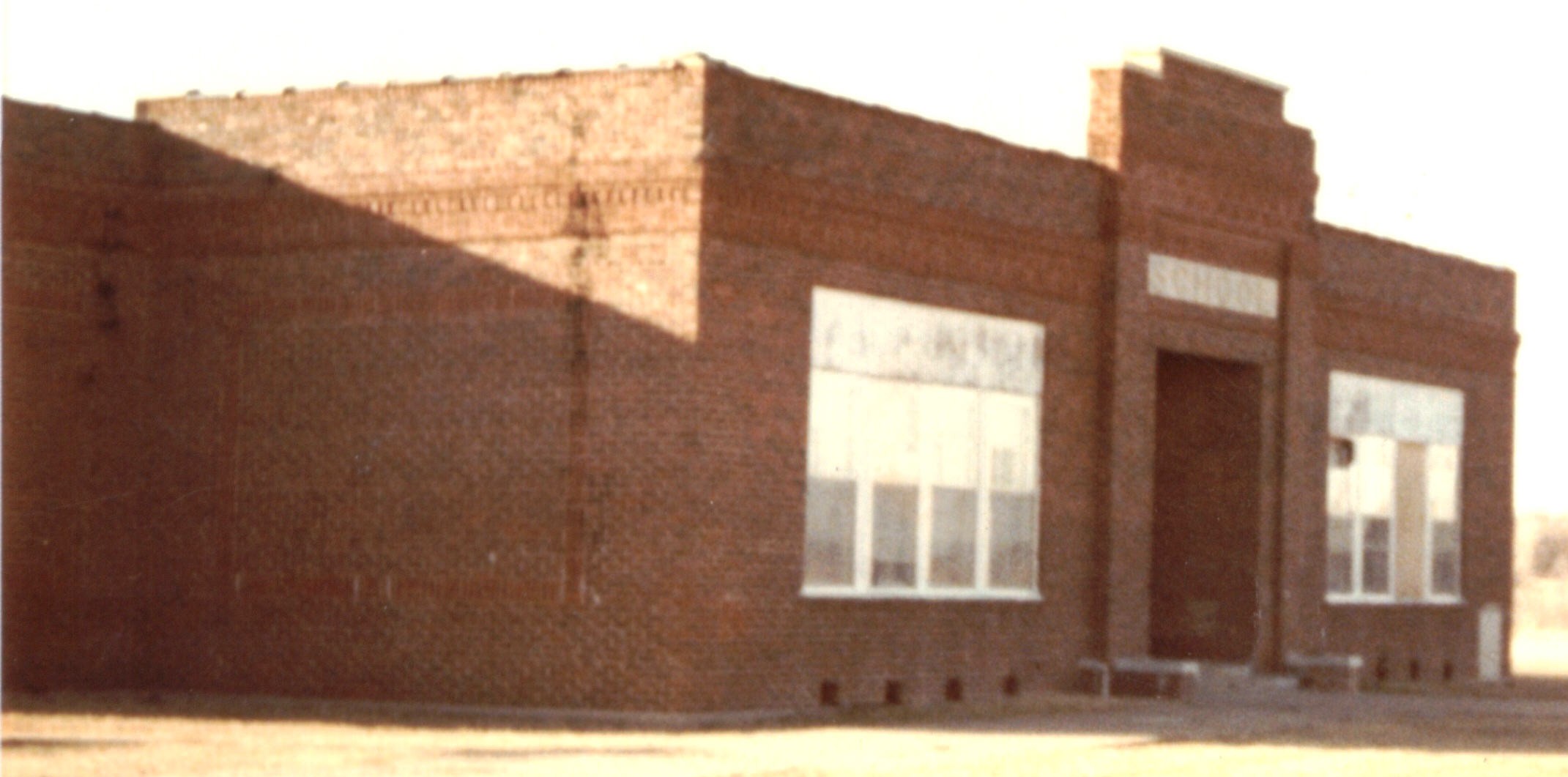
In 1922, when the town of Nuyaka was growing both in population and activity, it was decided to build a central school on Main Street, and then, by using buses, have all the school children in the area attend the same school, except for those who would still attend the �separate� schools. The School Directors were G.E. Brown, M.H. Hanson, and Raymond Thompson. The architect was J.M. Whitehead and the contractor was Richard D. Richter. When school buses were bought, the first bus drivers were Harley (Slim) Pickard, Brown McEwen and Walter Prophet.
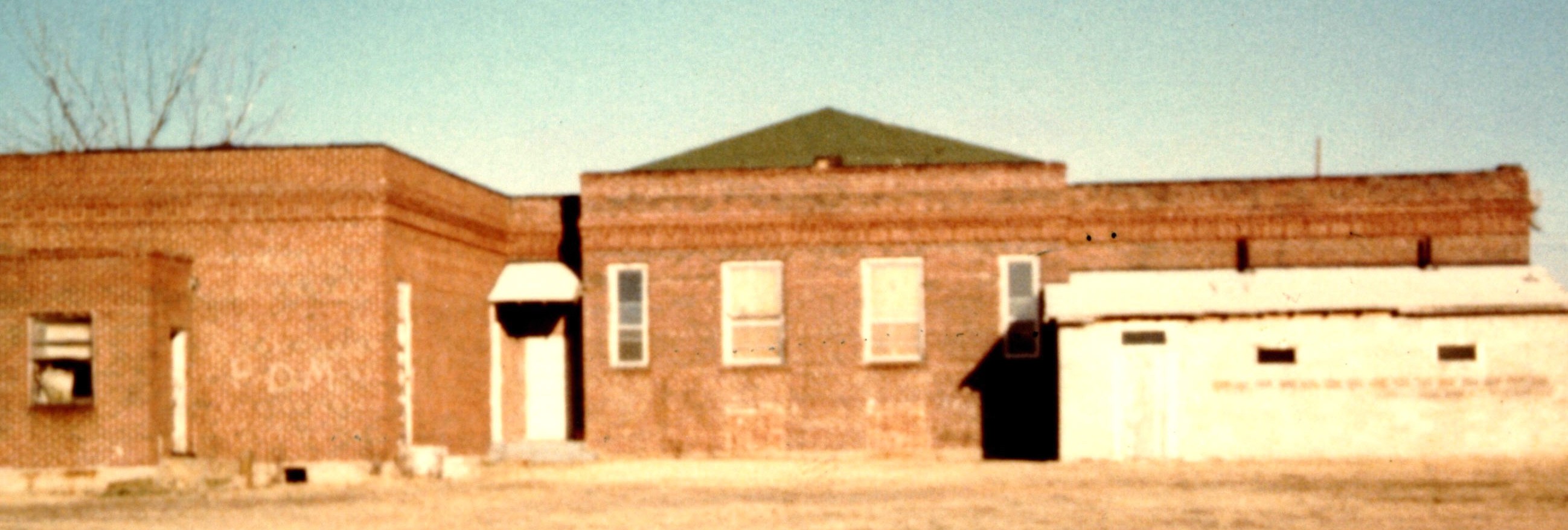
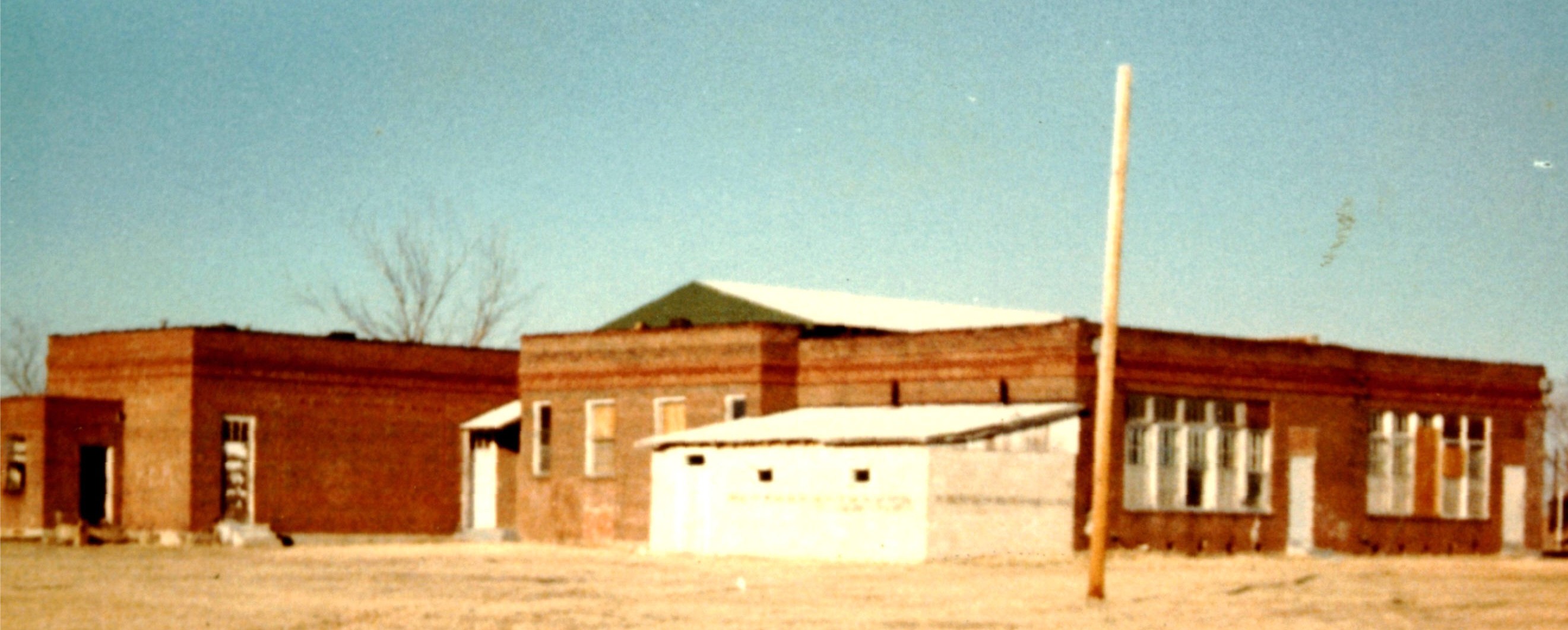
When the school was open, the community was very much involved. Parents would attend the numerous basketball games and it didn't matter if the games were at home or away, the parents where their cheering everyone on. And it didn't matter if we won or lost (unless you ask the coaches :) the support was always there. If your parents couldn't make it to a game, there was always another parent there to pat you on the back and tell you how great you did. Scholastic meets, Christmas programs, Halloween carnivals, talent shows, Valentine parties, school trips to Bells or the Tulsa zoo, spelling bees, graduations, math factors, recess, all wonderful, cherished memories.
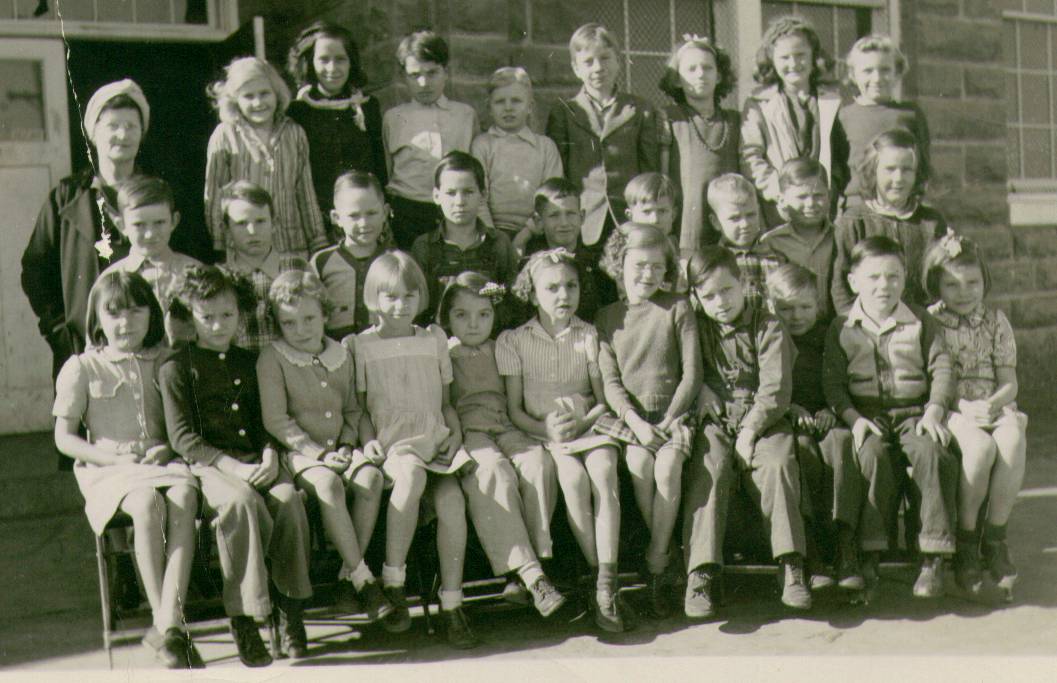
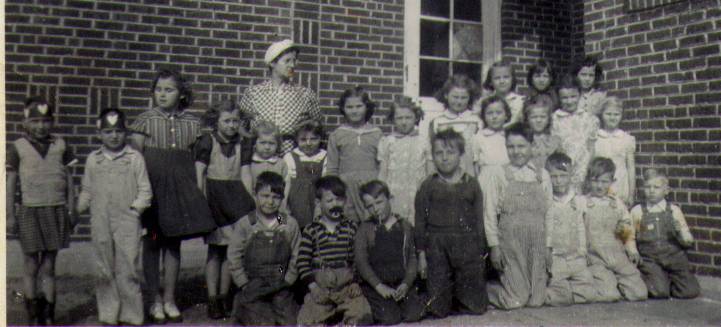
Nuyaka School..count down to final bell?
Part I: Soon it could be only memories
Wednesday, September 17, 1997
On December 19, depending on what voters decide, the final bell might be ringing at Nuyaka School.
The doors could close one last time. There would be no more children�s laughter echoing from the playground, and the school building would be filled only with memories of days gone by.
Locked behind closed doors, dozens of trophies once considered treasures of academic and sporting triumphs, would become ghostly showcases with only memories to keep them alive.
Nuyaka School opened its doors in 1922 and became the reservoir for many outlying school districts. Youngstown and Durant schools were just a few of the schools that consolidated with Nuyaka, expanding the tiny school district north to the highway, south to the Deep Fork River and on out to Rocky Hill.
Superintendents were also teachers and coaches�whatever was required to make the school run. G.G. Norval, Olen Rainwater, Luther M. Souders, George Haddad, Blaine Glover, Ted Johnson, Garland Lane are just some of the men that wore many hats keeping the school alive through the years.
Nuyaka Homecoming Association member, Florence Cahallin, remembers Glover as the driving force behind the basketball championships seized by the tiny Class C School in the early 40�s. Cahallin recalls, �Glover had those kids playing basketball while they were still in the primers, that�s why the team was so good.� Coach Jack Furr led the Nuyaka Braves to capture the state basketball championship two years in a row.
Cahallin chuckled reminiscing how Glover insisted that his team be allowed to play a Class A team, and the repercussions that followed when the �little Class C School won.�
Buddy York was a member of that cherished team, attending Nuyaka from 1941-1943. York, like several other of the male students at the school, were forced to stop their education to serve in the war. After serving in the Navy, York returned to Nuyaka in 1945-1946 to graduate.
�Yorkie� as his fellow students called him, was on the winning Phillips 66 Olympic Basketball Team from 1946-1948. Fame continued for him as he was inducted into the East Central University Hall of Fame.
The thirties and forties were peak years for Nuyaka School with about 38 students enrolled in each of the four high school classes and approximately 150 students in the lower classes. One of those classmates died on the Arizona during the war. Cahallin recalls some of their classmates being officers in the Navy, one was a colonel in the Army, and Claude Perkins actually worked his way up through the ranks to become a Captain. Perkins met such dignitaries as President Roosevelt and President Eisenhower.
Norvell was a superintendent that pushed for typewriters, making Nuyaka School a pioneer, blazing the trail for students to learn on the newly acquired machines.
Mrs. W.B. Taylor taught first grade at Nuyaka �forever� and is fondly remembered by students. With the depression looming over the country, attendance in the Nuyaka School began to decline as entire families moved from the area once booming in cotton and oil, to find jobs in war plants in other states. By 1947, the school district began to feel the effects of the declining enrollment that continued on a downward spiral for years.
In 1952, the district became the first school in Oklahoma to integrate, thus proclaiming Nuyaka again as a pioneer in education
Students from Nuyaka decided to form a Homecoming Association in 1952. The Association did not focus on graduates but on anyone that attended the school. That group remains close to this day, with some classes vacationing together traveling to Branson and even California.
In 1968, with the continuation of declining enrollment, Nuyaka moved its high school students to larger schools, including Okmulgee and Beggs.
The news grew bleaker as the years went by. Board of Education President Sheldon Cypert recalls rumors of Nuyaka�s closing upon moving to the community in 1970. �Every year that school was going to close. It has long outlived our expectations.�
In 1978, Cypert was the first woman elected to the Nuyaka Board of Education, which now has two women. She has had children in the Nuyaka system since 1975 except for the last three years when her son went to high school in Beggs
�Nuyaka kids are good kids. Because of the smaller school, the older students look out for the younger students. I�ve enjoyed this school. The parents would take off work and to on field trips with the school. It has truly been a community school.�
For now, Nuyaka�s 37 students, five teachers, bus driver, secretary, and the superintendent will cherish these coming months, enjoying the small classrooms, where the teacher ratio is about one to seven. Alarms will remain set for little later as children are still able to walk to school in this peaceful rural setting, where cars are few and far between and people wave as you go by. It could be the last time children will sing at the Christmas program on December 18, and on the 19th, the doors will close forever.
For these young Nuyaka students, January will bring a new year. A year of changes with early morning rising, long bus rides to school, crowded classrooms, and a sea of unfamiliar faces. If Nuyaka School�s bell rings one last time, weeds would replace children on the playground and memories would be all that fill Nuyaka�s classrooms.
