Anticancer and Pesticidal Components of Paw Paw ( copied from the 88th Annual Report of the Northern Nut Growers Association, Inc.)
(Asimina triloba)
Jerry L. McLaughlin'
Abstract
Extracts of the North American paw paw tree, Asimina triloba Dunal (Annonaceae), have yielded over 40 compounds representing a new chemical class of long-chain fatty acid derivatives. These compounds are called the Annonaceous acetogenins. They are powerfully bioactive and inhibit cell metabolism by blocking two essential enzymes: the NADH: ubiquinone oxidoreductase (complex 1) of mitochondria and a ubiquinone-linked NADH oxidase that is prevalent in the plasma membranes of cancerous cells. The resultant effect is a deprivation of adenosine triphosphate (ATP) levels which deprives the cell of its energy supply. Applications of the crude extracts, containing mixtures of the acetogenins, as pesticides and of the pure acetogenins, themselves, as antitumor agents hold excellent potential, especially against pesticide-resistant pests and against multiple-drug resistant (MDR) tumors; in both cases the resistant mechanisms are the consequence of ATPdependent éfflux pumps. It is anticipated that commercial growth of paw paw trees will be needed to satisfy the future demands of biomass to provide these extracts and compounds.
Introduction
A major goal of the research in my laboratory at Purdue University is to isolate new, useful, bioactive compounds from higher plants. Three methodologies are necessary to accomplish this goal: 1) simple bioassays to detect bioactive extracts and guide their fractionation; 2) chromatographic methods for the separation of the complex extracts to isolate the bioactive compounds, and 3) methods for structural elucidation to solve the chemical structures of the isolated compounds. In the past fifteen years, over 350 bioactive compounds from plants have been isolated and characterized in my laboratory, and much of this work has been summarized in three previous review papers (McLaughlin 1991, McLaughlin et al. 1991, McLaughlin et aI. 1993). A key to our success has been the development and use of simple "bench-top bioassays; these include lethality to brine shrimp (Meyer et al. 1982), the inhibition of crown gall tumors on discs of potato tubers (Ferrigni et al. 1982), and lethality to yellow-fever
Professor of Pharamacognosy, Dept. of Medicinal Chemistry and Molecular Pharamacology, School of Pharamacy and Pharmacal Sciences, Purdue University, West Lafayette, IN 47907-1333; phone: 765-494-1455; fax: 765-494-1414:
e-mail: jac @pharmacy.purdue.edu
49
mosquito larvae (Anonymous 1970). These bioassays permit us to focus quickly, and with little expense, on the discovery of new pesticidal and new antitumor
compoñnds (Anderson et al. 1991). Our antitumor work is then aided by more expensive cytotoxicity tests that are made against a panel of six human tumor cell lines at the Cell Culture Laboratory, Purdue Cancer Center, and by further tests at the National Cancer Institute (NCI) and at cooperative pharmaceutical companies.
Annonaceous Acetogenins
One of our most exciting lead plants has been the
paw paw tree, Asimina triloba Dunal (Annonaceae). Extracts
were highly bioactive in all of the bioassays, and we were
further impressed that proprietary sale of the fluid extract of
the seeds, as an emetic (to induce vomiting), had been exploited
by the Eli Lilly Company nearly 100 years ago (Anonymous 1898).
Tests ofourbioactive extracts of the bark at Eli Lilly
(Greenfield Labs) in 1982 demonstrated potent pesticidal effects
in a panel of seven indicator pests (Alkofahi et al. 1989). We
immediately began fractionation work with the bark, while our
colleagues at the USDA laboratories (Peoria) conducted parallel
work with the seeds; the brine shrimp test was used to direct the
work at both locations. By 1985 we had isolated and characterized
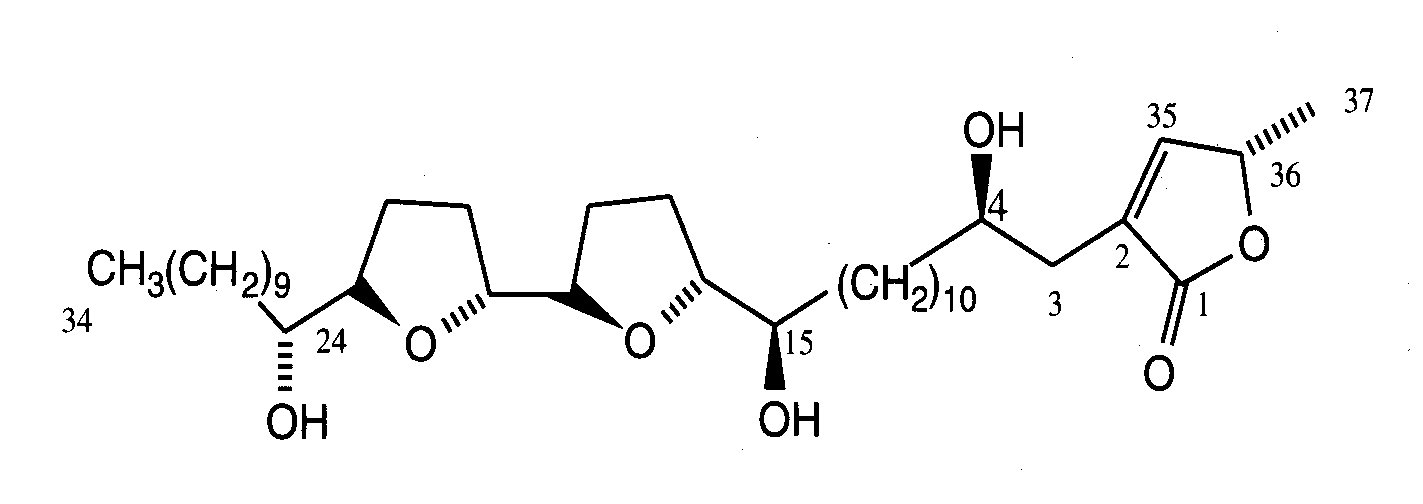
asimicin (Fig. 1) as one of the major bioactive components
(Rupprecht et al. 1986); asimicin was a new member of the class
of compounds known, since 1982, as Annonaceous acetogenins (Jolad
et al. 1982). Two patents were subsequently issued to the USDA
and Purdue protecting the pesticidal use of the acetogenins
(Mikolajczak et al. 1988) and the composition of matter of
asimicin (Mikolajczak et al. 1989).
Figure 1. Asimicin, a bioactive Annonaceous acetogenin.
Our subsequent work with the bark and seeds of paw paw has resulted in the isolation of over 40 additional Annonaceous aceiogenins (He et al. 1997). From Asimina and related Annonaceous genera, such as Annona, Goniothalamus, Rollinia, and Xylopia, we have now isolated and characterized well over 160 Annonaceous acetogenins; a total of about 250 of these compounds are now known, and we have summarized their discoveries and properties in four comprehensive review papers (Rupprecht et al. 1990, Fang et al. 1993, Gu et al. 1995 and Zeng et al. 1996). Two additional patents have now been issued to us protecting the composition of matter of bullatacin (Fig. 2a), bullatacinone (Fig. 2b), and a series of additional unique
50
acetogenins
which we believe have potential uses as new antitumor agents
(McLaughlin and Hui 1993 and McLaughlin et al. 1995). Three
additional patents are pending (Hopp and McLaughlin 1 997a, Hopp
and McLaughlin 1 997b and Oberlies and McLaughlin 1997).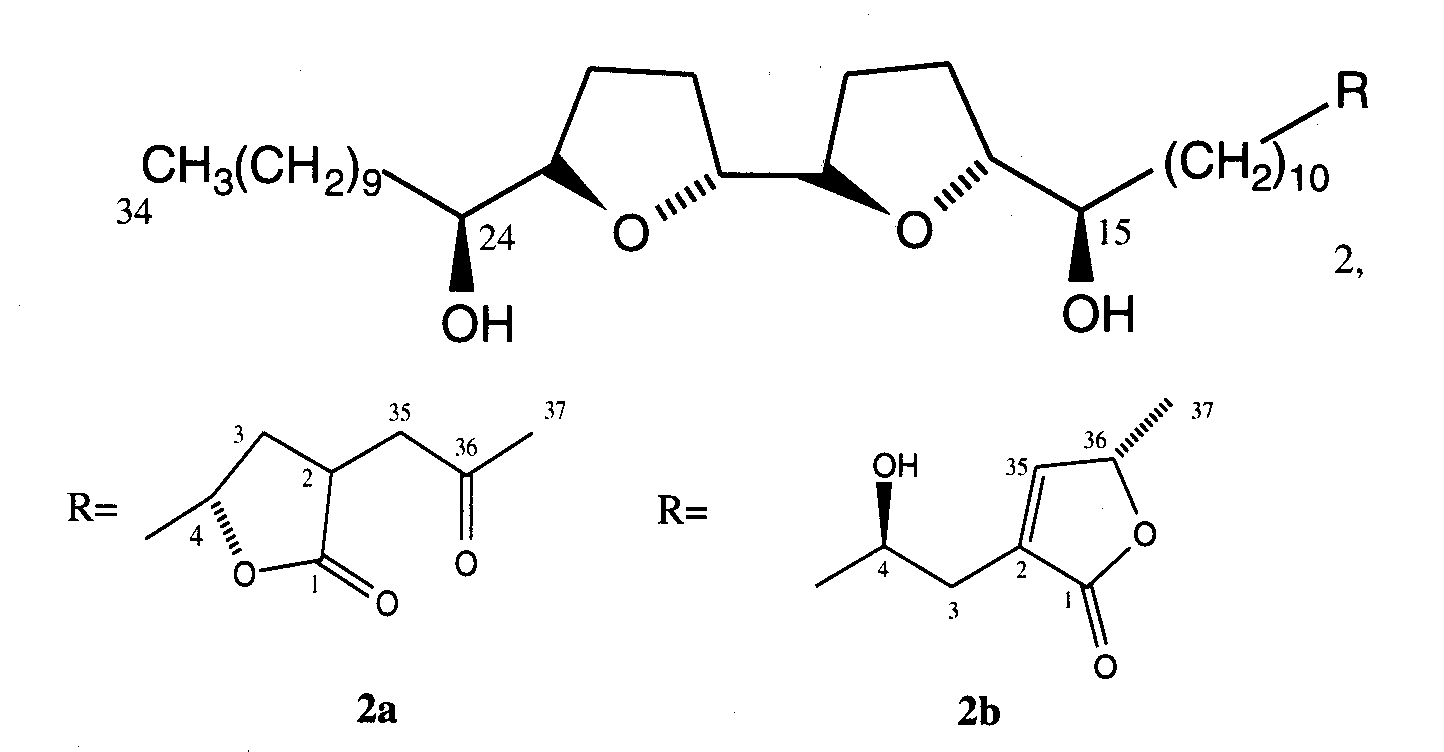
Figure 2. Additional Annonaceous acetogenins: 2a, bullatacin, 2b,
bullatacinone
Biological Effects
Potent pesticidal effects for the extracts and/or the pure acetogenins have been noted against mosquito larvae, European corn borers, spider mites, melon and green peach aphids, Mexican bean beetles, bean leaf beetles, striped cucumber beetles, cabbage loopers, nematodes, blowfly larvae, Colorado potato beetles, sweet potato whiteflies, and cockroaches (Alkofahi et al. 1989, McLaughlin et al. 1997, He et al. 1997, and Alali et al. 1998). Antiinfective effects have been recorded against malarial, microbial, and other parasitic infections (Rupprecht et al. 1990, Fang et al. 1993, Gu et al. 1995 and Zeng et al. 1996). Antitumor effects have been reported in vitro against numerous human tumor cell lines, and the acetogenins are quite active, with apparent selectivities of specific compounds for certain tumor types, in the panel of sixty human tumor cell lines at the Nd. We have recorded their in vivo effectiveness against P-388 and L-1210 murine leukemias as well as against A-2780 human ovarian tumor xenografts in athymic mice (Rupprecht et al. 1990 and Ahammadsahib et al. 1993). More recently, we have demonstrated the effectiveness of the acetogenins against MDR tumors (Oberlies et al. 1995, Oberlies et al. 1997a and Oberlies et al. 1997b) as well as against pesticide-resistant cockroaches (Alali et al. 1998).
51
Mechanisms of Action
Londerhausen et al. (1991) observed that the toxicities caused by the Annonaceous acetogenins in insects resulted in lethargy and decreased mobility prior to death. Treated insects had substantially lower total levels of ATP, similar to the effect of antimycin A, a known inhibitor of the mitochondrial electron transport system (ETS). Mitochondrial enzymes were tested, and squamocin (annonin I or 28-hydroxy-4-deoxybullatacin) was 2.5-5 times as potent as rotenone in inhibiting NADH: ubiquinone oxidoreductase. Concurrently, Lewis et al. (1993) observed a lower level of oxygen consumption in treated corn borers and located the site of action of paw paw extracts and asimicin (Fig.l) as mitochondrial complex I. Ahammadasahib et al. (1993), working with bullatacin (Fig. 2a) (which is the 24-epimer of Fig. 1) in SF9 insect cells as well as in insect and mammalian mitochondria, at the same time, arrived at the same conclusion. Friedrich et al. (1994) and Espositi et al. (1994) then found that the acetogenins bind competitively with respect to the ubiquinone site of complex I; whereas, rotenone, another natural ETS inhibitor, binds noncompetitively, suggesting an alternative site. Hollingworth et al:(l994) have concluded that Fig. 2a is the most potent of the several chemically diverse types of complex I ETS inhibitors examined. Landolt et al. (1995) and Alfonso et al. (1996) have shown several structure-activity relationships (SARs) among over 30 different acetogenins in the inhibition of oxygen uptake by rat liver mitochondria. He et al. (1997) have shown SARs among 44 acetogenins for pesticidal activity in the yellow fever mosquito larvae microtiter plate assay; bullatacin gave the best activity with LC50 0.1 mg/ml; compounds with LC50 values of <1 mg/ml are considered worthy of commercial development as new pesticides.
A second mode of action helps to explain the selectivity of the acetogenins in inhibiting tumor vs. normal cells (Oberlies et al. 1995); an ubiquinonelinked NADH oxidase is activated in the plasma membranes of tumor cells, and this enzymatic activity is potently inhibited by the acetogenins (Morre et al. 1995). The net effect of this action and of the action on the ETS results in intracellular depletion of ATP, and programmed cell death (apoptosis) is a likely consequence (Wolvetang et al. 1994). Resistance mechanisms which require an ATP-dependent transporter (or efflux pump) would be obvious targets for the useful application of these compounds as pesticides, antitumor agents, and antiinfectives when such resistance is a significant factor. To demonstrate, we have recently shown that the acetogenins have favorable resistance ratios with pesticide-resistant vs. pesticide-susceptible cockroaches (Alali et al. 1998), and, following our earlier observation that the acetogenins are cytotoxic to adriamycin-resistant mammary tumor cells (Oberlies et al. 1995), we have documented their SARs against MCF-7/Adr (MDR) vs. parental MCF-7 (nonresistant) human breast adenocarcinoma cells (Oberlies et al. 1997a and Oberlies et al. 1997b). Our next step is to demonstrate in vivo effectiveness against MDR human tumors in athymic mice, but we currently lack the physical and financial resources for such studies.
52
Evaluation of extracts made from numerous plant parts of paw paw determined that the twigs and small branches can serve as a source of biomass following coppicing or pollarding (Ratnayake et al. 1992 and Ratnayake et al. 1993); branches up to 1/2 in diameter give extracts which are potent enough for direct pesticidal applications. Thus, wild stands and planted plantations of paw paw can be trimmed periodically without destruction of the parent trees. We have determined that the optimum time of collection is May-July (Johnson et al. 1996), and the concentrations of the major acetogenins (asimicin, bullatacin, and trilobacin) coincide withthis peak period for bioactivity (Gu et al. 1998). We have developed and tested formulations for home preparations of the pesticidal extracts directly from the dried and pulverized biomass, and these simple preparations are quite effective against the usual ornamental and garden plant pests. However, the financial constraints needed to satisfy EPA testing regulations are a major roadblock to commercial development of this new, natural, environmentally friendly, pesticide.
Development of the acetogenins as new antitumor agents is also being hindered by bureaucratic, political, and financial restrictions. The major pharmaceutical companies are not receptive to ideas or products other than their own, and they are especially hesitant to pursue natural compounds because synthesis of the compounds is often difficult. Nevertheless, certain acetogenins are best effective against selected tumor types, e.g., squamotacin is selective against the human prostate carcinoma cell line (PC-3) (Hopp et al. 1996) and a series of 9-carbonyl compounds work best against the human pancreatic tumor cell line (PaCa-2) (Hopp et al. 1997). Thus, we anticipate that eventually the best acetogenin can be identified and used for the inhibition of specific tumor types.
A start-up company, Bioactive LC, is currently negotiating with the Purdue Research Foundation to license our patents for commercial development. In the meantime, it is suggested that plantations of paw paw trees can be planted and will be available to provide a reliable biomass source for the future pesticidal extracts and antitumor compounds. The author has recently received approval from the USDA, through the Conservation Reserve Program (CRP), to plant 6.5 acres of west-central Indiana bottomland to paw paw trees. Others might wish to explore this opportunity, and, at the very least, they will be able to enjoy the delicious fruits that will result.
Acknowledgements
Our work has been supported by a variety of sources including the Eli Lilly Company, the Trask Fund of the Purdue Research Foundation, and a major RO1 grant (no. CA30909) from the NCllNational Institutes of Health.
Literature Cited
Ahammadsahib, K.I., R.M. Hollingworth, J.P. McGovren, Y.-H. Hui and J.L.\par McLaughlin. 1993. Mode of action of bullatacin: A potent antitumor and\par pesticidal annonaceous acetogenin. Life Sciences 53: 1113-1120.
53
(etc.)