Welcome to...
1385 Campbell Blvd, Amherst,
New York 14228
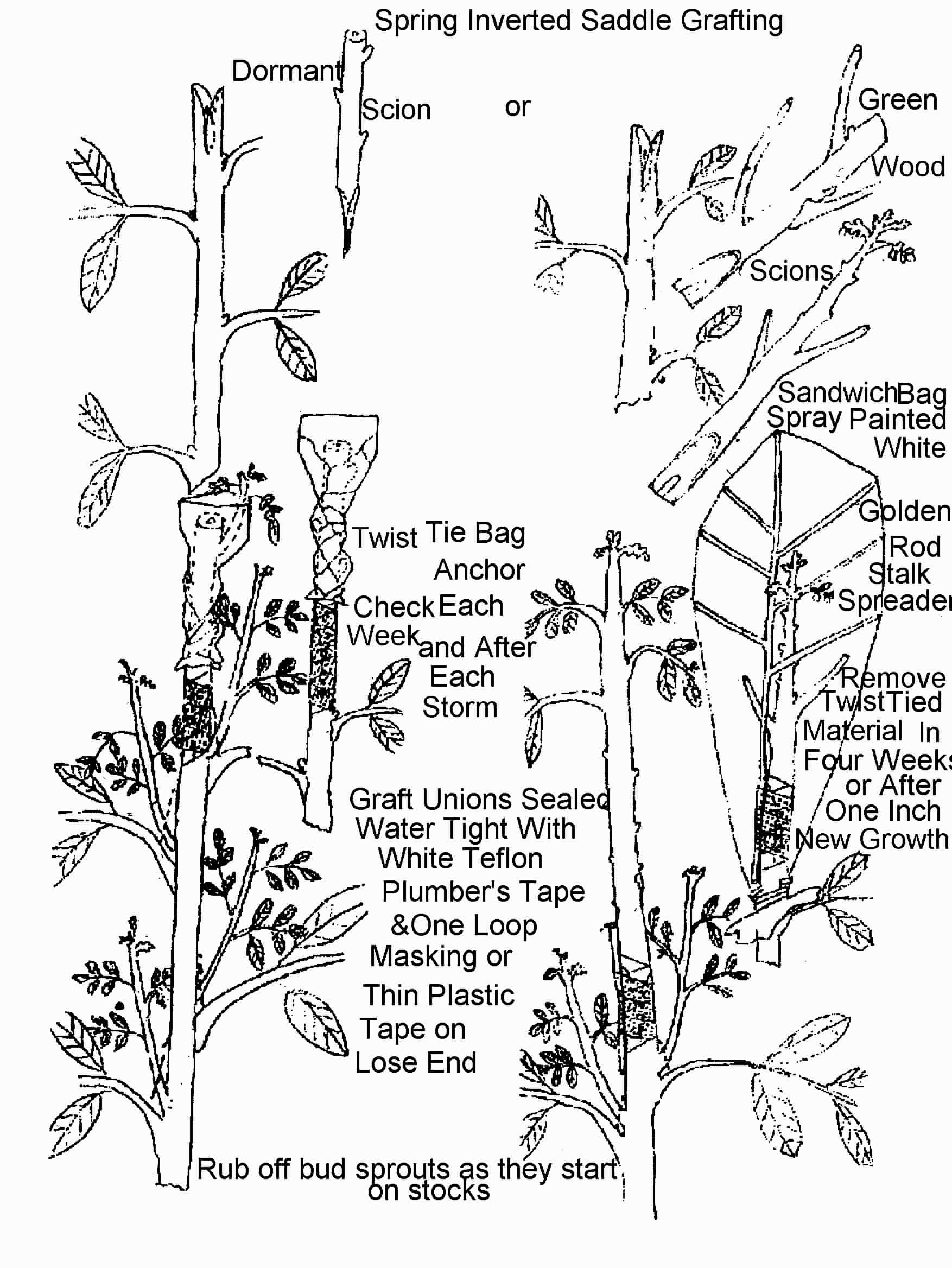
This is a small, mail order nursery. What started as a planting of Hemming Chinese chestnuts in 1962 has evolved into a 10,000 nut tree research planting, and is being weeded down to a few select nut and minor fruit trees. This nursery mails bare root trees wrapped in moist newspaper in late March thru May, cuttings and stratified seed in March, freezable seed like chestnut after freezing weather March/April. Scion cuttings are for grafting = ISgraft.jpg
This planting is on low ground, an ex-lake bed from
just after the Ice Age, old Lake Tonawanda...now cool as seen in heat map = GDD50.jpg Winters often
reach -20 Deg F near the ground. Early Fall frosts are usual as on most
river flats...half way from
Pawpaws, Persimmons, some Filberts/Hazel, and especially Korean Nut Pine need watching and watering directed onto the ground with about 1/4 cup of agricultural sulfuric acid in 5 gallons of water, usually as rain is seen coming on the AccuWeather radar.
Walnut, hickory, plus most chestnut and filbert bear large nuts productively without treating this garden soil. 10,000 trees (not counting seedlings in planting beds) will sort to 2,500 trees for adequate testing to gain the final cut to less than 1000. These are minimum care nut trees, and native fruit trees, except insecticide is needed for heartnut and chestnut as is expected in any large planting. I am now thinning my catalog to reflect squirrel predation in planting beds, and the lack of space for future planting. Trying to work around predators, it pays to change growing to items that start from root cuttings; on-own-root items; pawpaw, persimmon, filbert. Mulberries root from 18" dormant shoot cuttings.
Testing continues in cooperation with several members of the Northern Nut Growers Association, the North American Fruit Explorers, The PawPaw Foundation, the Society of Ontario Nut Growers, and the New York Nut Growers Association who test under similar conditions. We share scion wood which sometimes provides great selections, but usually great genes for sorting out in future generations.
Do not think we have success in hand, because, when a geneticist/breeder, we should have 60 varietal lines of excellent, resistant nuts to test against a disease to build in more resistance genes...as the blight-resistant- chestnut growers know...as the butternut bark and root diseases are learning.
. . Nursery items: walnut, hickory, filbert,
chestnut, pawpaw, persimmon, shelters, book, other.
. . .The Walnuts: Black walnut is very common nut in the eastern
Persian ( Hardy English) walnut can drop clean of its green hulls. Black walnuts typically carry their hulls past maturity until the hulls are pressed off, or are degraded off; first yellowing (the most staining stage, and the rubber boot stage for pressing off hull), then darkening to ink ready to plant, or store for planting. All walnuts are dried in a clean, airy state for a week to a month before kernel extraction, usually by cracking.


also seeb-sHRT00.jpg
Juglansailantifolia var. mandchurica
Covel Manchurian is a vast improvement over typical Japanese walnuts, and
native butternuts ( J. cinerea ), considering cracking, hull removal,
and sharp spines. Though the kernel of Covel is tight in the half-shell, it is not
keyed in. Its flavor and production are tops, so we suffer with a medium hard
shell, suture which is too long to always crack all the suture, and having to
wiggle the kernel from the half-shell to get it out whole. Covel's tree,
or Heartnut trees, look like spreading butternut trees, but with less butternut
bark and root disease.
. . Juglans nigra Black Walnut -Elmer Myers is an
Juglans ailantifolia Var. cordiformis CW3,Imshu, Schubert
Heartnuts - Heartnuts are the truly locket nuts. Pressure on the nut's
shoulders forces the half shells apart, and the kernel dumps free. Locket is
a perfect valentine, and its shells are prized for jewelry Stealth is a
large flat nut which will crack out whole in commercial cone crackers because
the half shells shear apart, and slide sideways over the kernel, not damaging
the kernel.
. . J a c x nigra/cinerea HybridHeartnuts - Filsinger
is the locket form, black walnut cross, but does not retain the black walnut
flavor. Dooley, Sauber, and Baker have the general shape of aheartnut,
butternut cross, but aremainly retained for breeding. Their seedlings are
vulnerable to the ink diseases of walnut where the Black walnut is somewhat
resistant. (Phytophthera sp.) is one problem. Baker is
the most upright tree, and hardy against arctic cold.
. . . . . The


 +
+  = Hican

also c-wHIC00
. . Carya ovata Shagbark Hickory -
Weschcke is a flat, relatively narrow nut typical of easy
cracking hickories. It is an upland hickory from northern
. . Carya laciniosa Shellbark
. . Carya illinoensis Pecan - Pecan is an
educational nut. It shows that the earliest ripening pecans grow due west of
here on the Mississippi; that removing shaded branches allows inlight, build
strong branches, reveals nuts, and blue jays working the nuts. Plant an
under-story of autumn olives for nitrogen fixing, and berries
which attract fruit eating birds, which attract Kestrels and Harrier hawks
which harvest blue jays.
Snaps from Bellevue, Iowa is the earliest ripening (20 Sept 99 in Amherst, but cures dry in October): 1.1" tip to tip, football shape nut, thinnest shell of the pecans. Other far north pecans are GI Joe, Deerstand, Diken, Oaks, ,Gibson, Dejay, and Fritz Flat. If good growing-weather continues, each is respectively 5 days later ripe, and 0.1" longer. After ripening Oaks, Gibson, etc. ripening has to be brought inside as the nuts often freeze turn black due to too much moisture.
. . Carya illinoensis x laciniosa Hicans-
These hybrid pecans ripen with the early pecans, though only Henke and Abbott
dry fast to avoid freezing. The larger hicans retain too much
moisture to ripen outdoors. Their kernels taste like shellbark hickory,
and are easy to end crack. Henke is 1.25": Hy-6 and
Kreider, or Marquardt 1.75". Marquardt really
has to be brought inside before heavy frost.
Abbott Pecan-thin-shell is a paper shell Bitcan (pecan
x bitternut hickory) of pecan flavor. It grows in a group of three Bitcans by a
house just east of


 a-tFIL00.jpg..
The Filbert: American hazel is a small, densely suckering
bush (half lilac size) that grows native here. Hybrids with European filbert
(lilac large nut-bush) balloon the pea size of the native kernel to above
marble size kernels of hybrids. These hybrids are winter hardy, but are only
partially resistant to the Eastern Filbert Blight. Hybrids with Turkish tree
hazel have larger, and thinner shell, nuts, but are just hardy enough to fruit
heavily after a normal USDA Zone 6 winter, and few Turkish hybrids have shown
great blight resistance, though their deeper roots give them more energy to
sustain growth and bearing. Many fully resistant European filberts are being
discovered. Grimonut.com has some for sale
a-tFIL00.jpg..
The Filbert: American hazel is a small, densely suckering
bush (half lilac size) that grows native here. Hybrids with European filbert
(lilac large nut-bush) balloon the pea size of the native kernel to above
marble size kernels of hybrids. These hybrids are winter hardy, but are only
partially resistant to the Eastern Filbert Blight. Hybrids with Turkish tree
hazel have larger, and thinner shell, nuts, but are just hardy enough to fruit
heavily after a normal USDA Zone 6 winter, and few Turkish hybrids have shown
great blight resistance, though their deeper roots give them more energy to
sustain growth and bearing. Many fully resistant European filberts are being
discovered. Grimonut.com has some for sale
. . Corylus avallana crosses, (complex hybrids) Slate's
Hybrids - Professor George Slate ran his unofficial projects with
Persians, Filberts, Persimmons, and Pawpaws at the Geneva NY Ag Experiment
Station. He made many crosses with European filbert and hazel, sometimes
importing named European varieties, starting with Rush hybrids (C.avallana
x C.
New seed and seedlings are out of productive selections remaining non-blighted.
. . Corylus avallana x colurna Tree filberts
- Tree filberts are talll, several stem nut-trees with gray
flaking bark, and thinner shell nuts than tree hazel. OB1, OB2
(scions only) show most promise among Tree Hazel types. Slagel Filbert
is very Eastern Filbert Blight resistant.
. . . The Chestnut; Think hybrid
sweet chestnut whenever chestnut is mentioned by a
Canadian nut grower, then narrow thinking toward northern Chinese, or hybrid
with native of Chinese, Japanese, Chinese X Japanese, or European. Typical
Chinese, Japanese, and European are too tender to grow here. All Native
Chestnut, and most Hybrid Chestnut get the bark blight. Bright winter sun
during an arctic high, raises fluids under the bark, allowing rapid freezing to
destroy bark (called South West Injury) on all chestnut species. Japanese
is great to breed because it has disease resistance (blight and gall wasp
resistance) and large nuts, early ripe due to the cool Japanese climate.
Japanese Hybrids still need a lot of selecting, having a thin bark, and mild
native climate.


d-sCHS00.jpg . . Castanea
molllissima Hemming strain Chinese chestnut
- These are from the few survivors of a bbushel of chestnut seed brought back
from the Paradise Plantation, Maryland in 1962. I found it the general rule
that Chinese chestnut does not survive above
. . Castanea mollisima x dentata Douglass Hybrid chestnut
- These originated with Earl Douglass of
Castanea complex hybrids x crenata Ridge strain chestnut.
These started from seed gathered off the earliest and best Japanese tree in
. . Castanea complex hybrids x sativa Layeroka strain
European hybrids. These started with Jack U. Gellatley in the Okenogen Valley of
British Columbia, Canada. Layeroka mirrors many of its
seedlings, seeming to be identical twins, but have variable resistance, and
usually poor bark health against South-West/freeze-thaw injury; productive
trees with large early nuts, somewhat not hard/soft nuts. Simpson
strain European hybrid is very much like Layeroka, but has pollen, and
a round nut. Pollen is often lacking on European types. The European types go
down after an arctic winter, but start up again if grafted below ground.
.
 .
. .Pawpaw,
Michigan-Indiana sorts - Pawpaws grow locally, but selections came from
material from Pennsylvania, or the Michigan/Indiana border.
.
. .Pawpaw,
Michigan-Indiana sorts - Pawpaws grow locally, but selections came from
material from Pennsylvania, or the Michigan/Indiana border.
. . Asimina trilob Pawpaw - PA Golden Strain Pawpaw
is early ripening. Coming from the deep, cold valleys above
. . Persimmon - Mid-western native persimmon from
central


. . Diospyros virginiana Native Persimmon-Usual
ripening order of the persimmon is: NC 10/Dickie (early September), Szukis,
Yates/Geneva Long (late October), Prok, SAA
Pieper. SAA Pieper persimmon is an


. . Morus alba x rubra Illinois Everbearing and Collier
are purple mulberries, 1.5"long by 0.5" diameter. IL is
very hardy and erect. The Semi-weeping
Collier is easiet to train low for picking.
. . Cornus mas Cornelian Cherry Dogwood - BlackPlum is
known for its early ripe, inch long fruit, and a very dark green glossy leafed
large bush: small yellow flowers are never frost injured. Graft early as the stock bushes begin to
flower.
. . Elaeagnus umballata Autumn Olive is a spreading
bush which enlivens trees they are under by fixing nitrogen. Autumn Olive,
Mulberry and Cornelian Cherry Dogwood like limestone (sweet) soil, easily seed
into it, and associate well with walnut, hickory, and pecan. Autumn
Olive berries are refreshing like lemonade while picking up nuts.
Mowing is needed to keep the grove open because the Autumn Olive bushes
can take over.
. . 30"x4"Diameter tree shelters are a big help in starting
transplants in little green houses. I send bare root seedlings which need the
transplants to grow vigorously on stored energy. New rooting follows vigorous
top growth which risks desiccation in a drying wind. Sustained growth is
possible in the moist air of a greenhouse, and that is what tree shelters
provide. They should be fitted so that a transplant is topping out of the
shelter with the third or fourth leaf. If the shelters are to remain for
months, or for years with filbert only, 3/4 inch holes should be drilled, 6 at
six inch centers Swiss cheese pattern to let the wind ventilate, chill,
and vibrate the tree for hardening-off. Shelters for filberts do not need
holes, and should not have them because filberts are exceedingly hardy, and the
shelters on filberts should be renewed to cramp-in and kill suckers in leaves,
and do not encourage mice and mouse nests with any holes. I sometimes send
filbert sprouts as 18" cuttings for rooting when generated from
underground, and have tiny to small roots, thus must have a nurse tree
shelter. Guard tree shelters made from
yellow plastic drain tile are needed to be left on older filberts to
discourage rabbits and suckering.
. . The book, Nut Growing Ontario Style, is a 172 page soft
cover manual published by the Society of Ontario Nut Growers. There are
chapters on each species of nut, pawpaws, persimmons, grafting, and our
attempts at breeding.
Send to: John H. Gordon Jr., 1385 Campbell Blvd, Amherst, NY 14228-1403
[email protected]