Migraine:Symptoms and Stages of Progression
|
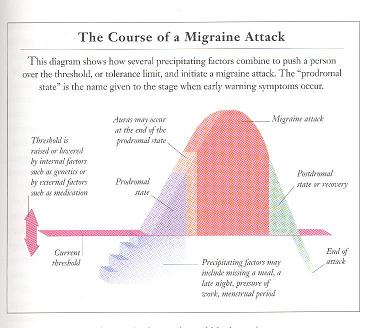
Migraines often follow stages of progression which may be refered to as 'the course of a migraine attack'. These stages include the prodromal state, aura state (with classic migraine), migraine attack, and recovery or postdromal state.
The prodromal state usually occurs 1-2 days before an attack and symptoms include: clumsiness, yawning, dizziness, fatigue, stiff neck, thirst, craving for sweets,sensitivity to light and sound, irritability and irritable bowel symptoms. Most people do not readily recognize the prodromal state because the symptoms are indefinite and sometimes vague.
The aura stage can last from 10-60 minutes. This stage precedes the 'migraine attack' and its symptoms include a variety of visual disturbances ie, brilliant stars, flashes, zigzags, or simple geometric patterns that pass across the visual field.
The migraine attack is most often characterized by a one-sided headache ranging from a nagging ache to an unbearable pounding. In addition to the headache, most people feel nauseated (95%), experience photophobia (80%), vomiting (25%) and diarrhea (20%).
The postdromal state is the 24 hour period following the headache. Many experience fatigue, poor concentration and frequent yawning during the postdrome while others feelings of euphoria or intense wellbeing.
For many people, the phases of migraine tend to blend into one another. Becoming aware of the typical pattern is important so that attacks can be halted during prodromal stages with quick action in response to early warning signs.
American College of Physicians. (2000). Migraine and other headaches .NewYork: New York. Dorling Kinderslay Publishing.
|
 home
home
 |