
|
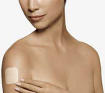
The Contraceptive PatchThe contraceptive patch, "Ortho Evra", was approved by the FDA in November, 2001. It is a beige one-and-three-quarter-inch-square patch. It releases hormones into the bloodstream through the skin. It is applied to the skin for three weeks and then is left off for one week to permit a normal menstrual period. It can be applied to the lower abdomen, upper outer arm, or upper body torso (not on the breasts). It contains both progestin (norelgestromin) and estrogen (ethinyl estradiol), and is associated with many of the same risk factors as oral contraceptives (i.e. Increased risk of blood clots, stroke, and heart attack).
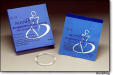
The Contraceptive RingThe contraceptive ring, "Nuva Ring", was approved by the FDA in October, 2001. It is a small, flexible, transparent ring that is inserted into a woman's vagina and provides birth control for one month. It is inserted for three weeks and is removed for the last week to allow for a normal menstrual period. Nuva Ring is a hormonal method of contraception and it does not need to be inserted by a physician. The contraceptive ring contains etonogestrel/ethinyl estradiol. Side effects include: increased risk of blood clots, stroke, and heart attack.
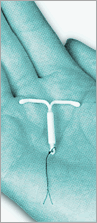
The Contraceptive ImplantThe contraceptive implant, "Implanon", is a rod that is about the size of a matchstick that is surgically inserted into a woman's inner upper arm. It contains progestin only (3-ketodesogestrel), and can prevent pregnancy for up to three years. Although it has been approved in Australia, Indonesia, and in eleven other European countries, it has not yet been approved by the FDA for use in the United States. The New IUD(Intrauterine Device)The new intrauterine device, "Mirena" was approved by the FDA in February, 2000. It is a small plastic device that gets inserted into the uterus by a physician. It gradually releases progestin (levonorgestrel), and can stay in place for up to five years. Side effects include increased risk for pelvic inflammatory disease, ectopic pregnancy, and infection as well as hormonal side effects related to progestin (i.e. nausea, vomiting, weight gain, menstrual changes). |






Other New Methods
1. "Seasonale" is a birth control pill that contains estrogen and progestin. The difference is that it is taken for three months at a time, as opposed to one month at a time, allowing for four menstrual periods a year instead of twelve.
2. "Lunelle" is a monthly injectable. It releases microcrystals of hormones - estrogen and progestin (estradiol cypionate and cycloprovera medroxy progesterone acetate). It has been approved by the FDA, however, it is currently under recall due to questionable effectiveness.
3. "Norplant II" is a hormonal implant. Unlike Norplant I, only two implants are necessary. The implants can remain in place, and will remain effective, for up to five years.
4. "Persona" uses a computer to monitor hormone levels in urine. It allows a woman to determine when she is ovulating so that intercourse can be avoided during these times to prevent pregnancy.
5. Several new methods of tubal sterilization are currently under way. Chemical scarring is currently being used for tubal sterilization in China. The chemicals damage the fallopian tubes causing scarring that blocks the passageway for the egg. Canada and the Netherlands have both approved chemical plugs. The procedure is done in the same way, however, different chemicals are used. Another form of tubal sterilization uses liquid silicone to form temporary plugs in the fallopian tubes, which can then be removed when pregnancy is desired.
6. Gonadotropin releasing hormone agonists (GnRH) are being developed as a reversible form of contraception. (GnRH) agonists prevent the release of FSH and LH from the pituitary gland which suppresses both ovulation and the production of sperm.
7. "Buffer gel" is being tested for its effectiveness in maintaining the natural acidic environment of the vagina. It is thought that reinforcing the acidic environment will help to destroy sperm as well as to help prevent sexually transmitted infections.
8. The "FemCap" is a dome made of soft silicone that covers the cervix. It is a barrier method of contraception, will be available in three sizes, and is designed to last for about three years.
9. "B-Oval" is a new oral contraceptive that uses a synthetic form of melatonin as opposed to the traditional estrogen. It is not expected to be available for use for quite some time.
10. Vaccines are currently being developed that should help people to develop antibodies against sperm.
Erin Kerby
Kwantlen University College
Collaborative Nursing Student
December 9, 2002
Access Magazine. Feb. 2002. New options in contraception, p.4. Author:
Columbia University's Health Questions and Answers Internet Service. The
contraceptive patch: A new birth control option. Retrieved November
25, 2002 from the World Wide Web site: http://www.goaskalice.com
Columbia University's Health Questions and Answers Internet Service. The
Nuvaring: Another new birth control option. Retrieved November 25,
2002 from the World Wide Web site: http://www.goaskalice.com
Columbia University's Health Questions and Answers Internet Service. The
Persona contraceptive. Retrieved November 25, 2002 from the World Wide
Web site: http://www.goaskalice.com
Croxxato, H., et al. (1999). Implanon. Human Reproduction,14 p.976-981.
Hubacher, D. (2002). The checkered history and bright future of intrauterine
contraception in the United States. Perspectives on Sexual and
Reproductive Health, 34, (2), p.98-103.
Planned Parenthood Federation of America. (2002). Future birth control methods
for women. Retrieved November 25, 2002 from the World Wide Web site:
http://www.plannedparenthood.org/ARTICLES/bcfuture_w.html
Women's Health Weekly. Jan. 24, 2002. New gel tested against STD's
as well as sperm, p.14. Author:
U.S. Food and Drug Administration. (Oct.3, 2001). FDA Talk Paper. FDA
approves first hormonal vaginal contraceptive ring.
Zheng, S., et al. (1999). Implanon. Contraception, 60, p. 1-8.