
SHEVCHENKO SCIENTIFIC SOCIETY in LVIV
Ecological commission
21, Gen. Chuprynka Str., Lviv, 290013, Ukraine
e-mail:[email protected]
TRANSFER OF WOOD PLANTS POLLEN BY WIND IN MOUNTAINS OF EAST EUROPE AND PROBLEMS OF FORESTING PALAEORECONSTRUCTION
by Eliso Kvavadze, Platon Tretyak
Attention! Some parts of the text are written of Cyrillic.
The knowledge of process of transfer by a wind pollen and spores
of plants is necessary for maintenance of correctness of palaeoecological reconstruction. Unfortunately it is not
enough investigated. 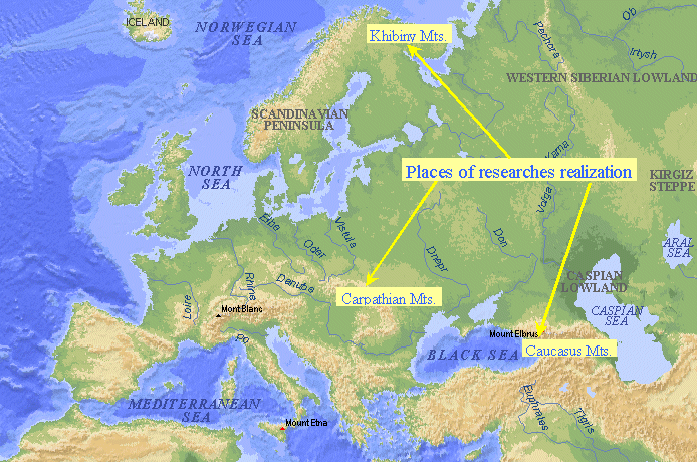 Therefore we'd
analyzed the contain of plants spores and
pollen at surface deposits of soil in Caucasus, Khibin and Carpathian mountains.
The received results have shown, that the pollen of wood plants, in particular
of beech, flows of a wind is brought highly in mountains and mass is accumulated
on a surface of soil in the Alpine zone.
Therefore we'd
analyzed the contain of plants spores and
pollen at surface deposits of soil in Caucasus, Khibin and Carpathian mountains.
The received results have shown, that the pollen of wood plants, in particular
of beech, flows of a wind is brought highly in mountains and mass is accumulated
on a surface of soil in the Alpine zone.
In the past
palaeobotanical study in Carpathians (on north-west mаkrоhillside Chornogora mountain region) were realized by G. Kozij (1932,
1934).
He tried to reconstruct the history of the forests of Carpathian during
the glacial and postglacial period (Козій, 1950,
1963). According to the materials of his own investigations, oriented to the
considerable essential contain in palaespectres of wideleaves trees pollen,
especially of Fagus sylvatica L. he drew a conclusion, that the forests with
the beech trees were spread on the upper forest belt of Carpathians in the
middle and late Holocene stage. His opinion has coincided with the opinion of
other researchers of that time (Szafer, 1935;
Firbas,
1949).
Later the subfossil spore-pollen deposits in the same region Srodon were analyzed (1948). This materials convincing confirm that the might amount of pollen of beech, hornbeam. hazel, lime, oak from the low and middle forest belts of mountains were transferred by the wind to the Alp and Subalp belts. In General, the pollen of wideleaves arbores plants is transfer on large distances in limits of continent. It is confirmed by the results of palynological explorations on the Shpizbergen (Srodon, 1960; Van de Knapp, 1988). The pollen of such arbores species as chestnut, lime, hornbeam, ash, elm, were discovered, with the exception of beech pollen. This facts prove the necessity of the correction of the fossil spore-pollen specters based on the analogical specters present-day surface deposits when reconstruct the paleoecological and botanical -history. The subfossil coprolites were first treated with KOH solution, further by flotation methods and acetalized by the Erdtman (1943) method. The pollen and spores were analyzed on preparations in glycerin solution using the M8iJ-15 light microscope. The investigated material is kept in a collection of the Palaeobotanical Department of the Institute of Palaeobiology of the Georgian Academy of Sciences, Tbilisi.
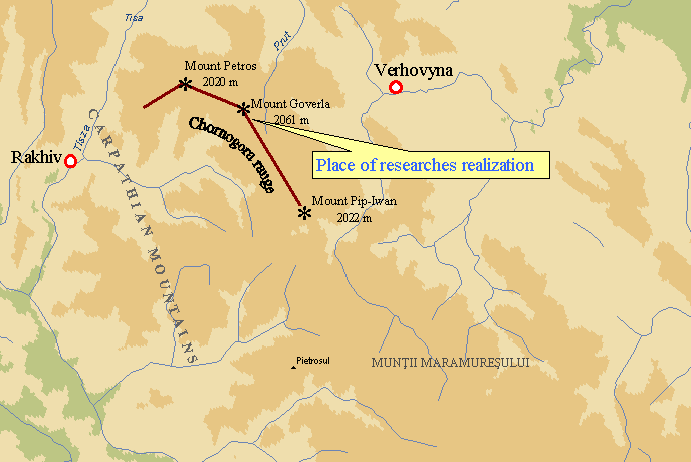
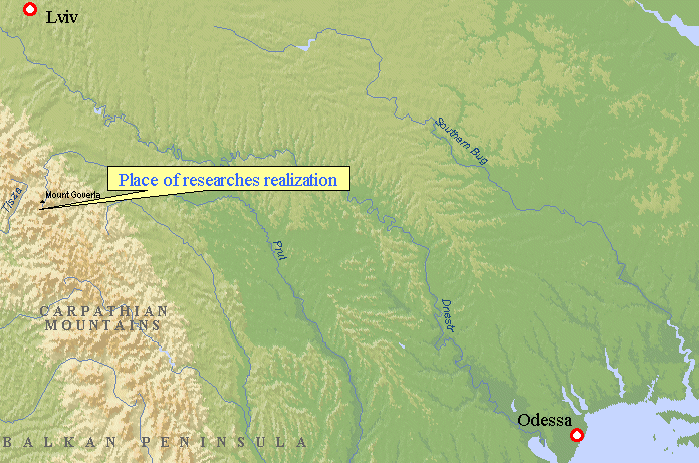 In Carpathians the studies were
carried out in high-mountain of Chornohora massif in limits of altitudes 1300 -
2061 m. of abs. altitude.
In Carpathians the studies were
carried out in high-mountain of Chornohora massif in limits of altitudes 1300 -
2061 m. of abs. altitude.
Results of this researches are represented on fig 1. Hence it was established, that in limits of Alp, Subalp and upper forest belt in spore-pollen spectrums at surface accumulation of soil prevail the pollen of Fagus sylvatica and Picea abies (L.) Karst. In limits watershed of range on Alp grasslands prevail (40 -60 %) beech the pollen. On north-west macrohillside in limits of Subalp and upper forest belts the relative quantity of beech pollen reduces till 20 %. Hence, we can draw a conclusion, that beech pollen was brought by the powerful spring winds from mountain valleys, that are located on south-west from Chornohora mountain range.
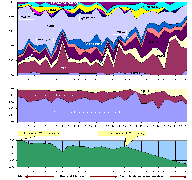
Fig. 1. Subfossil spore-pollen spectra of surface samples from the Chornohora mountain region (Carpathians)
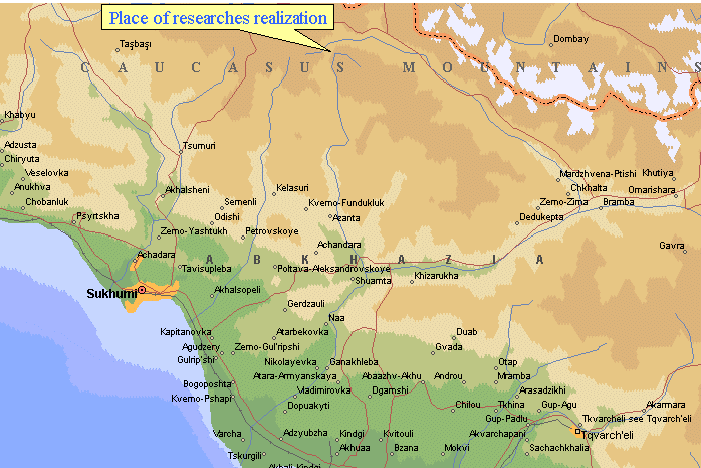 As against of the Fagus sylvatica
pollen that ability to be spread wind Fagus orientalis Lipsky in Abkhaz not
discover. Our researches were carried out in the mountain profiles from st.
Suchumi- till Zebelda - pass Maruch, on the river valleys Adange, Amtkel and
Large Khodgal (Квавадзе,
Рухадзе, 1989) and other. Pollen of
beech was discovered at considerable in quantities (30 - 50 %) in limits of
absolute altitudes 1200 - 2100 м., i. e. in limits of forest, oriental
beech mainly. Above till altitude near 2500м relative quantities of beech
pollen make not over 10 %, if you like local winds is fair of him transference.
As against of the Fagus sylvatica
pollen that ability to be spread wind Fagus orientalis Lipsky in Abkhaz not
discover. Our researches were carried out in the mountain profiles from st.
Suchumi- till Zebelda - pass Maruch, on the river valleys Adange, Amtkel and
Large Khodgal (Квавадзе,
Рухадзе, 1989) and other. Pollen of
beech was discovered at considerable in quantities (30 - 50 %) in limits of
absolute altitudes 1200 - 2100 м., i. e. in limits of forest, oriental
beech mainly. Above till altitude near 2500м relative quantities of beech
pollen make not over 10 %, if you like local winds is fair of him transference.
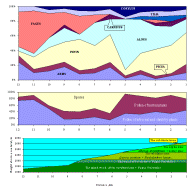
Fig. 2. Subfossil spore-pollen spectra of surface samples from the Abkhaz mountain region (Caucasus)
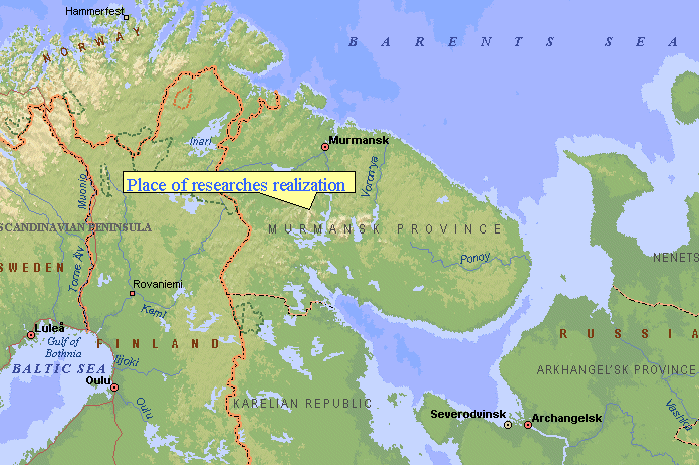
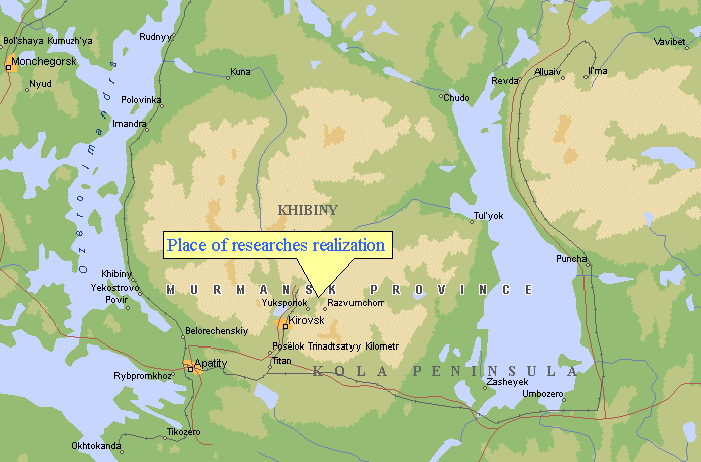 In Khibin the spore-pollen
specters of
modern deposits were researched by us along valleys of Yucsporrjok in limits of
absolute altitude 350 - 650 м.
In Khibin the spore-pollen
specters of
modern deposits were researched by us along valleys of Yucsporrjok in limits of
absolute altitude 350 - 650 м.
In their composition is represented the pollen of local forest species (Квавадзе, Третяк, 1995). From wideleaves species were discovered small a quantity lime pollen, but beech pollen was not discovered there. Therefore studies of section marsh-fluvial-glacial deposits about Kirowsk were fixed small amounts of beech pollen (till 0.1 %) in seam peat, which radiocarbon age makes 2700- 5770 years. Hence, we can draw a conclusion, that in middle Holocene the north limit of European beech spreading reached ed farther to the north from the present day limits, i.e. above 60 degrees N latitude to Scandinavian peninsula.
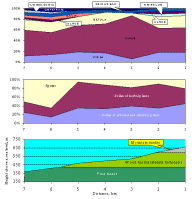
Fig. 3. Subfossil spore-pollen spectra of surface samples from the Khibin mountain region (Scandinavian peninsula)
This materials of explorations give arguments to confirm, that the pollen of Fagus sylvatica is capable to be transferred by wind flows fat up in the mountains, to accumulate in mass in limits of Alp belt as well as to be spread far in the North in limits of Fenoscandinafian. Analogous tendency to be transferred by wind of the pollen of oriental beech in limits of West Caucasus was not discover.
That tendency to wind transfer of pollen was not taken into account by research of the history of Carpathians forests. It is obvious that the Fagus sylvatica can be referred to the wideregional diagnostic species which is transferred by the wind on large distances from the lower to the upper belts of the mountains. Therefore, it is necessary to reconsider the existing ideas about the history of forming of Carpathians forests.
 This
WEB-site is made in 10 march 2002
This
WEB-site is made in 10 march 2002
The WEB-designer: Doctor of biological sciences, professor
Platon Tretyak
Platon Tretyak
[email protected]
