Call Your NY State Senators
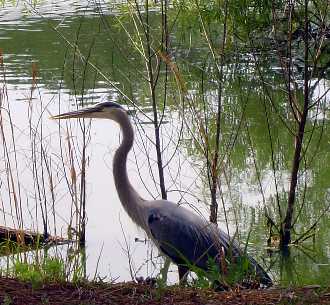
AUDUBON NEW YORK
BUFFALO AUDUBON SOCIETY
CITIZENS CAMPAIGN FOR THE
ENVIRONMENT
Ducks unlimited � Grreat Lakes/Atlantic
Region
ENVIRONMENTAL ADVOCATES OF NEW
YORK
NATURAL RESOURCES DEFENSE
COUNCIL
NEW YORK LEAGUE OF CONSERVATION
VOTERS
NEW YORK PUBLIC INTEREST RESEARCH
GROUP
NEW YORK STATE CONSERVATION
COUNCIL
NEW YORK STATE TROUT UNLIMITED
COUNCIL
NORTHEAST CHAPTER, AMERICAN LITTORAL
SOCIETY
RIVERKEEPER INC.
Sierra Club � Atlantic
Chapter
NEWS RELEASE
For
Immediate Release on March 17, 2006:
Contacts:
John Stouffer, Sierra Club � Atlantic
Chapter � (518) 426-9144
Sean Mahar, Audubon New York � (518)
669-1768
Liz Kaszubski, Buffalo Audubon Society
� (716) 695-3570
Dereth Glance, Citizens Campaign for
the Environment � (315)
Rob Moore, Environmental Advocates of
New York � (518) 462-5526
Brad Sewell, Natural Resources Defense
Council � (212) 727-4507
Marcia Bystryn, New York League of
Conservation Voters � (212) 361-6350
Laura Haight, New York Public Interest
Research Group � (518) 436-0876
Wallace John, New York Sate
Conservation Council � (518) 479-2485
Ron Urban, New York State Trout
Unlimited Council � (914) 388-3878
Don Riepe, Northeast Chapter, American
Littoral Society � (718) 634-6467
Leila Goldmark, Riverkeeper Inc. (914)
422-4126
CONSERVATION GROUPS URGE NYS SENATE TO
INCLUDE PROTECTION OF ALL WETLANDS IN THE STATE
BUDGET
Albany, NY on March 17, 2006 � Today, organizations representing thousands of citizens across New York State thanked Governor Pataki and the State Assembly for budget proposals that include increased funding and staffing for state wetlands programs and language to close loopholes in the State Freshwater Wetlands Act. Since 2001, New York State has failed to correct a glaring gap in wetland regulation that has exposed hundreds of wetlands to destruction. The groups called on the State Senate to waste no more time.
�For five years now, developers in New York State have taken advantage of a loophole in wetland protection law to destroy wetlands,� said John Stouffer, Legislative Director for the Sierra Club � Atlantic Chapter. �Now that the Assembly and the Governor have demonstrated that they want to close the loophole, we are counting on the environmental leadership of Senator Marcellino and the other members of the senate majority who support clean water, flood prevention and conservation of wildlife habitat to step up to the plate and make sure New York�s wetlands are protected�
The groups believe that there is broad support in the State Senate for closing the regulatory loophole. Wetland protection legislation sponsored by Senator Marcellino is co-sponsored by 12 majority party senators including Senator Balboni, Senator Flannagan, Senator Fuschillo, Senator Hannon, Senator LaValle, Senator Leibell, Senator Maltese, Senator Morahan and Senator Padavan. Numerous other Senators of both parties have also indicated that they will vote for passage of this bill.
New
York�s wetlands help to maintain the quality of our cold water fisheries,� said
Ron Urban of Trout Unlimited.
�Trout Unlimited and our coalition partners are counting on Senator
Marcellino, and the supporters of his legislation to
move the Senate majority to join Governor Pataki and the
State Assembly to resolve this outstanding issue in the 2006 budget-making
process.�
Because the New York State Freshwater Wetlands Act (ECL Art. 24) primarily protects wetlands that are 12.4 acres and larger, New York historically has relied on the U.S. Army Corps of Engineers (the Corps) to protect the vast majority of smaller wetlands throughout the State. However, since 2001, the Corps has largely stopped regulating so-called �isolated� wetlands (defined by the agency as wetlands lacking a surface water connection to a waterway), claiming it lacks legal authority to do so as a result of a Supreme Court decision (Solid Waste Agency of Northern Cook County v. United States (�SWANCC�), 531 U.S. 159 (2001)[1]. The result of this change is that hundreds of wetlands threatened by development in New York are not protected by either the state or the federal government. A survey of Corps records for the period 2001 � 2005 conducted by the Natural Resources Defense Council (NRDC) found more than 330 sites, each with at least one wetland that the Corps said it would no longer protect. These wetlands would have been federally protected prior to 2001.
This unregulated wetland destruction has caused economic loss to homeowners and the community at large, harmed our environment, and threatens public health and quality of life. Home buyers have suffered losses from flooding after unwittingly purchasing homes built in wetlands. Communities have lost the flood abatement, water purification and groundwater recharge function that wetlands provide. And, the habitat for countless wetland- dependent plants and animals, and the outdoor sporting and recreation they provide, have been lost.
"New York has a long tradition of leadership on environmental issues that is even more critical today given that the federal government has abandoned any pretense of protecting the nation's environment for all Americans," said Brad Sewell, Senior Attorney with the Natural Resources Defense Council. "On wetlands, New York is far from the leader, and we ask that the state catch up - our smallest wetlands are frequently our most valuable and they are being destroyed as we speak."
Following SWANCC, several states, including Wisconsin, Indiana and Ohio, upgraded their freshwater wetland protection laws to regulate the wetlands that the Corps no longer protected. Pennsylvania, New Jersey, Connecticut, Massachusetts, New Hampshire, Vermont and Maine already had adequate wetland protection laws on the books �basing regulation on scientific criteria, not wetland size � so no corrective action was necessary.
�It�s time for the environmental leaders in the Senate, like Senator Marcellino to work with their fellow Senators to make sure that the Senate joins Governor Pataki and the Assembly in restoring comprehensive wetland protection in New York,� said Marcia Bystryn, Executive Director of League of Conservation Voters.
"Many
different bird species across New York depend on freshwater wetlands to nest,
breed and feed, and numerous Audubon Important Bird Areas exist because of these
freshwater habitats," said Albert E.Caccese, Director of Conservation and
Government Relations for Audubon New York.
"Audubon New York applauds the Assembly and the Governor for taking
action to improve protection of these significant resources, and urges the
Senate to resolve this issue soon."
Studies by the U.S. Fish and Wildlife Service show that an acre of wetland can restore more than 1.5 million gallons of floodwater. Floodwater held in wetlands percolates into the ground, replenishing aquifers that serve both private and municipal water systems. They also filter out contaminants, protecting water quality in streams, lakes and rivers. This function is especially important for a majority of New York�s cities that rely on surface supplies of drinking water.
�While wetlands can purify our drinking water supplies for free, their destruction causes New York City and communities across the state to build complex filtration systems costing taxpayers billions of dollars,� said Leila Goldmark, Attorney for Riverkeeper.
�Governor Pataki, Assembly Speaker Silver, Assembly Environmental Conservation Chair Thomas DiNapoli, and Senate Environmental Conservation Chair Carl Marcellino have agreed to protect New York�s threatened wetlands and the full Senate must step up and act now.�
�We know the majority of the Senate supports taking action to protect wetlands,� said Robert Moore, Executive Director of Environmental Advocates of New York. �Senator Marcellino has an opportunity to show his leadership on this issue that is so critical to protecting water quality, preventing flooding, and providing wildlife habitat..�
�The question now is will the Senate stand with the Governor and the Assembly for conservation of New York wetlands, or will they continue to stall passage
of an important measure and force New Yorkers to face the risk of polluted water, increased flooding and loss of wildlife habitat,� Don Riepe, Director of the Northeast Chapter, American Littoral Society went on to say.
�Because of their value in preventing flooding, cleaning up water pollution and providing wildlife habitat, wetlands enjoy broad support from the public and from members of the New York State Legislature,� said Dereth Glance, _Program Director, for Citizens Campaign for the Environment.
[1] In the wake of the SWANCC decision,
the Corps adopted a policy of broadly excluding so-called �isolated� waters from
protection as �waters of the United States�. Many wetlands, and even lakes and
streams that are not immediately adjacent to larger streams and rivers or
connected by surface water to navigable waters, are being denied protection
under the Clean Water
Act.


Read our letter of support for this legislation (below) and click here for more on New York's Wetlands Legislation.
Citizens for a Green North Tonawanda
Honorable Carl L. Marcellino
Chairman, NYS Senate Environmental
Conservation Committee
Room 812, Legislative Office Building
Albany, NY
12247
(518) 455-2390
Dear Senator Marcellino,
As a founder of Citizens for a Green North Tonawanda, I convey our
recognition of your outstanding leadership in protecting New York�s wetlands
through your sponsorship of S.2081.
We trust that this letter will help in your efforts to persuade Senator
Bruno of the importance of this legislation.
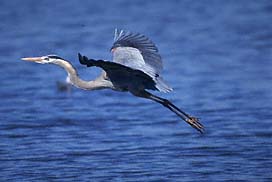
The exemplary wetland pictured above is the reason our grassroots
organization was founded in 1997.
We have had an uphill battle trying to save the remaining 75 acres of
what was once the 102-acre Klydel Wetland in our city in Niagara County. We appealed without success to the
Buffalo District of the US Army Corps of Engineers to protect this wetland after
a 2001 US Supreme Court decision caused them to declare it �isolated�. Thus far, our efforts to get the Corps
to reverse their decision have failed.
Even before the court decision, residential subdivisions were
constructed into the heart of the Klydel Wetland in the mid-1990�s without any
application whatsoever for required federal wetland permits in areas
�grandfathered� by New York State.
The results have been unhappy, unaware homeowners with cracked basements
in addition to flooding of surrounding neighborhoods by overwhelmed storm
sewers.
Therefore, we strongly support the elimination of the provisions in current law that grandfathers subdivisions and other activities in wetlands that were permitted prior to the passage of the law in 1975. Wisely, this bill will require that permits issued by DEC be included in the deed for the property. This provision will ensure that future prospective purchasers receive notice that structures on the property were constructed in wetlands. In 2003, the NYS Attorney General estimated that 501 homes developed foundation problems at a cost of $4.7 million in our neighboring town of Amherst. The town has since admitted that over twice as many homes have been damaged by being built in unstable soils-- many of them in wetlands.
If people are spending
their life savings for their home it shouldn�t be asking too much of the
homebuilders� association to allow them to make an informed decision. A developer receiving a rubber-stamped
wetland permit can�t make the wetland soil magically disappear. The days of selling �swampland� to the
unsuspecting in Florida should not continue to be repeated today in New
York.
Respectfully yours,
Chuck Rosenburg,
Citizens for a Green North Tonawanda
http://www.geocities.com/ntgreencitizen/index.html
Click here for a statement by the Office of the New York State Attorney General.
Back to our MAIN PAGE.
 Get your own Free Home Page