Wildlife and Plants of the North Tonawanda Audubon Nature Preserve
And A Wetlands Resolution
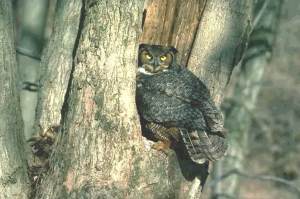 Most
excellent wildlife sighting-- A North Tonawanda High School student was
practicing his "baby" turkey calls (he was not hunting) in the North Tonawanda Audubon Nature Preserve during the first week of April 2004. Within a short
time he spotted a bird with a 5 ft. wingspan circling precariously
overhead-- it was a Great Horned Owl looking for a
meal.
Most
excellent wildlife sighting-- A North Tonawanda High School student was
practicing his "baby" turkey calls (he was not hunting) in the North Tonawanda Audubon Nature Preserve during the first week of April 2004. Within a short
time he spotted a bird with a 5 ft. wingspan circling precariously
overhead-- it was a Great Horned Owl looking for a
meal.
If you see an unusual
sighting in the preserve, tell us about it at [email protected]
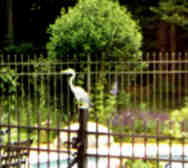

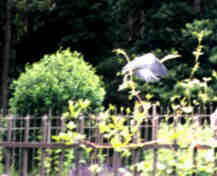
A Great Blue Heron going into the Klydel Wetland
May is the peak month to visit the Klydel Wetland for birdwatching and an account of just such a rewarding visit can be found further down this page. In addition, Chuck Rosenburg, Mark Galas, and Gerry Rising visited the Klydel Wetland for an early morning bird watching trip covering the new Buffalo Audubon Society nature preserve on May 12, 2001. These are just some of the species they noted: Scarlet tanager, ovenbird, rose-breasted grosbeak, red bellied woodpecker, and for the first time in Klydel-- the Carolina wren and the Philadelphia vireo.
Over 100 species of birds have been sited in this wetland. Many of the migrants seek a resting and feeding spot on their journeys. The Klydel Wetland is a nice oasis in a desert of suburbia located just 1 mile east of the Niagara River. If you view the air photos posted on this web site, you will see how attractive the wetland looks to a bird flying overhead.

Haven for Migrant and Breeding Songbirds
�
A morning tour of Klydel Wetland on May 14, 2000, witnessed the importance of this 70+/- acre island of forest
habitat to migrant and breeding songbirds. Hundreds of colorful warblers (a
minimum of 15 species total), thrushes, and other migrant birds fed and rested
within the productive wetland ecosystem, all the while singing their melodious
songs.
�
Many of the wetland�s breeding
birds, having just returned to western New York from southern states and Central or South America, and vocally defended territories and feasted on newly emerged insects.
�
A sharp-shinned hawk buzzed
overhead in search of avian prey and an eastern screech owl emphatically
defended its territory to a virtual intruder (the birder imitating a screech owl call to attract "mobbing" songbirds). The diversity and abundance of bird life made for a phenomenal bird watching experience, all within the North Tonawanda city limits!
�
Highlights of the birds heard
broadcasting their distinct songs or seen darting from branch-to-branch and
tree-to-tree included:
�
- sharp-shinned hawk
- eastern screech owl
- red-bellied woodpecker
- least flycatcher
- great crested flycatcher
- tufted titmouse (breeding
pair)
- veery
- gray-cheeked thrush
- Swainson�s thrush (many migrants
of this species)
- yellow-throated vireo
- red-eyed vireo
- Tennessee warbler
- Nashville warbler
- northern parula
- chestnut-sided warbler
- magnolia warbler
- black-throated blue
warbler
- yellow-rumped warbler
- black-throated green
warbler
- Blackburnian warbler
- bay-breasted warbler
- blackpoll warbler
- black-and-white
warbler
- American redstart
- hooded warbler
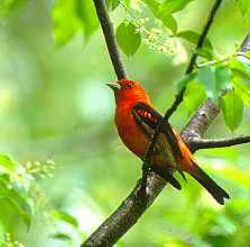
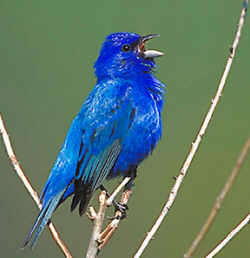
- scarlet tanager (3 brilliant males
and 1 female)
- rose-breasted grosbeak
WILDLIFE OBSERVED IN THE KLYDEL WETLAND
�
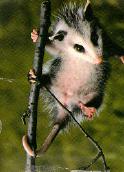
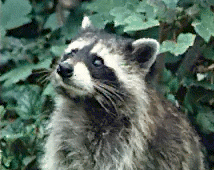
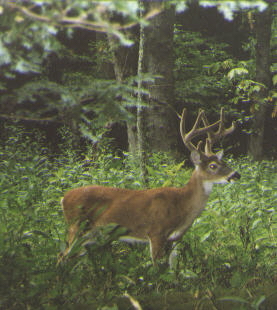
Mammals:� brown bat, short-tailed shrew, opossum, raccoon, red fox, white-footed mouse, deer mouse, meadow vole, eastern gray squirrel, eastern cottontail rabbit, and white-tailed deer.
�
Reptiles:� eastern garter snake, eastern ribbon snake, turtle (unidentified as to species although a snapping turtle nest was found in 1998 under the playground of nearby Meadow Elementary School).
�
Amphibians:� northern leopard frog,
western chorus frog, wood frog, spring peeper, American toad.
�
There are over
100 species of birds recorded in the wetland, some of them are the following:� American black duck, mallard duck, wood duck, great blue heron, green heron, Cooper's hawk, Northern goshawk, red-tailed hawk, sharp shinned hawk, Northern harrier, turkey vulture, spotted sandpiper, solitary sandpiper, common snipe, American woodcock, ring-necked pheasant, wild turkey, yellow-billed cuckoo, black billed cuckoo, eastern screech owl, great horned owl, ruby throated hummingbird, yellow bellied sapsucker, downy woodpecker, hairy woodpecker, red-bellied woodpecker, eastern wood pewee, least flycatcher, eastern phoebe, great crested flycatcher, eastern kingbird, white breasted nuthatch, brown creeper, Carolina wren, house wren, winter wren, golden crowned kinglet, ruby crowned kinglet, blue-gray gnatcatcher, veery, swainson's thrush, hermit thrush, wood thrush, gray catbird, brown thrasher, cedar waxwing, Philadelphia vireo, solitary vireo, yellow-throated vireo, red-eyed vireo, Tennessee warbler, Nashville warbler, Northern parula, yellow warbler, chestnut-sided warbler, magnolia warbler, bl. throated blue warbler, yellow rumped warbler, bl. throated�green warbler, blackburnian warbler, palm warbler, bay-breasted warbler, black and white warbler, American redstart, ovenbird, northern waterthrush, common yellowthroat,�Canada warbler,�scarlet tanager, rose breasted grosbeak, indigo bunting, Northern oriole, bullock's oriole,�pine siskin, common flicker, killdeer, swamp sparrow, and new in 2002- the blue-winged warbler.
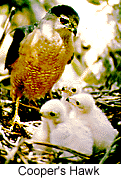
COOPER'S HAWK - likes to dine on songbirds at backyard birdfeeders surrounding Klydel....
The mature forested, Klydel Wetland has excellent habitat for owls. The great horned owl, as well as abundant numbers of eastern screech owls, are found in this unique wetland in an urban setting. A pair of Great Horned Owls was heard in the northern portion of the wetland calling to each other in 1999.
Noteworthy invertebrates: fairy shrimp, burrowing crayfish, fingernail clam.
If you see any unusual critters or plants in the wetland, please let us know at the e-mail below.
SOME TREES AND SHRUBS IN THE
KLYDEL WETLAND
Trees: shumard oak (first of this species discovered in New York State), silver maple, red maple, sugar
maple, box-elder, green ash, American elm, pin oak, swamp white oak, burr oak,
northern red oak, white oak, American beech, black cherry, American basswood,
Eastern cottonwood, American hornbeam, flowering dogwood, and
sycamore. The Shumard Oak, rare or undocumented elsewhere in New York State but found in the Klydel Wetland, was the subject of studies by Niagara University.
Shrubs: spicebush, gray dogwood, silky
dogwood, Northern arrow-wood, nannyberry, cranberry viburnum, common elderberry, choke cherry, meadowsweet, running strawberry bush, gooseberry, and willows.
OUR WETLANDS RESOLUTION
WHEREAS natural wetland habitats are critical to the survival of millions of birds, fish, and wildlife; (1)
WHEREAS wetlands are critical to biodiversity, open space, and recreational opportunities;
WHEREAS wetlands act as a unique filtration system that keeps our water clean and protects property from flooding;
WHEREAS wetlands are being lost at the rate of over 100,000 acres a year; (2)
WHEREAS more than eight out of ten voters say that protecting wetlands is important to them; (3)
THEREFORE BE IT RESOLVED that Citizens for a Green North Tonawanda supports the goal of no net loss of wetlands; (4)
AND BE IT FURTHER RESOLVED that Citizens for a Green North Tonawanda recognizes the value of wetlands to this community and is committed to preserving the Klydel Wetland.
Sources:
(1) Wetlands as Bird Habitat, Robert Stewart, Jr. in National Summary of Wetland Resources, U.S. Geological Survey Water Supply Paper 2425 (Washington, DC; US G.P.O., 1996, 49.
(2) Status and Trends of Wetlands in the Conterminous United States, U.S. Department of the Interior Fish and Wildlife Service Report to Congress, Draft, 1998. Full text available on website at http://www.nwf.org/nwf.
(3) Findings from Focus Groups and a Nationwide Survey of Registered Voters, Lake Sosin Snell Perry and Associates, January 1998.
(4) President Clinton's 1993 Wetlands Plan, as referenced in the Clean Water Action Plan: Restoring and Protecting America's Waters (p 40) U.S. Environmental Protection Agency, U.S. Department of Agriculture, and other federal agencies in fulfillment of the administration's mandate to create a plan to achieve the goals of the Clean Water Act. To order, call 1-800-490-9198 and request "EPA-840-R-98-001."
� 2006 [email protected]
Back to our MAIN PAGE.