
-
Encroachments on an Urban Wetland:� The Klydel Controversy
-
�
-
Published on pages 12�& 13 of the FALL 2000 Sierra Atlantic�magazine�
-
View the entire magazine in PDF format�at:� �http://www.newyork.sierraclub.org
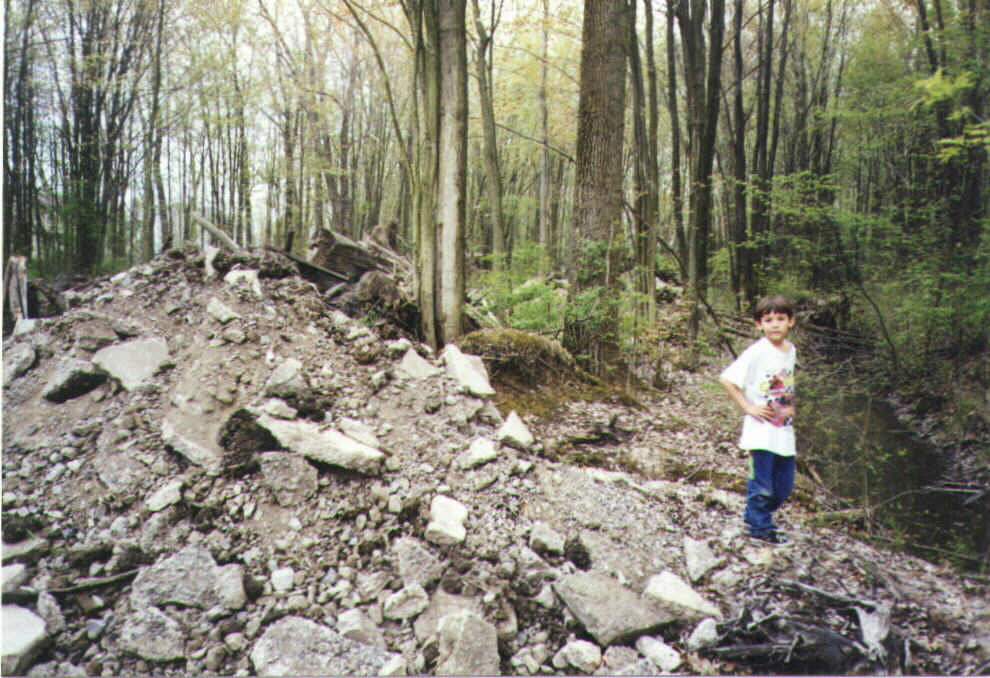
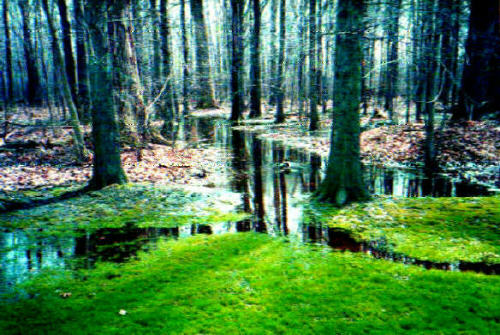
- Above, a portion of Klydel currently under threat of apartment construction.
- Never underestimate the actions a developer may take to destroy a wetland in your neighborhood. Never overestimate your chances of finding regulators who care about the natural, aquatic resource.
- �
Consider the Klydel Wetland (TE-15) in the City of North Tonawanda, Niagara County. NYSDEC originally mapped the Klydel Wetland as containing 102 acres. After a developer brazenly built a DEC-grandfathered subdivision into the middle of the wetland in the mid-1990�s without federal permits, only about 70 acres of the wetland remained. Many of the surrounding neighborhoods (about a dozen streets dead-end on Klydel) have suffered flooding since this sub-division was built.
- �
In 1993, the city�s mayor and a developer met with the DEC behind closed doors concerning large parcels of the Klydel Wetland. The mayor�s son and this developer purchased the Klydel property shortly after an April 1995 meeting in DEC offices, where negotiations with the state included a cash donation of $70,000 for Buckhorn Island State Park in exchange for destroying seven acres of the Klydel Wetland. The following year, the developer�s intentions for
these seven acres were finally announced by a prominent mega-mall developer, who proposed to build a supermarket and commercial strip on the site. This developer wisely abandoned this project after much outcry.- �
The Klydel Wetland has been the target of at least six development projects in the past four years. In January 2000, a contractor for the owners removed trees in apparent defiance of a federal order prohibiting the work. As soon as the U.S. Army Corps of Engineers learned of the logging, it posted a sign on the property forbidding the owners from doing any more work. The sign said: "The United States of America hereby orders you to stop work." The Sierra Club applauded the decision of the corps that prevented further destruction of the wetland.
- �
The Buffalo District of the Army
Corps received comments from over 800 individuals and organizations during a public comment period that ended April 8, 2000� none supportive of a new proposal for a 50-unit senior apartment complex on this same property in Klydel.�- �
-
Then in May 2000 a
controversial size reduction of the Klydel Wetland was announced on the front page of the Tonawanda News by the DEC Region 9 permit administrator. The boundary change is located where the senior complex is planned to be built. DEC wetland map changes are supposed to subject to a public hearing, but this one was not. - �
The entire laxity of the
DEC in the case of the Klydel Wetland flies in the face of the standard wetland permitting process. At Klydel there has been a wetland delineation report commissioned by the developer but not yet approved by the federal government, wetland permit application forms not filled out until after the property was logged, no alternative sites analysis, and DEC�s lack of open, good-faith discussions with all affected parties. The DEC has concealed information in its files, even when there was no authority under the Freedom of Information Law to deny access to records requested by the public.- �
The Sierra Club petitioned
the New York State Freshwater Wetlands Appeals Board with several concerns regarding the Klydel Wetland on behalf of Buffalo Audubon Society (currently purchasing another property in the wetland), Adirondack Mountain Club (Niagara Frontier chapter), Great Lakes United, Citizens for a Green North Tonawanda, and various other appellants.Sierra
Club awaits the decision of the Appeals Board, whose members are appointed by the governor to hear disputes over wetland issues.�Hopefully, justice will be served.[Update-- No real justice came from the NYS Appeals Board. There, was, however, a $97,000 award announced by NYS Governor Pataki in May 2002 to Buffalo Audubon Society to purchase the property in question that is now part of a nature preserve. In late 2006, Buffalo Audubon finally received reimbursement from New York State for the Society's purchase of the Probst property in June 2002.]
- �
This article was authored by the Wetlands Chair of the
Sierra Club, Atlantic Chapter (that has over 40,000 members throughout New York State.
Back to our MAIN PAGE.
We welcome comments or suggestions sent to the e-mail address listed below.
� 1997-2008 [email protected]
 Get your own Free Home Page