 LOVE
WETLANDS
!!!
LOVE
WETLANDS
!!!
LOVE
WETLANDS
!!!

Citizens for a Green North Tonawanda is a grassroots group formed in 1997. Our initial goal was preserving the Klydel Wetland in North Tonawanda (that now contains the North Tonawanda Audubon Nature Preserve). Advocacy has expanded to other issues, i.e., preserving green space, limiting urban sprawl, and cleaning up the environment. We also help other activists who wish to save wetlands in their communities.
We conduct owl prowls, nature walks, and other educational programs in the North Tonawanda Audubon Nature Preserve in partnership with Buffalo Audubon Society and the Western New York Land Conservancy. Students and teachers involved with the North Tonawanda High School Outdoor Awareness Club also played a critical role in saving the wetlands located near their school.
Citizens for a Green North Tonawanda is proud to announce that through the year 2006, sufficient funding has been granted to the partnership of the Western New York Land Conservancy, Buffalo Audubon Society, and Citizens for a Green North Tonawanda to purchase additional parcels in the Klydel Wetland for preservation and public access.
Approximately 36 acres of the Klydel Wetland has been acquired by the Western New York Land Conservancy for the new North Tonawanda Audubon Nature Preserve. An additional 9.3 acres in this wetland are owned by the North Tonawanda School District and under a ten-year lease with Buffalo Audubon Society. The total undeveloped remaining acreage in the Klydel Wetland is about 75 acres (of an original 102 acres mapped by the NYS Dept. of Environmental Conservation). Of the remaining wetland, about 46 acres are available to the public. Negotiations are continuing with more landowners (who have expressed an interest in selling their properties for preservation) to expend the remainder of the grants.
When our group was originally founded in February 1997-- it was upon the realization that a good part of the Klydel Wetland might have been turned into a huge supermarket with a BIG parking lot as proposed by Benderson Development in November 1996. We appreciated letters of support by Sierra Club and the Adirondack Mountain Club that were sent to our (now) ex-mayor requesting preservation of the Klydel Wetland. The mayor's son was an owner of the property that was going to be developed.
In April 1998, we were awarded $15,000 by the Niagara County Environmental Fund (funded by Occidental Petroleum as part of the Love Canal Settlement). We began with educating students at the 9.3 acres of school district property in the wetland. Our first nature trail was completed by the North Tonawanda High School Outdoor Awareness Club in the Fall of 1998 on the school district property off Woodward Avenue (actually listed as 1014 Raymond Street but that street does not traverse that property). An educational brochure that including a map of the nature trail is available at the N. Tonawanda library.
In partnership with the Western New York Land Conservancy, appraisals were completed by an independent appraiser by the year 2001 for all landowners who expressed an interest in selling their properties to expand the nature preserve. Parcels purchased will have conservation easement placed on them to permanently protect them. With the purchase in April 2001 of the first 17 acres by the partnership, the Klydel Wetland has come to be known as the "North Tonawanda Audubon Nature Preserve".

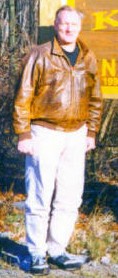 One of our founding board members sadly died on March 2, 2005 of a heart attack. Steve Slivan will be remembered for standing up to a logger who was trying to cut down a large part of the Klydel Wetland for development in 2000. The property Steve defended was saved and is now preserved as part of the North Tonawanda Audubon Nature Preserve. On October 29, 2005, the nature trail that was created on that logger's path of destruction was dedicated in Steve's memory.
The following is an article concerning the Klydel Wetland from the July 13, 1998 edition of the Tonawanda News. We thank North Tonawanda Earth Science teacher Paul Swisher for submitting this story to the News.
WETLANDS HELP EDUCATE NORTH TONAWANDA STUDENTS

It is one of the largest contiguous ecosystems of its type remaining in Western New York. It provides a natural drainage retention area for runoff precipitation in the city of North Tonawanda. It offers local homeowners protection against flooding. It provides habitat to hundreds of species of flora and fauna native to the Twin Cities. It serves as a rest stop for migrating birds en route to their seasonal destinations. And now, it is being prepared to serve as a hands-on educational nature preserve for students attending North Tonawanda City schools as well as for community residents.
All of the benefits and plans described above apply to the Klydel Wetlands, located in the heart of North Tonawanda. The 80 -plus acres of wetlands, which are regulated by the New York State Department of Environmental Conservation and the U.S. Army Corps of Engineers, has at its center 9.3 acres of property owned by the North Tonawanda Public School District.
The school district property has been used extensively this year by students attending North Tonawanda High School. Reszel Middle School students have also conducted studies in the wetlands as part of their modified Regents Earth Science project requirement. The district-owned wetlands serve as virtual "outdoor laboratories" that have been used to conduct lessons in Earth Science, environmental science, and biology. They have also been utilized to prepare high school students for county and state-wide competitions in science and conservation (such as the New York State ENVIROTHON) and they will be used in the fall as a study site for the GLOBE program. {GLOBE is Global Learning and Observations to Benefit the Environment, a hands- on, computer-based program that involves student assessment and measurement of the environment and subsequent data entry of information}. GLOBE is funded by NASA and will be introduced and implemented into existing curricula across all grade levels throughout North Tonawanda schools next fall.
Educational opportunities within the wetlands have been enhanced by a growing association with the organization, Citizens for a Green North Tonawanda (CGNT). In a meeting with North Tonawanda Schools Superintendent Dr. John George, CGNT co-founder Liz Kaszubski and NTHS science teacher Paul Swisher received support for utilizing the Klydel Wetlands for educational purposes. CGNT, in partnership with the Western New York Land Conservancy, also received support for pursuing plans to secure the remaining acres of wetlands as a nature refuge and outdoor education center. The latter goal moved one step closer to reality when CGNT was awarded a $15,000 grant from the Niagara County Environmental Fund. The grant money will be used to obtain appraisals from landowners who express interest in selling their wetland property for expansion of the nature preserve.
During the past school year, geologists, botanists, and environmental scientists associated with the preservation effort have volunteered their time and talents to work with NTHS teachers and students on activities conducted in the wetlands. Students were taught to obtain and identify wetland soil samples, how to classify various types of trees and plants found in wetland ecosystems, and how to identify many types of wetland wildlife based on sightings, tracks, scatology, and sounds. Students also constructed and used hand-made instruments such as clinometers (used to measure tree height) and densiometers (used to measure canopy percentage).
Additional plans for the fall of 1998 include student projects involving accurate demarcation of the school board property, construction and placing of informational signage relating to tree and plant species, wildlife, and soils, and the development of an informational brochure (including a map) that will be available to community residents. For information regarding the value of the Klydel Wetlands and for updates concerning the nature preserve, visit the CGNT web site at: http://www.geocities.com/ntgreencitizen/index.html.
This news article also included three photos with the following captions:
Nicole Boerdner uses a hand-made clinometer to measure the height of a pin oak. Pin oaks commonly grow in wetland soils.
Volunteer ecologist Chuck Rosenburg helps Graydon Grawe identify a soil sample with the aid of a Munsell chart.
A second growth forest (containing some old growth trees) offers peaceful respite and multitudinous benefits fo the community.
Citizens for a Green North Tonawanda would like to thank the students and their teachers, Paul Swisher and Chris Hiestand, for their interest in the Klydel Wetland and their enthusiasm.
Here is a photo of teacher volunteer, Paul Swisher, leading a tour of students and citizens on the new wetland nature trail: Thanks to Mike Igoe of WGRZ-TV for the great work he did in broadcasting our cause. If you missed the July 1, 2002 segment on the 5 PM news, view the story by hitting here.
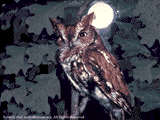
Check out our Owl Prowls and see a screech owl (above). Back to our main page.
We welcome comments or suggestions sent to the e-mail address listed below.
� 1997-2006 [email protected]

 Get your own Free Home Page