ABALONE CULTURE
Version of 13 Mar 2006. Started Feb 2006. (contents subject to change)
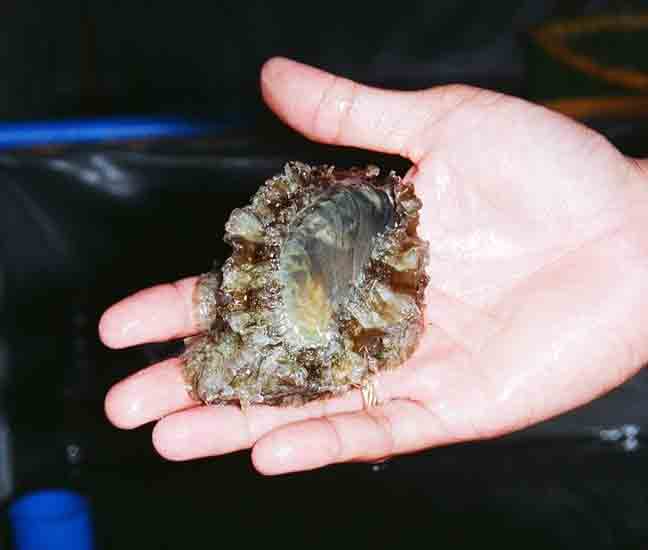
This is a native abalone 1.5 to 2 years old.
Weight: 100 to 120 grams
12 to 14 months old native abalones can be sold live/fresh
to restaurants or to canners. Most restaurants prefer canned. Coz semillas are bought 3 to 3.5 months old, grower
needs only ~9 months of culture time.
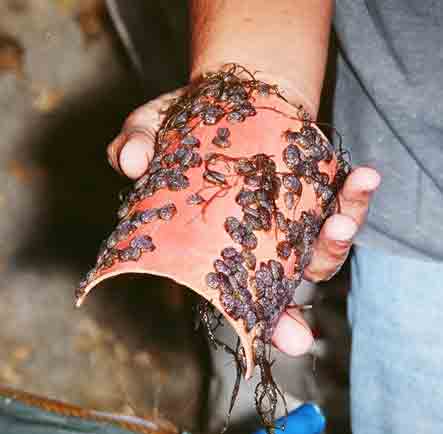
These are native abalone semillas 3 to 3.5 month old.
Shell length: 1.1 to 1.5 cm
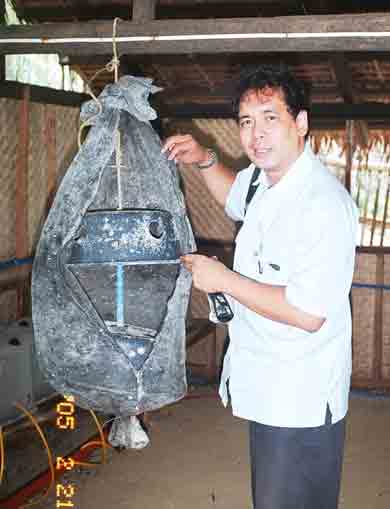
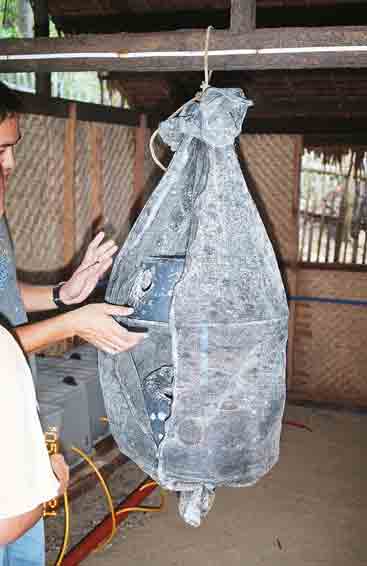
This is the NETCAGE method of abalone culture. Semillas are left to stick
& crawl on the surface of plastic pans together with gracilaria seaweeds.
NETCAGES remain submerged in pure clean seawater. Once a week, they are
lifted for feeds replishment. Gracilaria seaweed is all that is needed as weekly feeds.
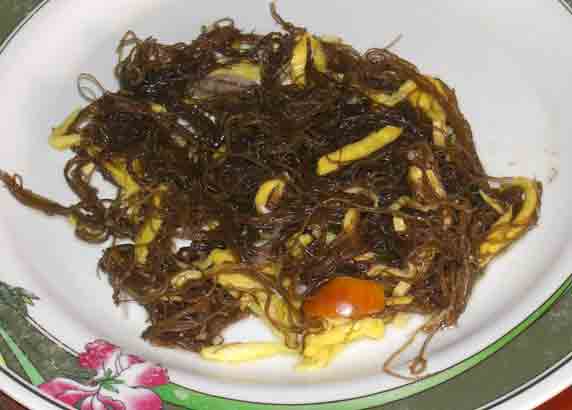
The brown hairlike stuff on this salad plate is gracilaria seaweed .
In Ilonggo, this is called GULAMAN. Another type of seaweed with "tiny
bubbles" throughout its stem is NOT gracilaria & is called LATO in Palawan.
Semillas eat about 35% of their body weight daily. To start one
culture batch, purchase semillas ~3 months old (about 1 gram per piece).
1000 semillas of ~1 gram each will consume 350 grams of gracilaria
per day. Abalones are herbivores like kambings, kabayos, & carabaos.
As abalones grow, feeding rate decreases to ~6% to 8% of body weight daily.
Abalones are STENOHALINE, ie they cannot withstand extreme changes in salinity.
Throughout its culture, NETCAGES must remain submerged in pure clean seawater.
Seawater is usually 32 to 34 ppt (parts of salt per thousand). PPT by weight?
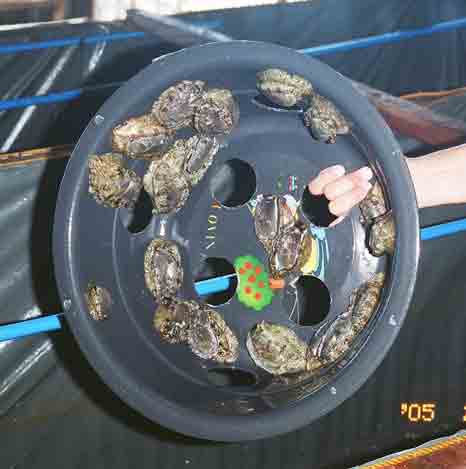
These are 10 to 12 months old abalones stuck to a plastic palanggana/pan
as they grow inside netcages. Weight: ~60 to 80 grams per piece.
These days, farmgate price of 12 to 14 months old fresh/live abalones is P:350/kg
Add packaging & air transport costs plus a reasonable margin for traders, selling price
of fresh/live abalones to restaurants is about P:550-P:600/kg at current prices.
Profit margins include recovery allowance for some percentage of spoilage.
Canned abalones have the advantage of tenderness in texture & long shelf life.
Coz abalones are not part of the common diet of most people (not even amongst
the affluent rich); most restaurants prefer to keep their inventory of abalones in cans.
It should not be difficult to find Mexican & Australian abalones in cans in several
Chinese restaurants.
Fresh/live abalones are usually blast frozen without the shells into 250, 500,
or 1000 gram packs. "Shucked" is term given to abalones removed of shells.
Frozen packs have to remain frozen even during transport. In order to avoid
costly refrigerated transport, another preparation is VACUUM packaging.
Deprived of air & oxygen, bacteria in vacuum packs cannot easily spoil the contents.
Apart from canning, another method of preservation is drying. Dried abalones
are either vacuum packed or loosely packaged.
A very recent link between abalones to material science
(structures & processes) & to energy.. has been recognized.
Try to google these three keywords: abalone, energy, & Belcher