
eRRion's

Tire patch kit

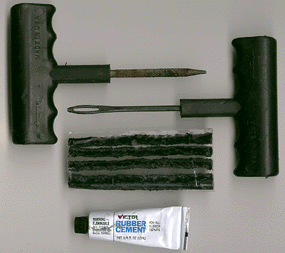
As you can see, they've been put to good use. The first T-handle tool (on the left) is used to roughen the hole after the puncturing object has been removed. The second T-handle (right) is used to insert the plugs (long stringy things). The rubber cement (on the bottom) serves the dual purpose of lubricating and chemically reacting with the plug to make the seal.

You can also buy the plugs & lube separately when you need to replenish your supply. I think they sell them in packs of ten (probably more than you'll need in a whole year!). This is my second or third pack of replacement plugs. The original ones were brownish red, but I've noticed no performance differences between the two colors.
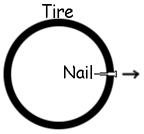
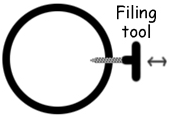
Here is a brief schematic of how the plugs work.

Figure 1

Figure 2

Figure 3

1. Remove the object (nail, screw, etc.) from the tire. You can use the pliers that (ahem) you should have in your toolkit.

2. Roughen the hole with the filing tool. Lubricate with the rubber cement. You'll have to put some muscle into this step because it isn't easy to get through a radial tire.

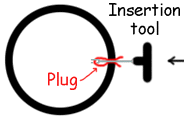
3. Important! Thoroughly lubricate the plug and insertion tool with the rubber cement (this is what causes the chemical reaction that fuses the plug with the tire). Insert about 3/4 way into tire, and pull straight out. The tool should come straight out; the sphincter-like pressure of the hole should retain the plug in the tire. Do NOT twist!


Figure 4

Figure 5

Figure 6

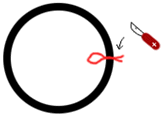
4. You can inflate the tire at this point. The instant you pulled that insertion tool out, the plug made its seal. Trim the plug flush with the surface of the tire.

5. Fixed! I rode a tire with two patches (from two different holes!) on the race track for 2 days... and the patches still didn't fail. :)

6. After you ride for just a few miles, the plug will gum itself to the inside surface of the tire. (Photo of inside of tire coming soon :) Intermittently, as your tire wears, you should re-trim the plug flush with the tire surface. This is because the plug wears much slower than the tire.

Note: This is a BRIEF description. For complete instructions, refer to the instructions included in your tire patch kit. Also remember... DON'T DO BURNOUTS WITH A PLUGGED TIRE! Another note about my use of a patched tire on the racetrack; ultimately, I would have preferred to use a spare (read NEW) tire, but I didn't have one at the track that day. BUT the patches worked fine anyway, illustrating the point I'm trying to make in this article.

PREVIOUS SECTION

Back to Bike Page

Back to eRRion's Homepage


This page hosted by
Get your own
Free Home Page

Hosted by www.Geocities.ws

1