

Volume 5
Issue # 4
February 6, 2004
"Spokesman for his doomed generation"
Editor's Note: The opinions expressed herein do not necessarily represent the views and standards of Now That's Entertainment, any of its contributors, MTV Books, Simon & Schuster, or any of their affliates. These are strictly those of Marty Beckerman. Language and content found herein may not be suitable for all ages and reader discretion is advised.
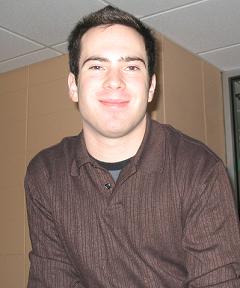
Marty Beckerman: If I had to differentiate, I'd say that "Cheerleaders" is a book for the kids who hate the popular kids, and "S.L.U.T." is a book for the popular kids who hate themselves. When I was putting together "Cheerleaders" I was a bitter, jealous 16-year-old who'd never been laid and hated the pretentiousness and endless, joyless hedonism of everyone around me. "S.L.U.T." is an effort to look back and understand why all those people felt the need to put on so much artifice, why they weren't happy, and what factors led to the current state of American youth. It was also a good excuse to write some really, really hot sex scenes.
NTE: So you'd say that you've matured these past few years. You think you've gained perspective into the mindset of an "in-crowd" person. Could this have anything with being a bitter teenage virgin then, and a, let's say, more rounded individual today?
MB: Well, I'm better with girls now, I've calmed down a little, I don't have much of a bloodlust anymore. Part of that was going to college and getting a real education, and part of that was just growing up, seeing my situation change and adapting. I dress better now, I listen to broader genres of music.... Shit, I've even started to rethink my position on religion, and I was a huge agnostic in high school. Yes, I'm the Lord's lamb or dolphin or goat or whatever the fuck it is. He guides my footsteps, and I pleasure His sweet rectum.
NTE: Which character in the narrative do you most identify with and why?
MB: Obviously I can't reveal how much of the narrative is based on actual experiences, but chronologically I'd be mostly in Max Brant's shoes, so that's why I gave him my initials. But I'm also like Brett in a lot of ways -- the crass sense of humor, the misogyny, the frustration at daily teen life... plus the endless adoration of nubile young strumpets with thighs wide open. Ha! Ha!
But then again, I can be really shy and awkward like Max, and also arrogant and self-assured like Trevor. So there's a little bit of me in each of the characters. Actually, if you put the first letters of Max's and Brett's names together, you get "MB," my initials again.
It's a very personal book, which is weird for a moral polemic because I'm trying to affect as many people as possible. But I went through a major break-up while writing this, and having the manuscript around – being able to pump my little heartbreak into that -- probably stopped me from killing myself. And that led to some extremely personal and confessional writing, even though it's a book meant for a mass audience. So figure that shit out.
NTE: Many of the quotes from the teens across the nation are quite alarming. We find the words of boys and girls from Fargo, New York, Portland . . . How did you go about getting them?
MB: Most are people I've met at college or run into at parties, or even overheard in public bathrooms. I just kept my ears open and wrote down the things people said that struck me. My favorite quote is from a 16-year-old girl from Seattle who said, "He was kind of an asshole, but he had a nice truck so I kind of let him fuck me." But it's those non-fiction quotes, statistics and article clippings that lend credibility to the claims I'm making in the fictional novella. It's possible to write a book about a generation with fiction -- Fitzgerald did it with "Gatsby," Ellis did it with "Less Than Zero," Remarque did it with "All Quiet on the Western Front." But a fictional book can't have that journalistic, statistical reality. On the other hand, a book of journalism might be able to capture a generation's reality but not its emotions or the human side of things. So I think I found a unique way of capturing both forms in one book. Or something. Fuck!
NTE: It must have been difficult to find that balance between being too personal and thus lacking credibility on the one hand, and being too analytical and having a cold statistical journalistic feel to it on the other hand. By attempting to capture both sides in one book, would you consider Generation S.L.U.T. more a work of non-fiction or a work of fiction? If I were to walk into a bookstore, in which section would I find a copy?
MB: It's officially going to be listed as fiction, but honestly I wanted it to be listed as nonfiction. It's probably easier to sell it as fiction though, and there could've been a legal issue with saying the novella is totally factual, which isn't true. But I really think the balance between fiction and journalism in "S.L.U.T." is something original, and adds a lot of importance to the flakier aspects of the book.
NTE: On a related note, there are several citations from many sources, such as The New York Times. My impression is that you are either an avid reader or have too much time on your hands. Which is it, if either?
MB: Oh Christ, I'm a fucking news junkie. I check the Drudge Report at least once per hour. My girlfriend has to physically stop me from reading CNN every time I go online. So yes, I'm a pretty avid reader, but it's probably a clinical disorder rather than intellectual curiosity.
As for having too much time on my hands, I'm averaging three orgasms per day, so I guess that answers that one.
NTE: Relative to growing up in Alaska, how is the social makeup of American University different from home, if at all?
MB: Well, the hedonism is apparent in both places, but the East Coast is a completely different culture. I'd say Alaska is culturally West Coast, and D.C. is far more WASP-ridden. It took me a long time to figure their culture out, but I've dated a couple WASP girls, made friends with WASPs, and I can say for sure that family life over here is very detached, very cold. There are far more ambitious and intelligent kids on this side of the country, but not many are happy in the California sense. Stereotypes are often true, sorry to say, and the stereotype of East Coast youth as status-obsessed and emotionally vacant is holding up so far.
NTE: Sorry, WASP?
MB: White Anglo-Saxon Protestant. Very, very weird culture. Check out my column "East Coast, Fuck You" for deeper insights.
NTE: Related to that, frat life plays a role in Generation S.L.U.T. and although somewhat ambivalent, it’s not particularly flattering. Do you at all participate in fraternity life at AU?
MB: I've got a few friends in the frat scene, I'm not going to lie. Some frat boys are great guys and genuinely kindhearted human beings. But again, the stereotype holds true far more than the exception. That entire scene is for the kids in high school who needed name brands across their chests to form an identity -- I'm not against name brands, just walking around with "GAP" or "Abercrombie" in huge letters -- but now the letters are Greek. It's about conquering the human fear of individuality through commonly shared symbols, which I can't exactly say is the worst thing in the world.
But when human beings are reduced to slabs of flesh with functional genitalia to be tortured and raped, which is surprisingly common in Greek life, things have simply gone too far.
NTE: How do you view the generalizability of Generation S.L.U.T.? I, for one, did not identify with certain aspects of the teenage life portrayed. Do you believe that Generation S.L.U.T. is a fundamentally American phenomenon, or does it have worldwide applicability?
MB: You know, school shootings are spreading to Europe, and everyone on earth is blaming the American entertainment industry for worldwide youth promiscuity. But honestly I believe this is more a product of the neo-feminist movement, which preaches the dissolution of marriage and monogamy, widespread access to abortions and the glorification of unbridled pleasure-seeking. I'm all for equality, but I think feminism took a wrong turn around 1960 and lost all credibility as a moral movement. Those rotten bitches just need to shut the fuck up and stick my cock in their mouths.
NTE: What’s next for Marty Beckerman?
MB: Right now I'm in the process of securing funding for an expedition to Iraq, Iran, Afghanistan, Israel, Gaza and a few other pleasant locales. The idea is to write a world politics book for teenagers and college students, most of whom are more concerned about their bongs than the fucked-up state of the human race. So it'll be similar to the works of P.J. O'Rourke, but geared toward young people raised on Britney Spears.
And if I'm killed over there, well, I had a good life, wrote a great novel and fulfilled the sexual needs of many, many young and barely legal girls with perky breasts and silky bottoms.
NTE: And should you come home in one piece and with functional genitilia, what does the future hold for you in the long term? A conventional American family with 2.5 children and a white picket fence? Or just to grow old as a dirty old man?
MB: Oh, I don't know. Five years ago I just wanted to be a humor columnist, and now I want to be a savior to millions. I'll probably wind up like Stalin or Saddam or Paul McCartney, I think we all have the same personality types.
NTE: Could be. Thanks for your time!

About Marty Beckerman:
Marty Beckerman is the 21-year-old spokesman for his doomed generation, raised in tropical Anchorage, Alaska and studying at American University in Washington, D.C. His occasionally controversial writing has appeared in New York Press, Disinformation, The Anchorage Daily News, Get Underground, Ain't It Cool News and Penthouse Online.
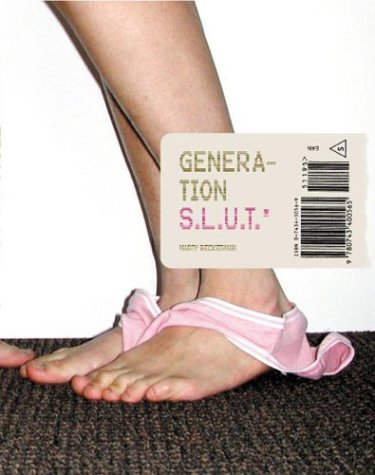
Beckerman's second book, Generation S.L.U.T. (sexually liberated urban teens): A Brutal Feel-Up Session with Today's Sex-Crazed Adolescent Populace, is to be published February 24, 2004 by MTV/Pocket Books (Simon & Schuster).
Beckerman's first book, Death to All Cheerleaders : One Adolescent Journalist's Cheerful Diatribe Against Teenage Plasticity, was published September 2000 by Infected Press.
Beckerman welcomes all feedback and may be contacted at [email protected]


