


Volume 2
Issue # 7
July 21, 2002
"Playing Russian Roulette with Ford and Neeson"
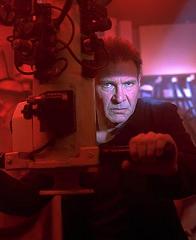
Photo © Copyright Paramount Pictures
Harrison Ford (Arlington Road, What Lies Beneath, Air Force One) and Liam Neeson (The Haunting, Schindler's List, Star Wars Episode 1) team up as Russian captains in a 1961 power struggle aboard K-19: The Widowmaker. A dramatic retelling of the crisis aboard the Soviet submarine amidst the Cold War, K-19, rated PG-13 for scenes of accident trauma, is a rare film in more ways than one. One aspect that really sticks out in my mind is its counter perspective, showing the Russians as heroes and the Americans as the enemies.
Right up front, the first thing this movie tells us is that up until a
few years ago, this story could not be told. The officers and crew that
were aboard the "real" K-19 were sworn to secrecy, that is,
until the fall of communism. Of course, this is a highly dramatized version
of what really happened, with fictionalized characters and altercations.
Nonetheless, it gives us, the people of the Western world, a glimpse of
what it would have been like to be a Russian during
the Cold War.
Inspired by true events, the premise of the film is thus (without giving away the whole movie): Ford's character, Captain Alexi Vostrikov, is given orders from Moscow/The Kremlin to assume leadership over Captain Mikhail Polenin's (Neeson) crew and ship, the K-19. "Where did the moniker "The Widowmaker" come from?" you may ask. Well, it (the submarine) was jinxed from the start. Several workers died during its construction and repairs. Its doctor was killed before its maiden voyage. The champagne bottle did not break at its inaugaration. Too many bad omens. Too many widows made. With a doctor who gets seasick and a rookie (fresh out of the academy) reactor officer, K-19 leaves port for the very first time.
The flagship of the Soviet army, K-19, a nuclear submarine, leaves port to fire a test missle. Enroute, Vostrikov orders a battery of drills for the clumsy crew, met only failure at every turn. Unaccaptable performances. Captain Vostrikov orders again and again, run the drill again and again until they get it right. Of course they never do. Harrison Ford playing a hard-ass, imagine that. Needless to say, the crew want their old captain, played by Neeson, back in charge. Polenin was serving as an executive officer on the sub. Anyways, eventually they run themselves into a bit of a pickle: a nuclear coolant leak. The reactor begins to heat up, and when (if) it reaches 1000 degrees, who knows what will happen. It could set off a chain reaction that would result in a nuclear explosion many times more powerful that Hiroshima. I guess it doesn't help that they happen to be mere kilometers away from the American coast and a NATO base. Ford's character is forced to make decisions with far-reaching ramifications, not only for the lives of his crew, but for the fate of the world.
The focus of this film is not only the story of the submarine, but also the political conflict between the rival captains. Playing a dangerous game of Russian Roulette, we find Comrade Captain Polenin publicly challenging numerous decisions made by Comrade Captain Vostrikov, saying that Vostrikov is forcing the ship and crew into unnecessary risks, pushing the integrity of the hull and the crew just too far. Dive deeper, Ford commands. From the politics of the military to the politics of the world, from character chemistry to character conflict, this film works on so many levels. Although Harrison Ford and Liam Neeson play Russians who speak English with a Russian accent, I found myself buying it. If you pay attention, you do catch Ford falling back to his 'normal' American accent, but their 'Russianness' is convincing enough to thwart your apprehensions, as it were. Russians and communists as good guys, imagine that.
The film primarily takes place aboard the claustrophobic-envoking submarine, but director Kathryn Bigelow (Strange Days, Point Break, Blue Steel) still manages to do some truly amazing things with that camera. The cinematography is fantastic and the acting is great, but you do sense some doldrums from time to time as you watch this movie, especially in the first half. You see, the movie doesn't really start until the reactor starts having its cooling problems, but the character and setting development leading up to that is compelling and interesting.
Ebert and Roeper both give it thumbs up, and I'd have to agree with them on this one. A truly riveting film with brilliant dialogue and real chemistry, K-19 comes highly recommended from this writer, that is, if you have two and half hours to spare (well, 2:20 officially). If you are expecting a high tempo war flick with lots of explosions, gunfire, and decapitations, this is not the film for you. You have to remember that this film takes place during the Cold War, when not much (if any) real 'war' was happening. "“K-19: The Widowmaker” is not a film about war but about the courage it takes not to go to war. It is about military muscle, mind and heart. It is also about a world in which technology is king and sacrifice in the name of national security is common" (quote from the official website). If you are looking for a different point of view on the world, a compelling thought-provoking depiction of life aboard a nuclear submarine, and a psychological thriller (what would you do under the same circumstances?) all rolled up in one, then K-19 is the film for you. Go see it. It's playing at the Fifth Avenue Cinemas and at the Silvercities around town.