The Mystery of the Victorian Mansion

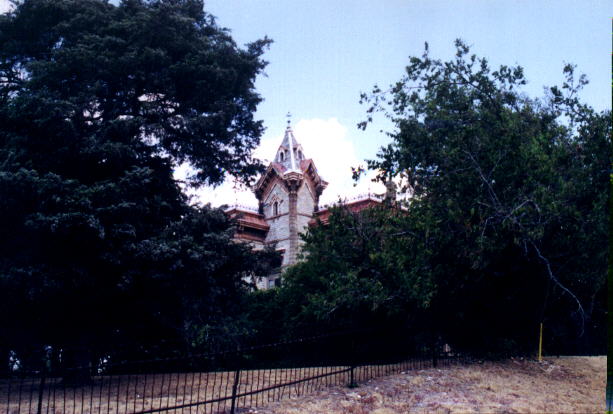
As we climbed closer to the top of the hill, we could tell that there was something behind the stand of trees in front of us.... the ancient wrought iron fencing was there for some reason, after all.
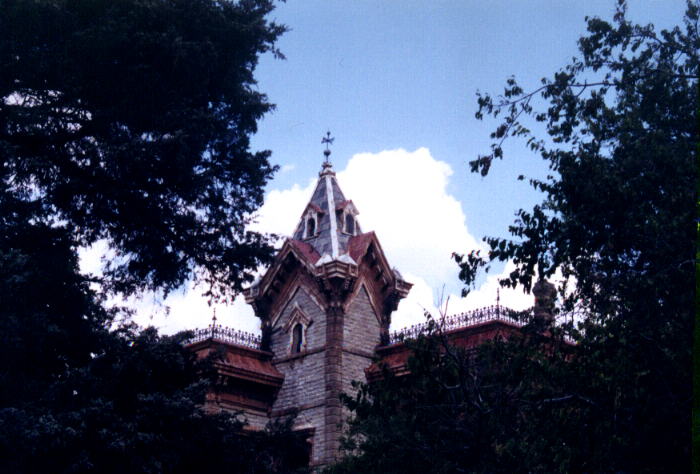
As a break in the trees opened up, we caught our first glimpse of El Castile as its main tower came into view. As we pushed onward in excitement, more and more of the grand old dame revealed herself.
The end of the road was really close now, so we stopped to take in the side view of the house. Most of the front was covered with ivy, or obstructed by bushes and trees, but what we could see was very impressive. It was hard to tell if anyone lived there or not. It didn't look like it to me. The grass in the yard was mowed, but the bushes and vines were really badly overgrown. The big house was quiet and still.... with its slight disarray adding to the melancholy feel of the place. It made you want to go inside and talk to the house... not to anyone who might be living there, but to to house itself.
Man, oh man.... I bet she could tell some stories! :)
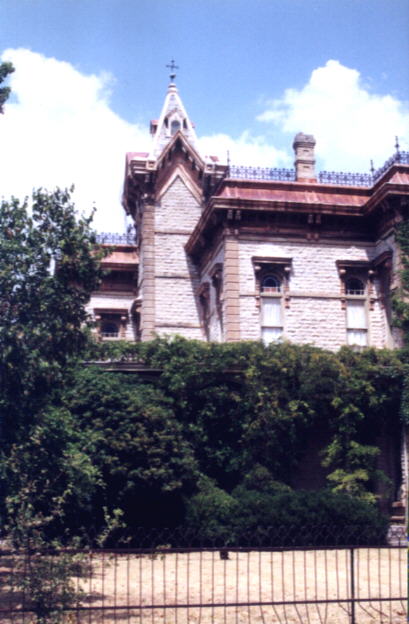
It looked to me like there was some sort of conservatory, or greenhouse, attached to the back of the house. As I said earlier, the road ends about even with the back of the house, so we couldn't see all around it. Not unless we hopped the fence and made ourselves at home..... my wife has a funny thing about not going to jail on one of our trips, so I decided to just look from the road.
There are houses nearby, one of which is right across the road. We didn't see any
activity at this more modern neighbor, but it was obviously still being used.
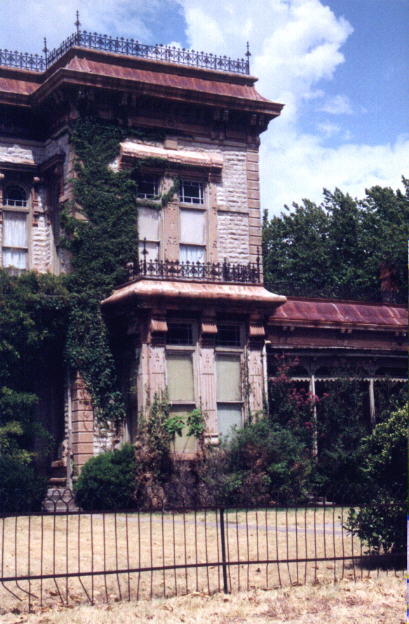
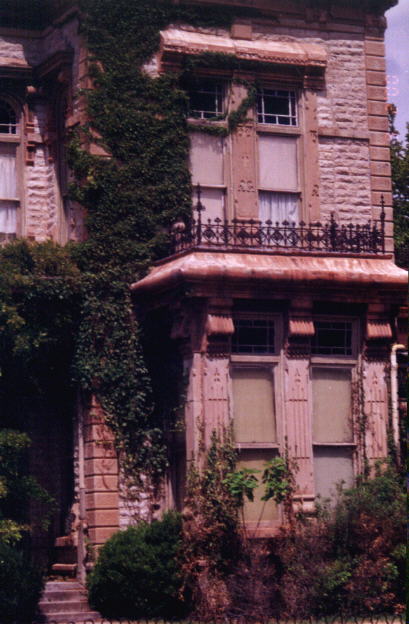
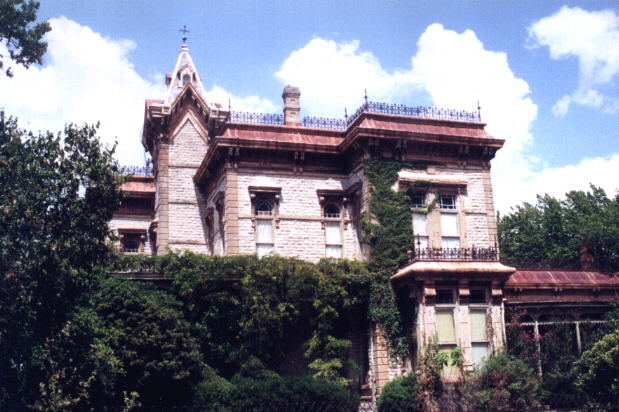
As far as the history of this place goes.... I was dying to find out anything I could. No historical markers were present, and I hadn't read anything about it anywhere before.
As soon as we got home from our trip, I dove into the internet to find out what I could. I'm still looking into it, but here's what I know so far:
The house is named El Castile. It was built in 1883 by a man named Daniel Waggoner. Dan Waggoner was the quintesential Texas Cattleman. After his first wife died, he packed up his son, his mother and brothers and sisters... along with a longhorn cattle herd of around 242 head, and started a new life.
With hard work, he and his young son became successful cattle ranchers. Dan remarried (a sixteen year old daughter of a neighboring rancher), and began to amass his fortune. El Castile cost $50,000 to build in 1883.... in todays dollars that is a fortune by anyones standards. Their cattle ranch became one of the biggest. In fact, in 1986 the Waggoner estate owned the single largest block of land occupied by a single family. They owned 80,000 cattle, 525,000 acres of land, and kept leases on 100,000 more.
They had the usual run-ins with rustlers and hostile Indians, but all in all their success built unchecked, until the turn of the century. A drought hit the region, threatening the huge cattle herd. W. T. was now in charge of the ranch after the passing of his father and he knew that he had to do something to provide water for the herd if he didn't want to loose them.
The obvious solution?.... Dig some wells. Sounds easy enough, but it wasn't. It seems that every time they dug a well, they hit oil.
Black gold.... Texas Tea .... :)
The drought soon ended, doing away with the need for extra water, and W. T. found himself sitting on some of the richest oil producing land in Texas.
Some folks just have all the luck!
W.T. (or "Tom") Waggoner, was just as hard a worker and businessman as his father was. He was much beloved in Decatur and neighboring Ft. Worth, contributing much to the growth and prosperity of both towns. W.T. expanded the Waggoner wealth far beyond even what his father could have dreamed. He built the incredible "Thistle Hill House", in Ft. Worth as a wedding present for his daughter around the turn of the century. Thistle Hill is open for tours, but it is my understanding that the Waggoner Estate still owns El Castile and it is not currently open for tours of the interior (but there's always hope!).
I'll update this page as I learn more about the history of this fascinating house!