In 1962 Paul Rodgers, George Haddaway,Bill Edwards and Joe Fabick, four St. Louisans, formed a non-sectarian, non-political organization called Wings of Hope. These U.S. businessmen made the non-profit organization to serve the poor through the use of unwanted airplanes. Since then, Wings of Hope has morphed into one of the largest midwestern-based caregiving organizations, despite offering care with NO charge and NO funds from the U.S. government.
Wings of Hope is a local service to the world. Stationed in Chesterfield, just notheast of St Louis, the organization is devoted to fueling the needy worldwide. Their mission is "to save lives, improve the quality of life and bring hope to people around the world where the utilization of aviation is vital to the accomplishment of these human endeavors."
The organization itself does not seem too impressive when I stroll through the hangar in Spirit of St. Louis Airport. The hangar generally houses about 4 planes at a time, with a few others parked on the side of the pavement just outside. Everything there is pretty dirty, and the occasional volunteers such as me usually are sent to scrape paint off metal or clean the grease off of engine parts. On the surface, Wings of Hope seems fairly ordinary, as far as small airplane repair hangars go, but when you talk with the workers, you glimpse the faith they have in working simply for the good of society.
| 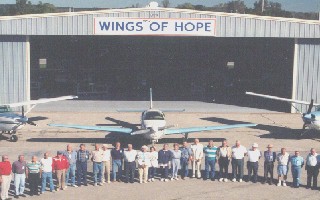
The volunteers come early in the morning every day and labor 8-hour workdays on disabled planes to make them functional again. This work requires time, patience, and close attention to detail. Most of these workers are retired men, but all still are youthful in their personality and their ambition to provide care for the sick and hungry.
The planes that this hangar fixes and improves do make a difference. The organization makes trips to transport food to the malnourished, and they transport many who have been wrought with disease and harsh living conditions in third-world environments to hospitals and clinics where they can recieve treatment. The organization owns 149 planes in 39 countries to accomplish this. Thirdly, they have carried missionaries, doctors, and teachers to give spiritual, physical, and intellectual aid to the deprived around the world.
Another notable characteristic of Wings of Hope, both on the macroscopic level as an organization and on the microscopic level in a worker's lunch conversation, reveals a lack of prejudice. For example, one worker I met named Bob lived in New Guinea for most of his life. He expressed his view that the organization's work does not have criteria for those it helps. Whether christian or muslim, black or white, asian or hispanic, dirty or clean.
Some notable events to which Wings of Hope has given their assistance include the earthquakes around Guatemala in the 1970s-80s and
1998 hurricane that hit the Carribean and nearby Belize. Their planes joined in the effort to airlift residents to inland and centralized sites for safety and medical attention. Also, their work is currently prominent in Zambia.
Wings of Hope surely offers a great deal to our world through their care for the poor and alienated.
| 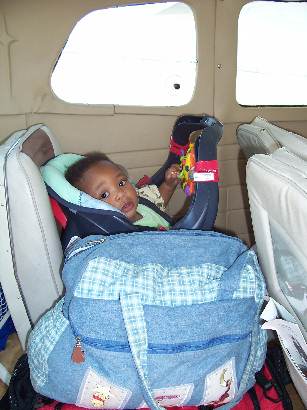
Child being flown to medical care
click here for the Wings of Hope Home Page
|