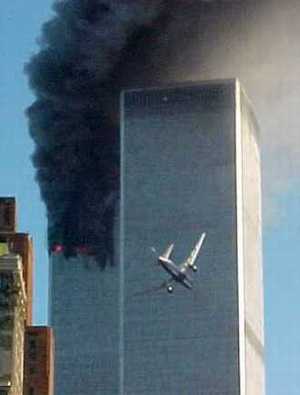
The Human Condition is the situation in which every human being finds himself or herself by virtue of being human. Plato's allegory of the cave gives insight to the darkness that humans are born into. We naturally percieve our environment in such a way that our surroundings provide an illusion of truth around us. To understand truth, we must break out of this blind state and see the light. We must redraw the map of our life that we first made by observing the illusion. This redrawing, or coming into the light, is often painful and difficult. However, we often find comfort in these illusions. We greatly desire to be happy (Pascal), so we lie to ourselves and to others to provide a more comfortable illusion of truth. We would rather believe our lies than come to terms with the truth. We also provide diversions for ourselves, finding things to occupy our time to avoid contemplating problems with the world and our existence (Pascal). After all, according to Buddha, at the core of human life is suffering. However, when we do look at these questions, we encounter a problem of evil: "If God is good, all-powerful, and truly exists in this world, then how can such things happen?" (Augustine) Part of our human condition is ignorance, so there is no way we can know the answer to this, or to understand God. But ignorance alone isn't enough for most people. Often, we adopt an understanding of evil as a lack of goodness, a privation of goodness. We can rationalize our own thoughts on problems and graces of life. This, too, is part of the human condition: reason, the ability of one to be aware of himself (Fromm). However, our intellect is considered imperfect because of our "original sin," our imperfect nature from birth, and also because of this we will die. This all makes up merely aspects of the human condition.
Three Important Ideas of the Section:
1. Transference is the process of active clinging to an outmoded view of reality. Often, this problem represents the idea that the worldview and responses to the world that one holds in childhood (in its correct context) is inappropriately transferred into the adult environment. Transference is often subtle, but always destructive. To correct or lessen the problems brought about by transference, one must redraw our maps for life, an often painful and very difficult experience.
2. Americans generally apply euphemisms to ideas that are hard to handle. When the truth is tough, we soften it up with vague and gentle terms. Truth and reality often are painful, and to avoid this pain or lessen this pain we apply terms like "pass on" and "left this life" to death. To cushion our feelings by adding an artificial positive spin on tragedies or even to conceal sins, we use our comfortable language.
3. The problem of evil is the reasonable question that arises from the seemingly inconsistent statements of God's omnibenevolence, omnipotence, existence, and the existence of evil. Logically, one reaches the conclusion that God is either not omnipotent or omnibenevolent or both, or that God may not exist. If God does exist and he is infinite (all-powerful) and all good, then there should be no evil. But there is evil (wickedness, pain, trouble, harm, disgust, misfortune, disaster). So, it seems that God must not meet all the original standards. However, one could approach this problem of evil with the idea that evil is merely the absense of goodness (a privation), that it is not a thing, but a wrong choice.
Images of Key Ideas:
One good question to ponder:
Question: Did the state of original justice exist in reality or only in theory?
My Answer: There is no possible way for one or the other to be proven or disproven. Scientifically, we have no means to know when, where, or how God first entered the lives of humanity or gave us souls. According to somewhat-accepted belief, there was a brief time (perhaps even just a second or two) between the time God did make the first humans fully human and when the first human sinned. Literalistically, this time was with Adam and Eve in the Garden of Eden. Concerning the evolutionary reality, I find it hard to believe that there was one definite moment before which there was perfection and after which there was sin forevermore, but humankind definitely separated itself from God. Whether slowly or instantly is unanswerable.