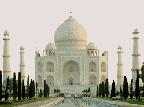
The mausoleum of the Taj Mahal is set in a symmetrical, park setting across from the Jamuna River. Less pronounced mosques surround the bulbous, marble-built Taj Mahal.
Uses: Built as an islamic tomb by Emperor Shah Jahan for his wife.
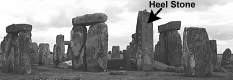
The stones are arranged in such a manner as to have astrological meaning. If standing correctly in the centre of the arrangement, you can view the sun rising exactly over the "Heel Stone" (the pointy stone) on solstice (the longest day of the year).
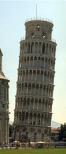
Falling at a rate of 1.2mm every year. Currenlty leaning 10� to vertical.
58.36m high above the level of the foundation.
Construction began 1173AD and completed in 1350AD. It is built on top of shifting sands of a former estuary.
The lean became obvious in 1178, and Pisano decided to correct the lean of the first few levels by building the next few to tend a little in the opposite direction. He was fired and a 100 years later Giovanni Di Simone added another three levels at a compensating angle. He quit under pressure and the tower was completed a cetury later by an unknown architect.
Uses: Built as the bell tower for the nearby Cathedral of Pisa.
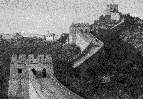
Construction began under the Chou Dynasty in the 7th century BC. Four walls were built as defense against invasion.
During the Qin Dynasty (221-200BC), the first Emperor, Qin Shi Huangdi, connected these walls along North China. The wall measured 5000km at that time.
During the Ming Dynasty(1368 - 1644) a major renovation occured to the Great Wall, enlarging it to 6400km over 200 years.
The Great Wall of China now stretches from the Jiayu Pass in the Gansu Province to the mouth of the Yalu River which empties into the Yellow Sea.