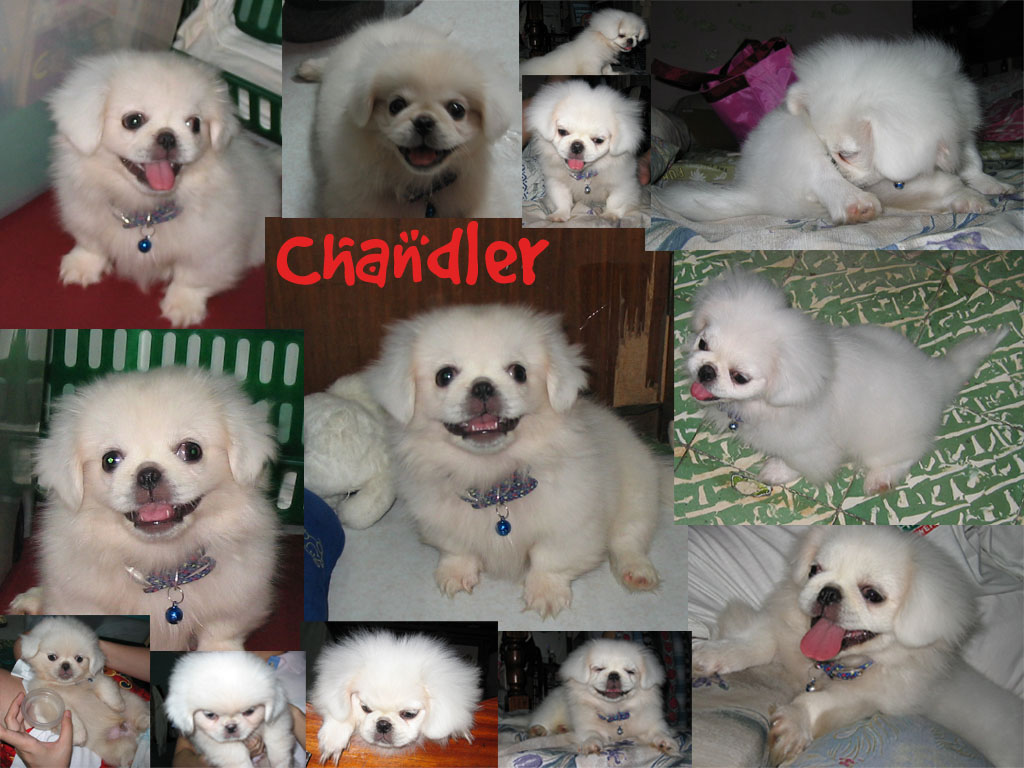
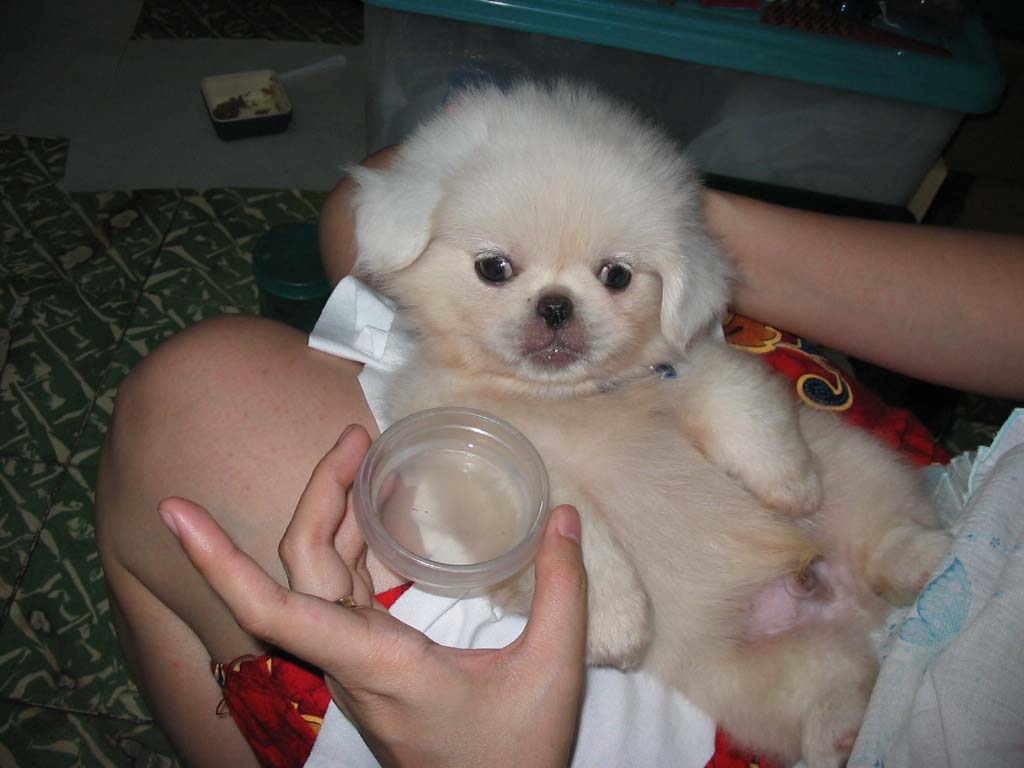
| Chandler a big dog in a small body |
| Fun Facts: |
| He loves playing with his bear and pig toys...especially the FEET pillow He likes to jump on my bed and lie down for a nap He answers to "CHIA! CHIA!" His name CHANDLER is in memory of the popular sitcom "friends" He got a cute chin with whisker and tail that's always wagging He likes to sleep (A LOT!) He likes tissues He likes to eat, drink, eat and drink |
| More about Chandler |
| CHANDLER --- A small, but sturdy dog with a long straight coat, thick mane and plenty of feathering on the tail, underside, legs and ears. Very loving and sweet with his family (that's us...), but wary of strangers. Loyal and dignified. Confident, calm, pleasant company. Tends to be possessive of toys and food. |
| Chandler's Behavior Children: good with older children Friendliness: Protective with his family Trainability: Easy to train Independence: Needs people a lot Dominance: High Other Pets: Generally good with other pets Combativeness: Friendly with other dogs Noise: doesn't bark |
 |
 |
| Little Facts: It was during the Tao Kuang period (1821-1851) that the breeding of these little dogs - now called Pekingese - reached its height. Records of pedigrees were never kept, but Imperial Dog Books, illustrated with the most admired dogs, were used as a standard, and breeding was the subject of much thought and many elaborate theories. Prenatal impression was the method most in vogue. Mothers were taken several times daily to see pictures and sculptures of the most beautiful dogs, and then colors desired were hung in their sleeping quarters, and they slept on sheepskins to suggest a profuse coat. Spectacle marks around the eyes, in keeping with the huge horn-rimmed spectacles worn by officials and the literate, were desired, as to confer a look of wisdom and learning. All-white dogs - partly because of rarity and partly from the fact that white is the color of mourning in China - were greatly prized and the subject of much superstition. When one appeared, it was believed to be the spirit of some great man and was generally kept in the Temple and treated with profound respect. During the reign of Empress Dowager Tsu Hsi (known as "Old Buddha"), in order to gain prestige, she surrounded herself with diminutive "lion dogs," insisting that their resemblance to the lion be as close as possible. The great Lama Buddha was always accompanied by a small pet dog which, at will, became a lion on whose back the Buddha rode through the heavens, with power to call from his fingertips tiny lions which, in the hour of need, became great beasts and attacked his enemies. It then became even more important that the little dogs have more feathering and a greater width of muzzle. A white spot on the forehead was a feature greatly prized, as the traditional lion was represented as holding an embroidered ball between his feet. Embroidered balls were always the playthings given the young dogs - and so they are today! |
 |
 |