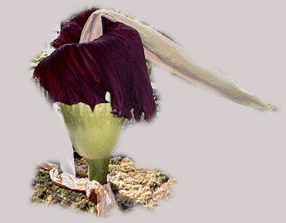
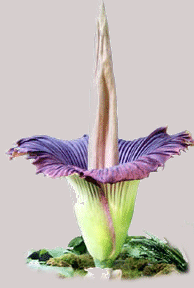
| Amorphophallus titanum, commonly called as Titan Arum, is the longest known branched inflorescence is about six meters long. Native of Sumatra, Indonesia. It was discovered by Italian botanist Odoardo Beccari in 1878. It blooms so rarely. Grows from a large tuber which can reach 170 pounds or more. In cultivation it can reach over 12 feet high, its stalk in the wild can reach 20 feet tall and 15 feet across. The plant genus Amorphophallus belongs to the family Araceae (aroid family) and is estimated to encompass some 170 species. |
 |
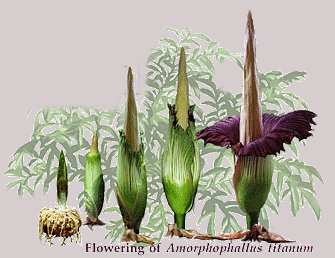
| Seed sprouts and grows on small compound leaf and one small storage root called a tuber. Leaf looks like a small sapling tree, but is actually a single leaf with a "trunk like" leaf stalk and a lot of leaflets. The leaf photosynthesizes all summer and stores energy in the form of carbohydrates in the storage tuber, and tuber grows bigger. Leaf dies after one season. Next season, one new, larger leaf grows. Every year the same process is repeated until the tube reaches a certain large size, it rests. Next season it grows a flower; the largest in the world! The flower comes out with a spathe, a funnel-shaped red petal and with a spadix which sticks up tall. The true flowers are actually tiny and hidden down inside the funnel, in a ring around the base of the spadix. |
 |
| The flower stinks like dead meat to attract flies and beetles that pollinate the female flowers. If pollen gets on the tiny female flowers when they are receptive, seeds will form -- if not, the flower will die and the plant may die. The bloom usually lasts less than one day. "This is one of the 10 rarest species in the world, and fires in Sumatra are threatening its existence." |