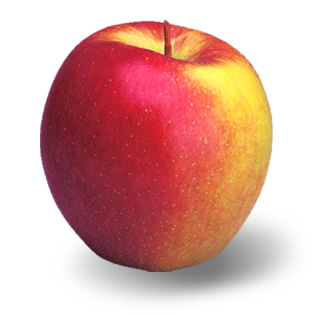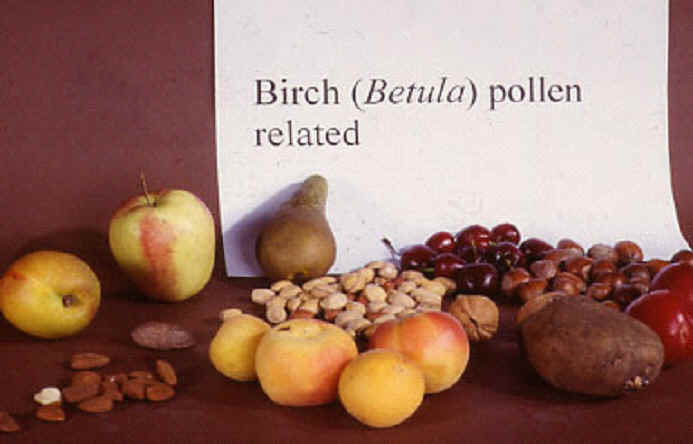
From
a handout at 1st Baltic Allergy Congress,
Nils
E Eriksson,
From
an immunological point of view, cross-reactions could mean various things. It
could be a complete identity between aeroallergen and food allergen, e.g. when a
patient with allergy against crustaceans gets symptoms of corresponding allergen
in the air in a seafood processing industry
1
. In other cases it could
mean partial similarity between airways allergen and food allergen, e.g. when a
patient, allergic against pollen from Asteraceae
plants, shows hypersensitivity against honey containing pollen from same
botanical group
2
.
More
common is, however, common allergenic structures, epitopes, on the food allergen
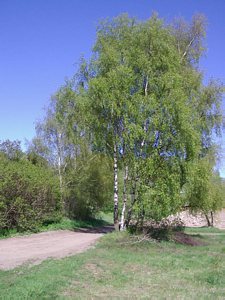
and the aeroallergen. Examples are food hypersensitivity related to birch-pollen
3
. A large number of
immunological cross-reactions have been demonstrated during the last decades.
Many of these have, however, no clinical significance
4
; the serological
cross-reactivity is always broader than clinical cross-reactivity
5
. For a review, please se
reference number 5 (van Ree 2004). From a clinical point of view, cross
reactions might be defined as an association between a clinically relevant
pollen allergy and a clinically relevant food allergy, based on IgE
cross-reactivity
The
most important cross-reactions between inhalation and food allergen are those
between pollen allergy and food. The figures for the prevalence of food
hypersensitivity among birch-pollen allergic patients varies: in South Italy 24%
6
, in Sweden 40%
7
, 70%
8
and 93% (in children with
severe birch-pollen allergy)
9
.
Studies
from different countries in Europe have shown that 70 - 90% of
patients who are allergic against some vegetables also have a pollen
allergy
10-12
.
 |
The majority
of birch-pollen allergics report
hypersensitivity symptoms from food
13
. The food that most often
give symptoms in birch-pollen allergic patients are nuts (hazelnut,
brazil nut
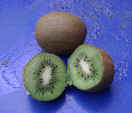
and walnut), kiwi,
and fruits belonging to the botanical family Rosaceae (apple,
peach,
almond,
pear,
nectarine,
plum,
cherry,
apricot), as well as
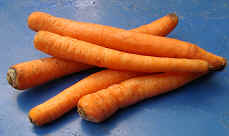
peanut, carrot, celery and potato peel
7, 8, 14
. Sensitizations without
clinical relevance are often found for a number spices
15
. A recently detected
birch-pollen relation is that with soy
16
. |
|
 |
 |
Although
birch-pollen allergic patients tolerate many “new” exotic fruits
17
, cross-reactions with
birch-pollen has been reported with e.g. Sharon fruit (persimmon)
18
, jackfruit
19
, Chicory
20
and kiwi
21, 22
.
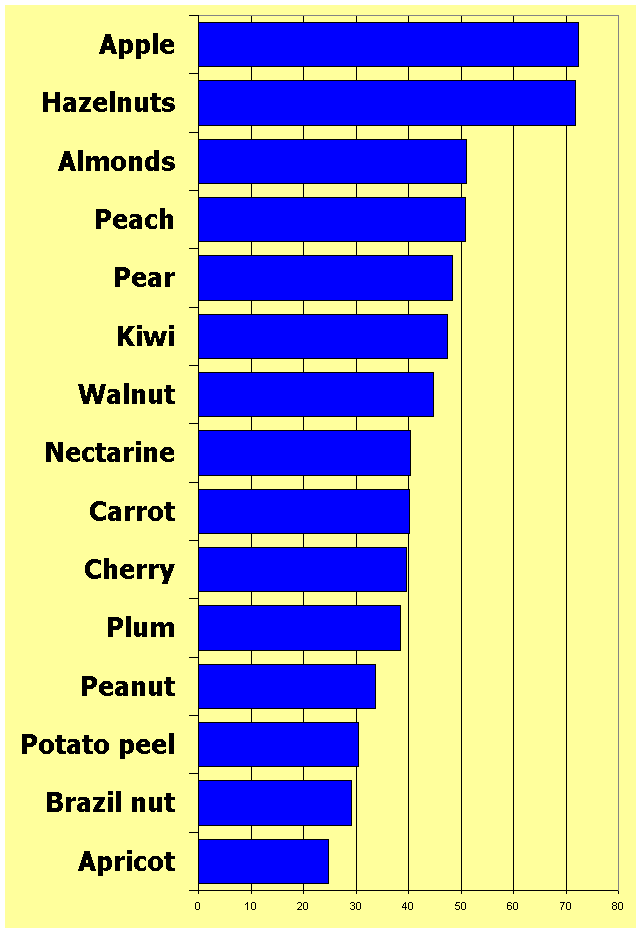
Information on "clustering of the foods" in birch pollen allergi patients
The
following diagram shows the self-reported
food allergy among birch pollen allergic patients in Sweden accoring to pooled
data from several studies (Eriksson
Allergy 1978; 33: 189-96 , Eriksson
et al. Allergy 1982; 37: 437-43. Eriksson et al. Allergologie
2004; I27: 233-243. Eriksson et al. J
Investig Allergol Clin Immunol 2004; 14: 70-9)
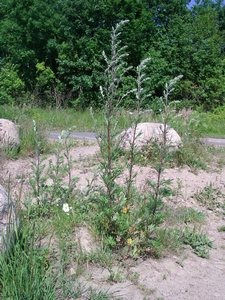 |
Mugwort
is a weed, belonging to the Asteraceae
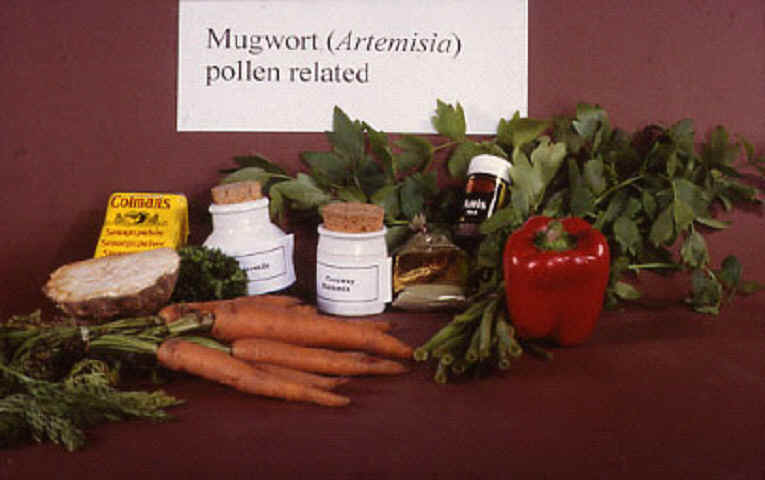
family. Foodstuffs and spices that have connections with mugwort allergy are
mainly those belonging to the Apiaceae
family, e.g. celery, parsley, coriander, carrot, garlic, curry, paprika,
camomile and spices such as aniseed, fennel and caraway
23
, and also some vegetables
belonging to the Asteraceae family,
such as sunflower seed and honey
24
. Pistachio nut and mango belong to the family Anacardiaceae. Other
mugwort related foods are paprika sweet, mustard, avocado, garlic and
hazelnut.
It should be noted that the herb medicine Echinacea comes from a flower, belonging to Asteraceae, thus related to mugwort and might induce symptoms in murgwort-allergic individuals. |
 |
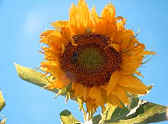 sunflower sunflower |
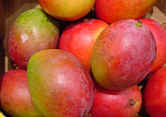 |
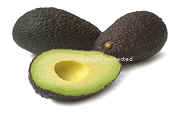 avocado avocado |
Celery
allergy has been reported to produce severe symptoms, including anaphylaxis
25
, and most celery allergic
patients have an allergy against pollen, mainly mugwort, but also sometimes
birch
26
. The mugwort
allergic patients with hypersensitivity to celery usually tolerate
neither fresh or boiled celery, in contrast to birch-pollen allergics who
usually tolerate boiled celery
26, 27
Among
Swedish patients, allergy to carrot as well as celery is more often related to
birch pollen allergy than to mugwort allergy. See the following table (Data
from the study Eriksson et al. J Investigational Allergology and Clinical
Immunol. 2004; 14: 70-79. These data not given in the article)
|
Skin prick test |
Carrot
(n=92) |
Celery |
|
Only
birch pos., % |
51 |
34 |
|
Only
mugwort pos., % |
4 |
14 |
|
Both
pos., % |
22 |
31 |
|
Both
neg., % |
23 |
21 |
Ragweed
(Ambrosia) is a weed, distantly related to mugwort, common in
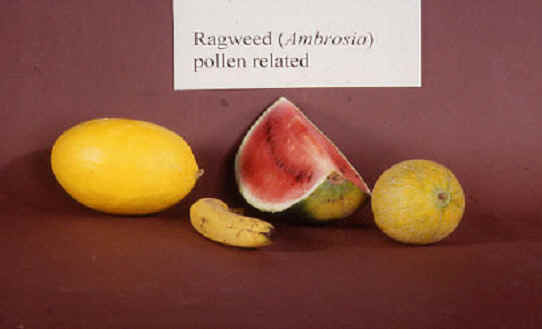
 |
The connection between grass pollen allergy and sensitization to foodstuffs, such as wheat and other grains, tomato, pea, peanut, melon and kiwi which is seen in tests 21, 30 , is of very little clinical significance in Nordic countries 31 . An example from a Swedish study: |
Food
sensitization in pollen allergic patients in
Pollen allergy
Food allergy
Only grass (n=11)
27%
Grass + tree (n=17)
65%
Grass + tree + mugwort (n=28)
75%
The clinical importance of
different cross-reactions varies, however, between different regions. In some
countries, e.g. in South Europe, the cross-reactions between food and grasses
are of practical importance
32, 33
.
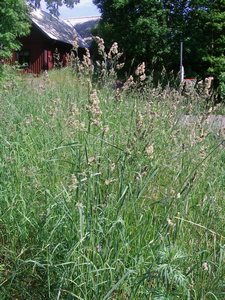
Connections
have been reported between allergy for Parietaria
pollen (Pellitory-of-the-Wall),
that occurs in the Mediterranean, and allergy against pistachio nuts
34
, between
pollen from Plantago(Plantain)
and melon
33
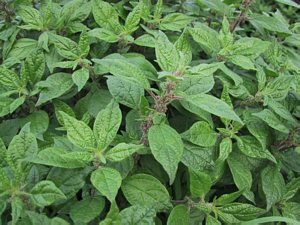
and Chenopodium
(Lambs quarters)
and melon, banana and peach
35
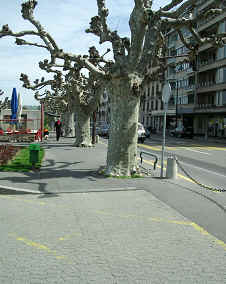
. Cross-reactions have also
been shown between pollen from Platanus
acerifolia (Plane tree)
and
hazelnuts, peach, apple, peanuts, maize,
chickpea and lettuce
36
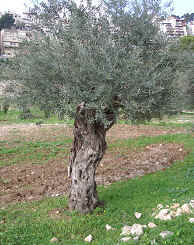
and between olive
pollen (common in the Mediterranean region) and peach, pear, melon and kiwi
37
 |
 |
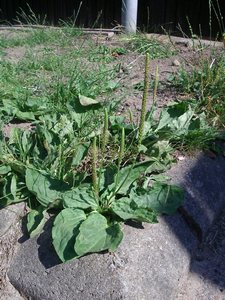 |
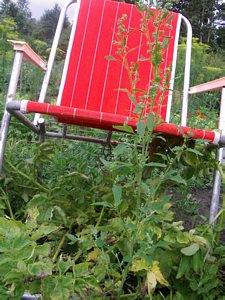
| Plane tree (Geneve) | Olive tree (Nazareth) | Plantago (Halmstad) |
 |
 |
|
| Chenopodium (Goosefoot, Lambs quarters) (Svinmålla) on my lot in Halmstad | Parietaria | |
There is a positive relationship between the degree of birch-pollen sensitization and the occurrence of food hypersensitivity. The more pronounced the birch-pollen allergy, the bigger is the probability for food allergy 38 . Among Swedish hay fever patients with negative IgE against birch-pollen 14 % had a food hypersensitivity and with increasing degree of birch sensitization the prevalence of food allergy increased, reaching 88% in those with the highest RAST class 13 . A similar correlation was found between skin test results with birch-pollen and food allergy. Among patients with a negative or weak birch-pollen skin test, the prevalence of food allergy was about 20%, and in those with a very large skin reaction it was 90% 13 . A correlation also exists between the histamine release induced by birch-pollen and the existence of food allergy 39 .
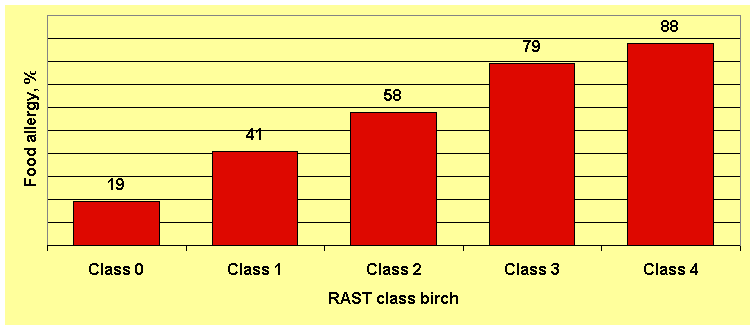
Diagram: The proportion of patients having food
allergy increases with increasing level of birch
pollen IgE (RAST classes)
Pollen allergic patients
having a food allergy get more symptoms during the pollen season than those
without a food allergy
38, 40, 41
. Moreover, a relationship
exists between the duration of the pollen allergy and the prevalence of food
allergy. The longer the patient has had the pollen allergy, the bigger is the
probability for food allergy. According to an Italian study, food allergy occurs
in approximately 40% of patients who have had birch-pollen allergy one year and
with increasing duration the frequency increases to peak approximately at 85% in
patients having had pollen allergy more than 15 years
38
.
A
study from
Among
food allergic patients it has been shown that the more foods the patient has an
allergy to, the higher is the probability of a pollen allergy
43
.
In Northern Europe, cross reactting food allergy is more common in patients with a ”pan.pollen allergy” (i.e. sensitization against grasses, mugwort and birch), than in those with only a mono-pollen allergy or a combination of grass + birch, grass + mugwort or birch + mugwort pollen allergy 31, 74
Geographical differences
The regional distribution of pollen-related food allergy could be summarized in the following way:
|
Region |
Cross reacting food |
|
North America |
Ragweed-related |
|
Northern Europe |
Birch-related |
|
Central Europe |
Mugwort-related |
|
Southern Europe |
Grass-related (also Olive,
Plantago and Parietaria) |
Although
this article is about pollen and food, it should be observed that
cross-reactions exist between latex and many fruits, e-g. banana, avocado, kiwi,
chestnut, nectarine, plum, strawberry and tomato
44
. There are also
cross-reactions between on one hand crustaceans, clams and snails and on the
other hand mites
45
and insects, such as
cockroach
46
and Chironomid larvae
47
. Cross-reactions also exist
between eggs and chicken meat and chicken feather
48
and between pork and cat
49
.
The
symptoms most often induced by cross-reacting food are oral symptoms, such as itching
of the lips, mouth, or pharynx, and swelling of the lips, tongue, throat, and
palate (The Oral Allergy Syndrome, OAS). An Italian study on patients
with allergy against fruit or vegetable found that 59% had such symptoms whereas
19% had urticaria or angioedema, 13% gastrointestinal symptoms and 6% laryngeal
angioedema. Rhinitis was noticed in 6% and asthma in 3%. Less then 1 % had
anaphylactic reactions
12
.
Seasonal
variation in the symptoms of birch pollen related food allergy has been shown,
with an increase in reactivity to apple noted
during the birch pollen season
50
.
Previously
unexpected symptoms elicited by birch-pollen-related food have recently been
reported. A subpopulation of patients with hypersensitivity to birch-pollen and
atopic eczema reacts with worsening of eczema after oral challenge with
birch-pollen-related foods
51
.
In
a Swedish study, nine patients with birch-pollen allergy were investigated
toward the end of the birch-pollen season and again 6 months later (off-season).
It was found that birch-pollen exposure triggered a local inflammation in the
duodenum. Seven patients had symptoms resembling Irritable Bowel Syndrome
and three reported deterioration by birch-pollen-related food. In four patients
the birch-pollen season aggravated their bowel symptoms
52
.
Among
cross reacting food, celery seems to elicit more severe symptoms than other
foods
53
.
If
a food allergy is not a result of a cross reaction, the symptom are more severe
than in food reactions that are related to pollen allergy. This has been shown
with kiwi
54
, peach
55
, nut
56
and apples and pears
57
.
It
is seldom necessary to perform diagnostic tests with the cross-reacting
foodstuffs, since the patients´ histories often are evident
58
. If tests are used, however,
the main problem is (with skin tests as well as with IgE-tests) on the one hand
clinically false positive test results because of the cross-reactions
59
, and on the other hand a
low diagnostic sensitivity of tests performed with commercial extracts
60
. In a Spanish study only 8%
of positive results of SPT or IgE-tests to potential cross-reactive foods were
clinically relevant.
61
. Prick-by-prick test, using
fresh food is often the best method
62
. Using apples, peaches and
pears, there are often more positive reactions with the peel than the pulp
63
. With some food (hazelnut
and apple) the skin prick test, using fresh fruit, has a good diagnostic
precision with a satisfactory sensitivity (> 90%) and acceptable specificity
(>80%)
64
.
In
cases when the history and skin tests or IgE-tests don’t give the answer and a
reliable diagnosis is needed, double-blind placebo-controlled food challenge (DBPCFC)
should be performed.
In
most cases of food allergy, the only treatment is to avoid the offending food.
Pollen-allergic patients without a cross-reacting food allergy could be informed
about the existence of cross-reactions but should not be advised to eliminate
these foods. Neither should positive skin tests or IgE-tests with food result in
such advice to symptom free patients. Testing with cross reacting foods has,
however, a prognostic value; patients with positive test have a higher
probability to get a clinically relevant food allergy in the future
42
Treatment
with antihistamines might reduce the symptoms, however, without completely
abolishing the symptoms
65
Patients
with risk of severe reactions should bring an emergency kit with adrenaline,
corticosteroids and antihistamines.
Immunotherapy
(desensitization) with food allergen is presently not possible, Immunotherapy
using birch-pollen might, however, improve the cross-reacting food allergy in a
proportion of the patients. In a Swedish study only 46% of the birch allergic
children showed an improvement of the food hypersensitivity
9
. Other studies have,
however, shown higher figures: 56%
66
, 83%
67
, 69%
68
and 87%
69
. One study could not find
any change in the severity of food
allergy
70
.
The
patients can usually be told that they tolerate heated or processed food
55
. There are however
exceptions. Roasting of hazelnut reduces the allergenic activity – but
according to a Danish study still five of 17 patients with hazel nut allergy
also reacted when provocation was performed with roasted nuts
71
With
celery we have on one hand a Birch-celery syndrome with thermo-labile celery
allergens, meaning that the birch allergics usually tolerate celery soup
although they get symptoms from raw celery. The celery-mugwort syndrome, on the
other hand, involves thermo-stable allergens, meaning that the mugwort allergics
with a celery allergy usually don't tolerate celery soup
26, 72
The
thermo-lability of for instance apple allergens means that the apple allergic
patients my tolerate apples that have been placed in the microwave oven.
Microwave-treated apples (750 watt, 1 minute) are often tolerated while
maintaining the taste and consistency.
Apple
allergic patients should be informed that different apple strains have varying
tendency to induce allergic symptoms
73
. Two apple allergic
individuals were challenged with several different apple strains. It was found
that Golden
Delicious, Granny
Smith, Jonagold,
Breaburn, Prime rouge, Apollo and
Cox Orange elicited much symptoms whereas Jamba,
Macoun,
Gloster,
Altländer
Pfannkuchenapfel and Hammerstein
were tolerated.
Patients
could be advised to peel the fruit and cut it into peaces and let the pieces
stay in room temperature for a while before eating it, since the peel usually is
more allergenic than the pulp.
39, 63
Some
birch allergic patient say:”I cannot tolerate any fruit at all”. Most often
they nevertheless tolerate e.g. melons, pineapples, grapes, banana and citrus
fruits. Furthermore there are many other exotic fruits that they have not yet
tried
17
For an overwiev of immunologcal aspects of the cross reactions - please read ref. no 75 (Viets et al.)
References
1.
Jeebhay MF, Robins TG, Lehrer SB, Lopata AL. Occupational seafood allergy:
a review. Occup Environ Med. 2001; 58:
553-62.
2.
Bousquet J, Dhivert H, Clauzel AM, Hewitt B, Michel FB. Occupational
allergy to sunflower pollen. J Allergy
Clin Immunol. 1985; 75: 70-4.
3.
Wensing M, Akkerdaas JH, van Leeuwen WA, et al. IgE to Bet v 1 and
profilin: cross-reactivity patterns and clinical relevance.
J Allergy Clin Immunol. 2002; 110:
435-42.
4.
Bircher AJ, Van Melle G, Haller E, Curty B, Frei PC. IgE to food
allergens are highly prevalent in patients allergic to pollens, with and without
symptoms of food allergy. Clin Exp
Allergy. 1994; 24: 367-74.
5.
van Ree R. Clinical importance of cross-reactivity in food allergy.
Curr Opin Allergy Clin Immunol. 2004; 4:
235-40.
6.
Troise C, Voltolini S, Delbono G, Negrini AC. Allergy to pollens from
Betulaceae and Corylaceae in a Mediterranean area (Genoa, Italy)--a ten-year
retrospective study. J Investig Allergol Clin Immunol. 1992; 2: 313-7.
7.
Eriksson NE. Food sensitivity reported by patients with asthma and hay
fever. A relationship between food sensitivity and birch pollen-allergy and
between food sensitivity and acetylsalicylic acid intolerance.
Allergy. 1978; 33: 189-96
8.
Eriksson NE, Formgren H, Svenonius E. Food hypersensitivity in patients
with pollen allergy. Allergy. 1982; 37:
437-43.
9.
Moller C. Effect of pollen immunotherapy on food hypersensitivity in
children with birch pollinosis. Ann Allergy. 1989; 62:
343-5.
10.
Caballero T, Martin Esteban M, Garcia Ara C, Pascual C, Ojeda A.
Relationship between pollinosis and fruit or vegetable sensitization.
Pediatr Allergy Immunol. 1994; 5:
218-22.
11.
Thiel C. (Food allergy in pollen allergic individuals (pollen associated
food allergies)). Allergologie. 1988; 11:
397-410.
12.
Ortolani C, Ispano M, Pastorello E, Bigi A, Ansaloni R. The oral allergy
syndrome. Ann Allergy. 1988; 61:
47-52.
13.
Eriksson NE, Wihl JA, Arrendal H. Birch pollen-related food
hypersensitivity: influence of total and specific IgE levels. A multicenter
study. Allergy. 1983; 38:
353-7.
14.
Eriksson NE, Moller C, Werner S, Magnusson J, Bengtsson U, Zolubas M.
Self-reported food hypersensitivity in Sweden, Denmark, Estonia, Lithuania, and
Russia. J Investig Allergol Clin Immunol. 2004; 14: 70-9.
15.
Niinimaki A, Hannuksela M, Makinen-Kiljunen S. Skin prick tests and in
vitro immunoassays with native spices and spice extracts.
Ann Allergy Asthma Immunol. 1995; 75:
280-6.
16.
Mittag D, Vieths S, Vogel L, et al. Soybean allergy in patients allergic
to birch pollen: clinical investigation and molecular characterization of
allergens. J Allergy Clin Immunol.
2004; 113: 148-54.
17.
Eriksson NE, Werner S, Foucard T, et al. Self-reported hypersensitivity
to exotic fruit in birch pollen allergic patients.
Allergology International. 2003; 52:
199-206.
18.
Bolhaar ST, van Ree R, Ma Y, et al. Severe allergy to sharon fruit caused
by birch pollen. Int Arch Allergy Immunol. 2005; 136: 45-52.
19.
Bolhaar ST, Ree R, Bruijnzeel-Koomen CA, Knulst AC, Zuidmeer L. Allergy
to jackfruit: a novel example of Bet v 1-related food allergy.
Allergy. 2004; 59: 1187-92.
20.
Cadot P, Kochuyt AM, van Ree R, Ceuppens JL. Oral allergy syndrome to
chicory associated with birch pollen allergy.
Int Arch Allergy Immunol. 2003; 131:
19-24.
21.
Pastorello EA, Pravettoni V, Ispano M, et al. Identification of the
allergenic components of kiwi fruit and evaluation of their cross-reactivity
with timothy and birch pollens. J Allergy Clin Immunol. 1996; 98: 601-10.
22.
Gall H, Kalveram KJ, Forck G, Sterry W. Kiwi fruit allergy: a new birch
pollen-associated food allergy. J
Allergy Clin Immunol. 1994; 94: 70-6.
23.
Wüthrich B, Dietschi R. The celery-carrot-mugwort-condiment syndrome:
skin test and RAST results. Schweiz
Med Wochenschr. 1985; 115: 258-64.
24.
Garcia Ortiz JC, Cosmes PM, Lopez Asunsolo A. Allergy to foods in
patients monosensitized to Artemisia pollen.
Allergy. 1996; 51: 927-31.
25.
Kauppinen K, Kousa M, Reunala T. Aromatic plants--a cause of severe
attacks of angio-edema and urticaria.
Contact Dermatitis. 1980; 6: 251-4.
26.
Wüthrich B, Stager J, Johansson SG. Celery allergy associated with birch
and mugwort pollinosis. Allergy. 1990; 45:
566-71.
27.
Ballmer-Weber BK, Hoffmann A, Wuthrich B, et al. Influence of food
processing on the allergenicity of celery: DBPCFC with celery spice and cooked
celery in patients with celery allergy.
Allergy. 2002; 57: 228-35.
28.
Anderson LB, Jr., Dreyfuss EM, Logan J, Johnstone DE, Glaser J. Melon and
banana sensitivity coincident with ragweed pollinosis.
J Allergy. 1970; 45: 310-9.
29.
Enberg RN, Leickly FE, McCullough J, Bailey J, Ownby DR. Watermelon and
ragweed share allergens. J Allergy Clin Immunol. 1987; 79: 867-75.
30.
de Martino M, Novembre E, Cozza G, de Marco A, Bonazza P, Vierucci A.
Sensitivity to tomato and peanut allergens in children monosensitized to grass
pollen. Allergy. 1988; 43:
206-13
31.
Ghunaim N, Gronlund H, Kronqvist M, et al. Antibody profiles and
self-reported symptoms to pollen-related food allergens in grass pollen-allergic
patients from northern Europe. Allergy.
2005; 60: 185-91.
32.
Boccafogli A, Vicentini L, Camerani A, Cogliati P, A DA, Scolozzi R.
Adverse food reactions in patients with grass pollen allergic respiratory
disease [see comments]. Ann Allergy. 1994; 73:
301-8.
33.
Garcia Ortiz JC, Cosmes Martin P, Lopez Asunolo A. Melon sensitivity
shares allergens with Plantago and grass pollens.
Allergy. 1995; 50: 269-73.
34.
Liccardi G, Mistrello G, Noschese P, Falagiani P, M DA, G DA. Oral
allergy syndrome (OAS) in pollinosis patients after eating pistachio nuts: two
cases with two different patterns of onset.
Allergy. 1996; 51: 919-22.
35.
Callejo A, Sanchis ME, Armentia A, Moneoa I, Fernandez A. A new
pollen-fruit cross-reactivity. Allergy. 2002; 57:
1088-9.
36.
Enrique E, Cistero-Bahima A, Bartolome B, et al. Platanus acerifolia
pollinosis and food allergy. Allergy. 2002; 57:
351-6.
37.
Florido Lopez JF, Quiralte Enriquez J, Arias de Saavedra Alias JM, Saenz
de San Pedro B, Martin Casanez E. An allergen from Olea europaea pollen (Ole e
7) is associated with plant-derived food anaphylaxis.
Allergy. 2002; 57 Suppl 71: 53-9.
38.
Asero R, Massironi F, Velati C. Detection of prognostic factors for oral
allergy syndrome in patients with birch pollen hypersensitivity.
J Allergy Clin Immunol. 1996; 97:
611-6.
39.
Kleine Tebbe J, Galleani M, Jeep S, Pilz B, Baisch A, Kunkel G. Basophil
histamine release in patients with birch pollen hypersensitivity with and
without allergic symptoms to fruits.
Allergy. 1992; 47: 618-23.
40.
Fogle Hansson M, Bende M. The significance of hypersensitivity to nuts in
patients with birch pollen allergy.
Allergy. 1993; 48: 282-4.
41.
Fiorini G, Rinaldi G, Bigi G, Sironi D, Cremonini LM. Symptoms of
respiratory allergies are worse in subjects with coexisting food sensitization.
Clin Exp Allergy. 1990; 20: 689-92.
42.
Asero R. Relevance of pollen-specific IgE levels to the development of
Apiaceae hypersensitivity in patients with birch pollen allergy.
Allergy. 1997; 52: 560-4.
43.
Crespo JF, Pascual C, Vallecillo A, Esteban MM. Sensitization to inhalant
allergens in children diagnosed with food hypersensitivity.
Allergy Proc. 1995; 16: 89-92.
44.
Brehler R, Theissen U, Mohr C, Luger T. "Latex-fruit syndrome":
frequency of cross-reacting IgE antibodies.
Allergy. 1997; 52: 404-10
45.
Vuitton DA, Ranc e F, Paquin ML, et al. Cross-reactivity between
terrestrial snails (Helix species) and house-dust mite (Dermatophagoides
pteronyssinus). I. In vivo study. Allergy. 1998; 53:
144-50
46.
Santos AB, Chapman MD, Aalberse RC, et al. Cockroach allergens and asthma
in Brazil: identification of tropomyosin as a major allergen with potential
cross-reactivity with mite and shrimp allergens.
J Allergy Clin Immunol. 1999; 104:
329-37.
47.
Eriksson NE, Ryden B, Jonsson P. Hypersensitivity to larvae of
chironomids (non-biting midges). Cross-sensitization with crustaceans.
Allergy. 1989; 44: 305-13
48.
Mandallaz MM, de Weck AL, Dahinden CA. Bird-egg syndrome.
Cross-reactivity between bird antigens and egg-yolk livetins in IgE-mediated
hypersensitivity. Int Arch Allergy
Appl Immunol. 1988; 87: 143-50.
49.
Drouet M, Boutet S, Lauret MG, et al. [The pork-cat syndrome or crossed
allergy between pork meat and cat epithelia (1)].
Allerg Immunol Paris. 1994; 26:
166-8, 171-2.
50.
Skamstrup Hansen K, Vieths S, Vestergaard H, Skov PS, Bindslev-Jensen C,
Poulsen LK. Seasonal variation in food allergy to apple.
J Chromatogr B Biomed Sci Appl. 2001; 756:
19-32.
51.
Reekers R, Busche M, Wittmann M, Kapp A, Werfel T. Birch pollen-related
foods trigger atopic dermatitis in patients with specific cutaneous T-cell
responses to birch pollen antigens. J
Allergy Clin Immunol. 1999; 104:
466-72.
52.
Magnusson J, Lin XP, Dahlman-Hoglund A, et al. Seasonal intestinal
inflammation in patients with birch pollen allergy.
J Allergy Clin Immunol. 2003; 112:
45-50.
53.
Pauli G, Bessot JC, Dietemann Molard A, Braun PA, Thierry R. Celery
sensitivity: clinical and immunological correlations with pollen allergy.
Clin Allergy. 1985; 15: 273-9.
54.
Aleman A, Sastre J, Quirce S, et al. Allergy to kiwi: A double-blind,
placebo-controlled food challenge study in patients from a birch-free area.
J Allergy Clin Immunol. 2004; 113:
543-550.
55.
Cuesta Herranz J, Lazaro M, de las Heras M, et al. Peach allergy pattern:
experience in 70 patients. Allergy. 1998; 53:
78-82
56.
Teuber SS, Comstock SS, Sathe SK, Roux KH. Tree nut allergy.
Curr Allergy Asthma Rep. 2003; 3:
54-61.
57.
Fernandez Rivas M, van Ree R, Cuevas M. Allergy to Rosaceae fruits
without related pollinosis. J Allergy Clin Immunol. 1997; 100: 728-33.
58.
Crespo JF, Rodriguez J. Food allergy in adulthood.
Allergy. 2003; 58: 98-113.
59.
Sicherer SH. Clinical implications of cross-reactive food allergens.
J Allergy Clin Immunol. 2001; 108:
881-90.
60.
Ortolani C, Ispano M, Pastorello EA, Ansaloni R, Magri GC. Comparison of
results of skin prick tests (with fresh foods and commercial food extracts) and
RAST in 100 patients with oral allergy syndrome.
J Allergy Clin Immunol. 1989; 83:
683-90.
61.
Crespo JF, Rodriguez J, James JM, Daroca P, Reano M, Vives R. Reactivity
to potential cross-reactive foods in fruit-allergic patients: implications for
prescribing food avoidance. Allergy.
2002; 57: 946-9.
62.
Dreborg S, Foucard T. Allergy to apple, carrot and potato in children
with birch pollen allergy. Allergy. 1983; 38:
167-72.
63.
Fernandez-Rivas M, Cuevas M. Peels of Rosaceae fruits have a higher
allergenicity than pulps. Clin Exp Allergy. 1999; 29:
1239-47.
64.
Anhoej C, Backer V, Nolte H. Diagnostic evaluation of grass- and
birch-allergic patients with oral allergy syndrome.
Allergy. 2001; 56: 548-52.
65.
Bindslev Jensen C, Vibits A, Stahl Skov P, Weeke B. Oral allergy syndrome:
the effect of astemizole. Allergy. 1991; 46:
610-3.
66.
Herrmann D, Henzgen M, Frank E, Rudeschko O, Jager L. Effect of
hyposensitization for tree pollinosis on associated apple allergy.
J Investig Allergol Clin Immunol. 1995; 5:
259-67.
67.
Asero R. Effects of birch pollen-specific immunotherapy on apple allergy
in birch pollen-hypersensitive patients.
Clin Exp Allergy. 1998; 28: 1368-73.
68.
Bolhaar ST, Tiemessen MM, Zuidmeer L, et al. Efficacy of birch-pollen
immunotherapy on cross-reactive food allergy confirmed by skin tests and
double-blind food challenges. Clin Exp Allergy. 2004; 34:
761-9.
69.
Bucher X, Pichler WJ, Dahinden CA, Helbling A. Effect of tree pollen
specific, subcutaneous immunotherapy on the oral allergy syndrome to apple and
hazelnut. Allergy. 2004; 59:
1272-6.
70.
Hansen KS, Khinchi MS, Skov PS, Bindslev-Jensen C, Poulsen LK, Malling
HJ. Food allergy to apple and specific immunotherapy with birch pollen.
Mol Nutr Food Res. 2004; 48: 441-8.
71.
Hansen KS, Ballmer-Weber BK, Luttkopf D, et al. Roasted
hazelnuts--allergenic activity evaluated by double-blind, placebo-controlled
food challenge. Allergy. 2003; 58:
132-8.
72.
Jankiewicz A, Aulepp H, Baltes W, et al. Allergic sensitization to native
and heated celery root in pollen-sensitive patients investigated by skin test
and IgE binding. Int Arch Allergy Immunol. 1996; 111: 268-78.
73.
Vieths S, Jankiewicz A, Schoning B, Aulepp H. Apple allergy: the
IgE-binding potency of apple strains is related to the occurrence of the 18-kDa
allergen. Allergy. 1994; 49:
262-71.
74
Osterballe, M., T. K. Hansen,
et al. (2005). "The clinical relevance of sensitization to pollen-related
fruits and vegetables in unselected pollen-sensitized adults." Allergy
60(2): 218-25.
75 Vieths, S., S. Scheurer, et al. (2002). "Current understanding of cross-reactivity of food allergens and pollen." Ann N Y Acad Sci 964: 47-68