Approximately 3-4% of individuals with Down syndrome have cells containing 46 chromosomes though they still have the features associated with Down syndrome. Material from one chromosome 21 gets stuck or translocated onto another chromosome ether prior to or at conception. Cells from individuals with Translocation have two normal 21st chromosomes. They also have additional pieces of chromosome 21 attached to chromosome 14 or another. Meaning there is still to much material from chromosome 21.
Occurrence of Down syndrome
Down syndrome is a random event. There is nothing linking activity of parents or their environment to Down syndrome. The probability of having another child with Down syndrome after having one is about 1%, regardless of the mother�s age.
Translocation parents:
There maybe an increased likelihood of Down syndrome in other pregnancies. Parents of translocation Down syndrome children may be balanced carriers. Genetic counseling can help to find out for sure.
Not all parents of translocation Down syndrome children are balanced carriers and so there would be NO increased risk.
Dignosis of Down syndrome
Because of the very strong characteristics of Down syndrome is usually diagnosed at birth. The primary doctor will take blood and run a chromosomal karotype to be sure.
There is no way to know from birth how Down syndrome will affect a person. Down syndrome affects every single person differently, each having there own personalities, strengths and weaknesses. Each child with Down syndrome just needs lots of love and care.
What Are The Characteristics?
There are over 50 clinical signs of Down Syndrome, but it is rare to find all or even most of them in one person. Some common characteristics include:
The eyes have an upward and outward slant
There is a fold of skin on the inner side of the eye (epicanthal fold)
The eye slit is narrow and short
Small, white patches can be seen on the edge of the iris
The face has a flat appearance
The head is smaller than average
The soft spots on the head (fontanels) are larger than normal because the baby is growing more slowly
The ears are smaller and lower-set and may result in hearing problems due to small inner ear canals
The mouth is small and the lips are thin which leads to the tongue sticking out because the inside of the mouth is smaller
The neck appears slightly short and lose folds of skin are seen at the back and sides (these go away as the baby grows). They may also have a condition known as Atlantoaxial Instability, a misalignment of the top 2 vertebrae of the neck.
The legs and arms are short in relation to the body
The hands are broad and flat with short fingers, the little finger slants inward, and there is a single palmer crease
The feet are broad with short toes and there is a larger space than normal between the big toe and the other toes
There is poor muscle tone (hypotonia) and loose-jointedness (hyperflexibilty)
Reflexes tend to be weaker and the cry is weak but high pitched in infancy
Associated Medical Disorders
During the first days and months of life, some disorders may be immediately diagnosed. Congenital hypothyroidism, characterized by a reduced basal metabolism, an enlargement of the thyroid gland, and disturbances in the autonomic nervous system, occurs slightly more frequently in babies with Down syndrome. A routine blood test for hypothyroidism that is performed on the newborns will detect this condition if present.
Recent studies indicate that 66 to 89% of children with Down syndrome have a hearing loss of greater than 15 to 20 decibels in at least one ear, due to the fact that the external ear and the bones of the middle and inner ear may develop differently in children with Down syndrome. Many hearing problems can be corrected. But, because of the high prevalence of hearing loss in children with Down syndrome, an objective measure of hearing should be taken to establish hearing status. In addition to hearing disorders, visual problems may also be present early in life. Cataracts occur in approximately 3% of children with Down syndrome, but can be surgically removed.
Seizure disorders, though less prevalent than some of the other associated medical conditions, still affect between 5 and 13% of individuals with Down syndrome, a 10-fold greater incidence than in the general population. There is an unusually high incidence of infantile spasms or seizures in children less than one year of age, some of which are precipitated by neonatal complications and infections and cardiovascular disease. However, these seizures can be treated with anti-epileptic drugs.

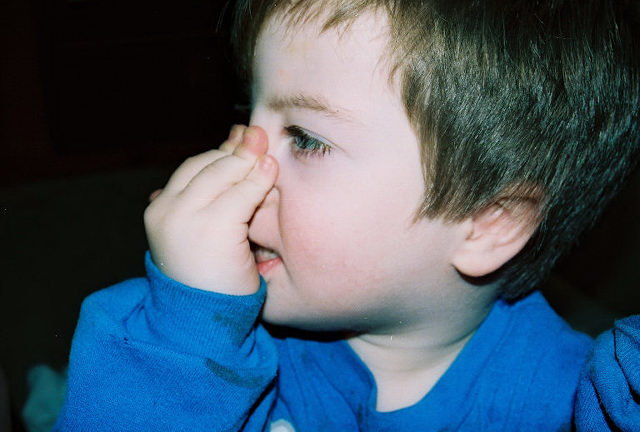
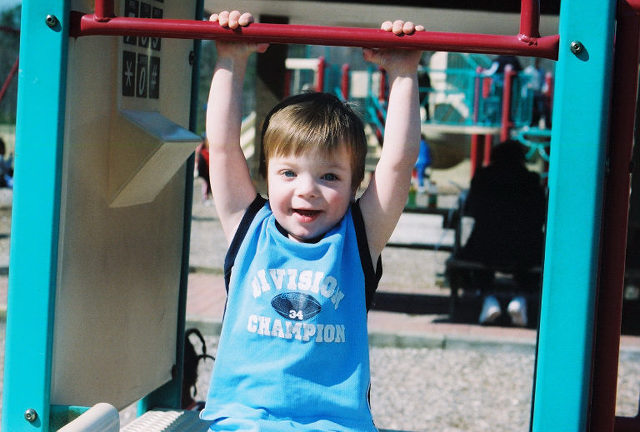
 The eyes have an upward and outward slant