 |
|
 |
 |
 |
 |
 |
 |
 |
| Current Occupants |
 |
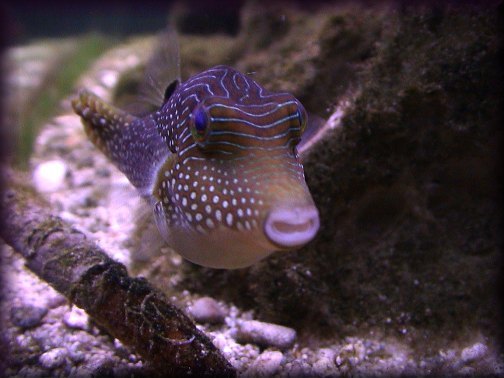
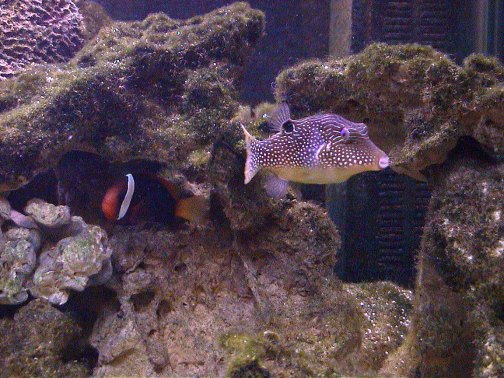
| Spotted Sharp Nose Puffer or Jewel Puffer (Canthigaster Solandri) Inhabits intertidal reef flats, lagoon and seaward ledges. Often found in pairs, sometimes in small groups. Feeds mainly on filamentous red and green algae but also on corals, tunicates, molluscs, echinoderms, polychaets, crustaceans and bryozoans. A very intelligent and curious fish. Adult to 11 cm. |
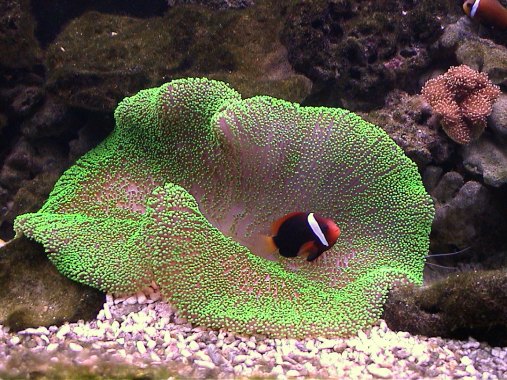
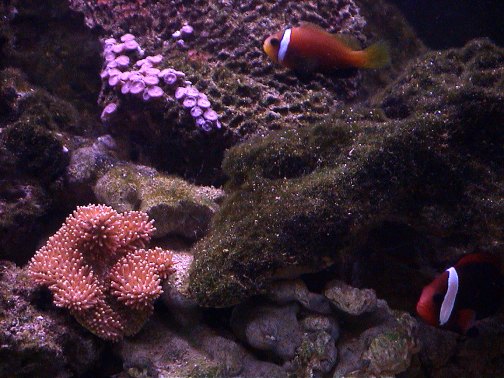
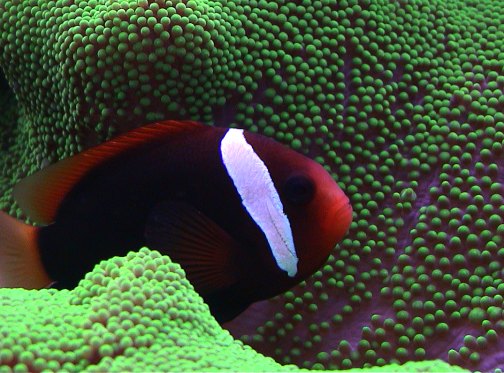
| Tomato Red and Black Indonesian Clown (Amphiprion melanopus) An attractive easy to keep fish. Can grow to 10 cm in lenth. Most are territorial and may attack other clowns of the same type until one is dominant and becomes the female. Does not mix well with other clowns of different types. |
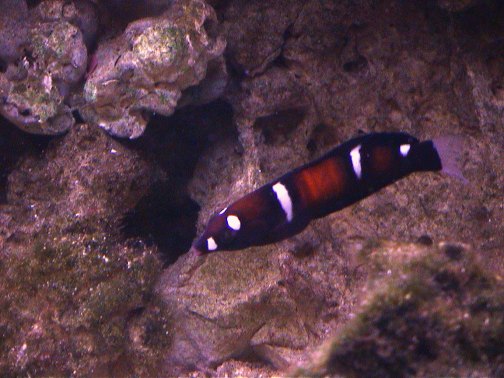
| Coris Gaimard Wrasse The Gaimard, will go through 3 distinct growing phases, juveniles will change into females with bluish green bodies, yellow tails with many brilliant blue spots. In the later stages they are darker with a faint greenish vertical bar on their flank. They are not fussy eaters and will accept most foods. In times of distress or when sleeping will rapidly dissapear into the substrate. They are very active swimmers and can grow to 40 cm. |
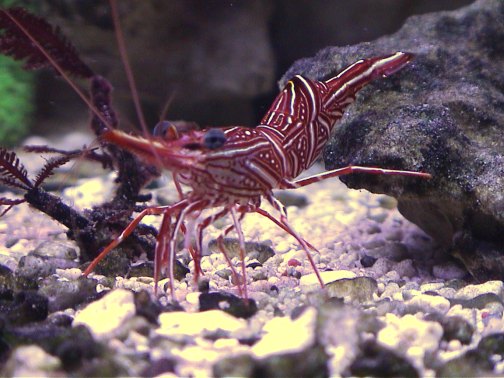
| Camel Shrimp (Rhynchocinetes sp) A striking looking shrimp but not suitable for reef tanks as it will eat some soft corals and polyps. |
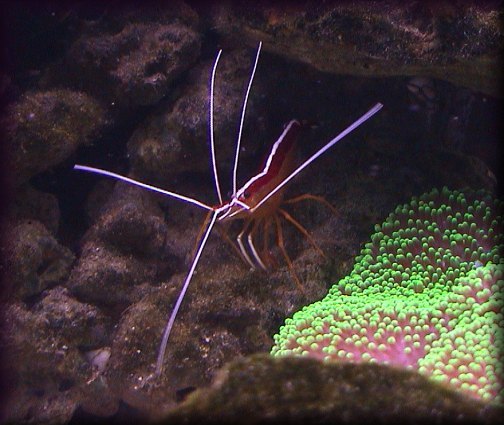
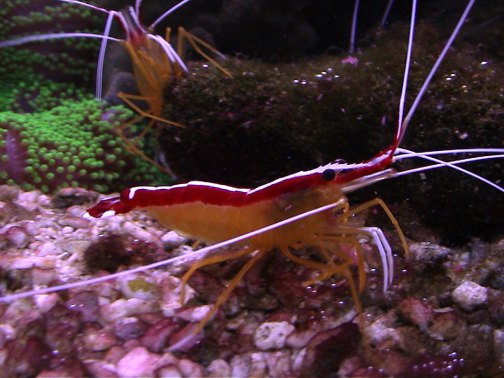
| Red Stripe Cleaner Shrimp ( Lysmata amboinensis) A peaceful shrimp that will live up to it's name and clean parasites off certain fish. Best kept in mated pairs which may spawn eggs every 3 weeks. |
| Green Carpet Anemone |
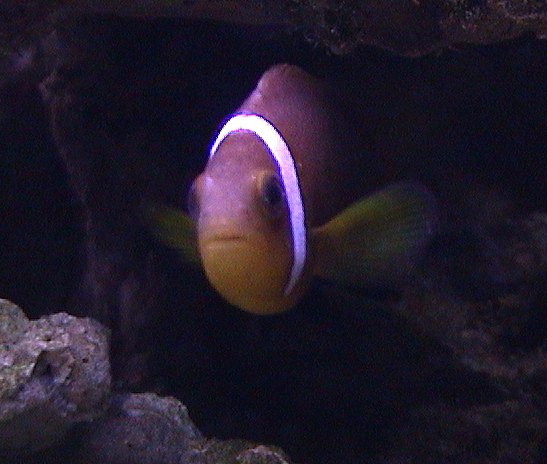
| Maldives clown (Amphiprion nigripes) |

|
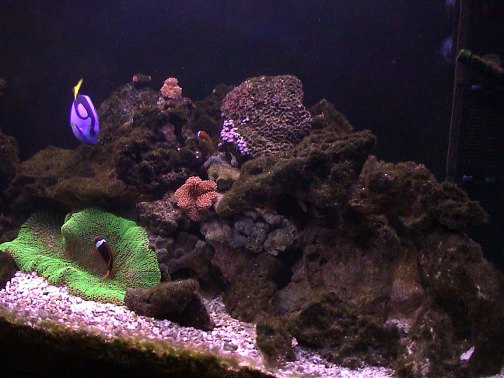
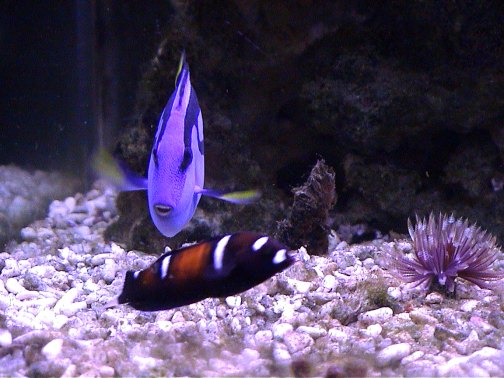
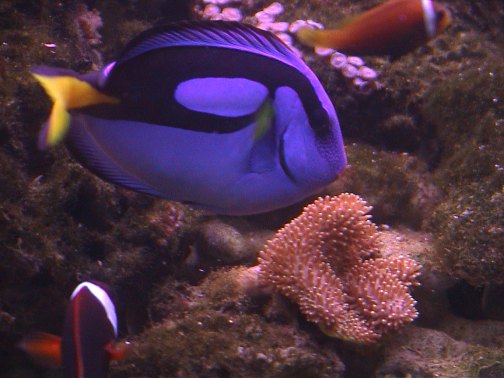
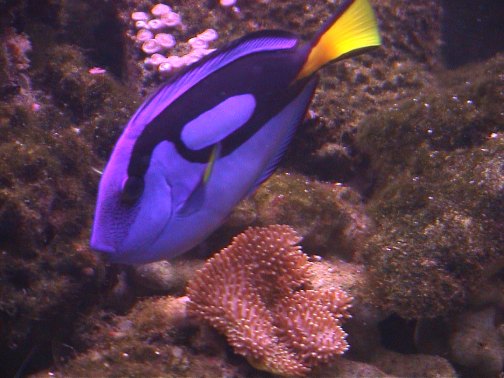
| The Blue Hippo Tang (Paracanthurus hepatus) A beautiful if somewhat nervous fish that are active swimmers and will cover a lot of territory. They eat most foods but will relish an abundant supply of nori (seaweed strips) clipped to the side of the aquarium. Quite often they will wedge themselves between rocks and exhibit sideways glancing movements against the substrate. Can be prone to ich (white spot disease) if tank conditions are not ideal. |
 |
 |
 |
 |
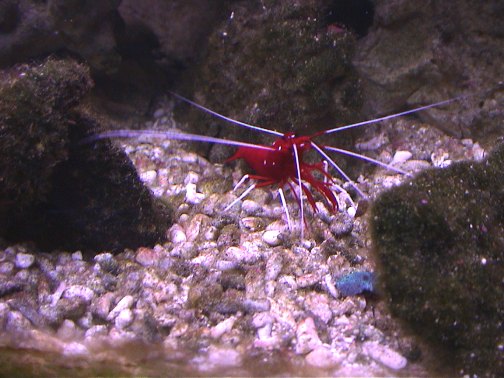
| The Fire Shrimp (L. debelius) A very striking and brightly coloured shrimp that will readily try and jump on the backs of fish such as tangs to provide their cleaning service. Prefers dark caves to set up its cleaning station. |
 |
 |
 |
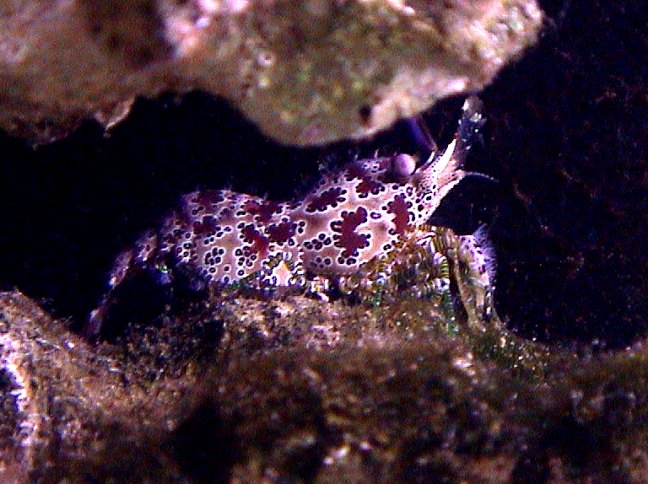
| Saron Marble Shrimp (marmoratus or rectitostris) This shrimp hitch hiked in. There are some reports that they will eat soft corals. A very shy and nocturnal creature, with menacing looking horns. |
 |