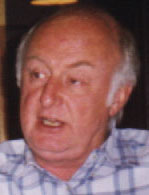
University of New Mexico and is currently an advisor to the Moving Image Arts Council at the College of Santa Fe.
Mr Walpole was kind enough to agree to an interview with
NewMexicoActors.com on April 11, 2000. This is the content of the
interview.
NMADC: You recently completed 3 films in late '99 here in New Mexico, The Hand of Fate, The Tao of Steve and Tortilla Heaven, how did you feel about each project's progress and the end result?
AW: If I start with the Tao of Steve, that's kind of every film- maker's dream. The Hand of Fate was a feature documentary about clairvoyance. The Tao of Steve was shot in July and August of 1999, the rough cut was completed in October, submitted to the Sundance Film Festival and it won a special jury award for the actor. A month later, after Sundance, we sold it to Sony Pictures Classics, it is due for release in August 2000. So in one year, we went from production to completion to sales, which is every film-maker's dream. A very uncommon occurrence. It was
shot in twenty-eight days and written by a local writer, Duncan North. He collaborated with the director, Jenniphr Goodman and her sister Greer Goodman to develop the script. In a sense, it was an auto-biographical film, a romantic-comedy. Tortilla Heaven was shot in November and December of 1999. At the moment, the rough cut is being done in Los Angeles. It was a much more ambitious project 'cause it was a huge cast and done on location. It was ambitious in the fact that they didn't really have enough money to make the film they wanted to make. So we had to cut a lot of corners. It was a difficult shoot because of weather and how large the cast was. But I think, ultimately, it will be a very good film.
NMADC: Do you foresee a similar success with Tortilla Heaven?
AW: I do. I really responded to the script, it's a great script, it's a really good story and I think it has a really good cast. I think those two elements will help it. I think it was very well shot by the DP (director of photography) from Mexico. Chuey Chavez. It has a great look to it and the performances are very good. It's a common story for anybody but I think those kinds of films are special in the fact that it portrays a small town in northern New Mexico and what happens with the milagro (miracle). The film is really about greed and how greed is not a good thing. I think the content of the film is very positive and very funny. I think it'll be classified as a comedy.
NMADC: What obstacles did you encounter with the filming of any of the projects and how did you overcome them?
AW: Well, the biggest obstacle is always financial, there's always obstacles when you get together 100 people to make a movie. It's very hard to get that many people working together for a short period of time under very intense conditions. There's always the obstacle of time in trying to get things done. shooting in the winter is difficult because you lose daylight earlier and then shooting on location is hard. Especially for actors coming in from Los Angeles. I think on Tortilla Heaven we had 31 speaking parts that were SAG actors. About 60% of the cast were from out of New Mexico. Some of them had roots here. Miguel Sandoval is from Santa Fe, Geno Silva is from Albuquerque and returned back to make this film, which was quite nice and Jade Herrera, who grew up in Albuquerque. I think it's great to have those professional actors come back to New Mexico to do a project. Part of the problem in doing a film from out of the mainstream,by that I mean Los Angeles and New York, is moving people and equipment. It can be very stressful, especially for a first-time director. The main thing you try to do is put a crew around them that is very professional and experienced that the director can trust.
NMADC: From your standpoint, what are your feelings on filming in New Mexico?
AW: When you're working in a rural area, or in a small community like here in the southwest it's very difficult because you're very dependent on those centers of the media world, Los Angeles and New York. New Mexico is a very film friendly state, people are very helpful with film companies, the crews are very good, there's a great talent in the world of extras and there's a pretty good pool of professional guild actors. There's a lot of benefits and there's a look that can be acquired here. But what happens is, in New Mexico, most people see the place outside of us, who live here, as a place to do westerns. What I was really glad about the last 2 films we did is that one is a romantic-comedy and the other is a real New Mexico story and weren't traditional westerns. I just hope that New Mexico is seen more as a place to make films that don't have to be westerns.
NMADC: So your expectations have been met by the skills and attitudes of the people you have worked with?
AW: Absolutely, New Mexico is a great place to film.
NMADC: Do you have any future plans for projects in New Mexico that you can talk about?
AW: At the moment I'm involved in four or five other films. All are independent films. They're in the early stages of budgeting and pre-production. I'd rather not mention any titles at this time, it's still too early to tell.
NMADC: What other visions do you have concerning the future of film making in New Mexico?
AW: I think that the bill that was just passed by the House and Senate in the New Mexico Legislature is a major thing that helps gap finance some projects that come into the state.
NMADC: What do you see as the strengths and weakness New Mexico has in relation to film-making
AW: In the visual world it's all here, certainly in the acting in terms of extras and cast and technical crews it's all here. The difficulty is in the remoteness.
PA's and Extras are the heart and soul of a movie. They put in the longest hours and they're responsible for a lot of stuff. Extras wait for hours and hours and when they're called upon, it's usually for a big scene and they have to do it right. To have these people wait and then return to retain the continuity is a major thing. Yes there's a director and lead actors and the DP and those people are important. But, to me, the PA's and the Extras become the pulse of what a film's about. They're there because they want to be there. You know they're not there for the money. Their attitude permeates how a production runs.
NewMexicoActors.com wants to thank Mr Alton Walpole for his precious
time in doing this interview. Thank you, sir.