Results of search for bears in south-east Mondulkiri (Cambodia) in January 1999.
Idea, text, photos and drawings by Alexey A. Zborovskiy, Master of Science
_______________________________________________
Written in 1999, updated in 2006.
Background and goal
There are two bear species found in Kingdom Cambodia today: Helarctos malayanus (Malayan bear, or sunbear) and Ursus thibetanus (the Asiatic black bear, or moonbear). Though there were no direct counts of existing wild populations ever conducted in the country, multiple indirect evidences, such as number of marketed cubs/bear parts, show that overall quantity is still relatively sufficient.
It is well known fact, that today all tropical bear populations are being under direct pressure of Man's increased greed and selfishness. These wrong trends in people's minds express themselves in such phenomena like extermination of remaining bear habitat, establishment of gloomy bear parts business (1) and the like. The main consumer of bear products is China, which, in addition to murdering its own animals, smuggles bear parts and live bears from other countries, including Cambodia.
In January 1999 I undertook 7-days survey in Cambodian province of Mondulkiri. My end purpose was (and still is) to contribute in harmonizing people's and animal's lives there. First step towards goals of such kind is to obtain and share with others the trustworthy information about present situation in the area. Along with collecting data on bears distribution and abundance, I investigated ways locals use bears/bear habitat in the province. The given report represents results of this brief, but productive expedition.
SURVEY AREA
Let
me start from saying few words about
Cambodian landscapes and people in general. A sound part of Kingdom's
territory
is covered by palm-, banana-, coffee- and other plantations. There are
hundreds
of different tribes, or minority groups in the country, often
represented by
only few thousands (or even hundreds) individuals. Each such
tribe, as a
rule, speaks its own language and maintains its own unique culture.
With
effort, in remaining forested parts of a region some indigenous hunters
and
forest product collectors can be found. These people are rare however,
because
today - under pressure of "civilized" men (which merely trade forests
away) - they're forced to abandon their traditional lifestyles and to
become a
common banana-, coffee- etc. growers.
In Mondulkiri (Fig.
1) the
main tribe is called Phnongs. This province is one of only a few,
which still have some extensive
forest covers and harbor threatened animals, such as bears and
tigers. As
for 1997th census, Mondulikri's population was about 24 000
persons
(total 90 villages). Khmers (Cambodian national majority group) are now
"dissolving" Phnongs at growing rate.
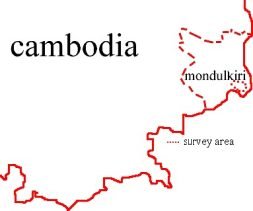
Figure 1. Allocation of Mondulkiri and survey area.
The province has small airport is village called Senmonorom. Last, together with Dak Dam (a lesser village in Mondulkiri, which I also visited) have local values as centers of commercial and other activities. They attract people from all parts of province, as well as from outside. Non-residents of Senmonorom and Dak Dam are the employees of several NGOs, tourists, traders (both legal and illegal) and missioners.
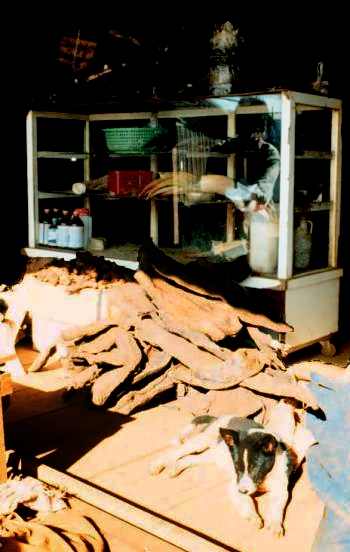
Photo 4. A pile of dry elephant meat detected on Senmonorom's street market. Many other animal parts are sold there as well. Besides meat, you can see hornbill beaks and other animal parts on the given photo.
The area surrounding Senmonorom is cleared from forests in radius of 10-15 km. These lands now look more like savannas, or even deserts (photo 5). Similarly, but to a lesser extent, this takes place around Dak Dam. Main reason for clear-cutting is relatively new policy of giving up old good ways of life in exchange for things, which shine like gold, but not gold at all. Alcohol, cigarettes, low-taste movies - these products of "civilization" became symbolic weapons, using which the so-called "educated" men subdue the so-called "savages" not only in Mondulkiri, but in literally all parts of remaining clean world.
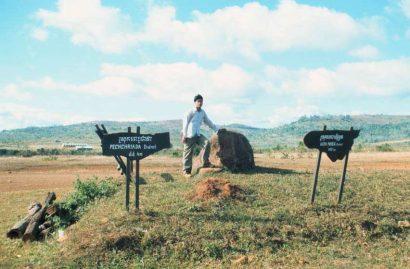
Photo 5. Author's interpreter on the crossroad in Senmonorom's savannah.
As for period of study, the most extensive (dry dipterocarp) forest cover was situated north from Senmonorom. Lesser pieces of forest, dispersed in radius of 20-30 km around Senmonorom and Dak Dam, contained dense nets of trails and rough car roads, majority of which permit driving in dry seasons only. We hiked a route from village Busra to Dak Dam - along and sometimes through one of such pieces of forest - the proposed Phnom Nam Lir wildlife sanctuary (PNLWS). Last is situated in south-east beak-shaped "corner" of Mondulkiri. It can be roughly detected on a satellite image (made using GoogleEarth© software, for example) as undivided green spot (i.e. forested surface) around 12021min 30sec N, 107027min 59sec E - pointer (WGS-84 map datum). In three days we crossed Busra district North to South, and, finally, were brought back to Senmonorom by friendly Dak Dam's motorcyclists (Fig. 2).
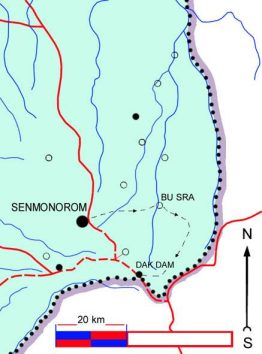
Figure 2. We drove a jeep from Senmonorom to Busra-village. Bear tracks were surveyed by hiking a route from Busra to Dak Dam.
OUR FINDINGS
1. Bear sign
The most trustworthy data on Malayan sun bear and the Asiatic black
bear
distribution in south Mondulkiri were gathered through our own direct
field
search for bear sign. However, conversations with forest people also
brought some results.
Total
10 people were interviewed on the route. All of them
said they depend on hunt. But the degree of this dependence varied
significantly. Below I call hunters only those, who hunted
actively. Contrary
- people, which hunted occasionally (i. e. wwhen met animals on forest
roads,
for example) are called farmers-hunters. Last are carrying guns
with
them just "in case". 6 out of 10 persons, whom we questioned on a
route, belonged to hunters, while 4 - to farmers-hunters. Only roughly
1/30th
part of total population belonged to hunters in study area.
Our two guides (photo 6) were Phnongs. The elder one was a hunter
with
over 30 years of experience. Thanks this modest and friendly person, we
found
dozens of evidences of bears presence, as well as tracks of threatened
tiger.
We didn't see any bear footprints however. The majority of detected
bear sign
were up to 1-year old claw marks on the trees. It could be considered
as normal
situation for this period of a year if we had no data, indicating
extremely
fast decline of bear density in this area due to both poaching and
logging (see
below).
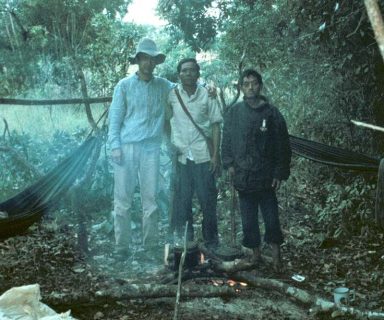
Photo 6: An author (left) with guides. On the route, we slept total 3 nights in the jungle.
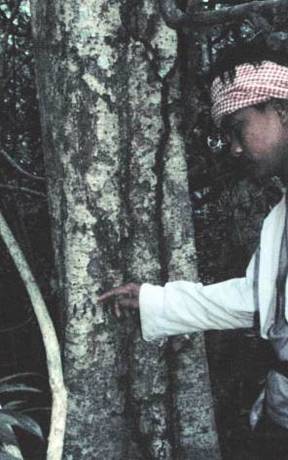
Regarding clawmarks (photo on cover, photo 7 below), our guide - hunter often couldn't say apart the two species (i. e. moonbear and sunbear), as both of them are famous tree-climbers. Thus, mostly these findings were classified just as "bear clawmarks".
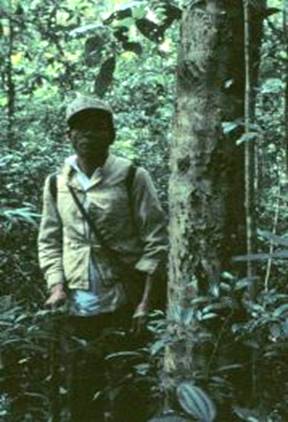
Photo 7. Our guide near the trunk, covered by bear clawmarks. The guide said the marks were left by female and cubs. "About 1 year ago, mother-bear trained her cubs to climb trees", - he said. In this particular case, however, he surely determined these marks as left by sunbears.
In addition to clawmarks, we found some evidence of bear recent foraging - destroyed bee nest on the tree trunk (photo 8). There were also fresh sunbear scats found nearby this tree.
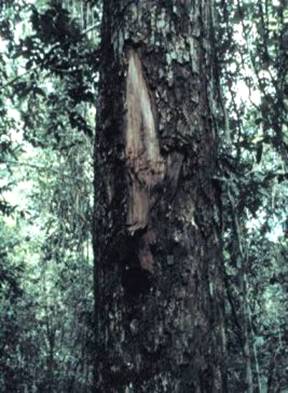
Photo 8. A bee-nest destroyed by sunbear.
All bear sign which we found, are shown in the below Table 1.
Table 1. Bear sign found between 12-th-17-th January in south-east Mondulkiri (1:50 000 U.S.-army maps: ser. L7016, sheet 6433-I)
|
Bear species |
N |
E |
age of sign |
age of bear |
sign description |
|
? |
767000 |
1376500 |
>12 months |
adult |
clawmarks on tree trunk |
|
Malayan bear |
767000 |
1376000 |
5+ months |
cubs |
clawmarks on 17 different trees* |
|
Malayan bear |
767100 |
1375000 |
1-2 months |
adult |
damaged tree trunk (bear was uncovering bee-nest) |
|
? |
769000 |
1373000 |
24 months |
adult |
clawmarks on tree trunk |
|
? |
769000 |
1373000 |
<24 hours |
? |
broken branches |
|
Malayan bear |
770000 |
1371000 |
<24 hours |
subadult |
feces |
|
? |
770000 |
1371000 |
<24hours |
adult |
feces |
*Left by 5-10 different cubs, which, according to or guide, practiced tree climbing.
2. Bear habitat
For survival of both sunbears and moonbears within any particular area, 3 main conditions must be observed: 1) food must be sufficient, 2) shelters for bringing and milking cubs must be present, 3) no bear hunt should be allowed. I determine sun-/moonbear habitat in study area as unsatisfactory due to high density of armed people and lack of shelters (large trees with cavities, or caves for example). I was looking specifically for trees with diameter of a trunk about 1 meter (on the chest level), but didn't find any. Only the potential bear food: insects and vegetation, was plentiful in the area. Bears of both species are definitely endangered along the northern boundary of PNLWS, because majority of their sign belonged to previous year. Bears status seemed to be changing extremely fast in the area, because residents of all 8 settlements, which we visited along the route, reported that: "2-3 years ago bears were often seen around, but now they're rare".
3. The ways locals treat bears and bear habitat
Bears as source of money
We found no bear parts on the Senmonorom's market, but heard of a person, who holded bear cub for sale. We also saw a bear bile in the private house (photo 9).
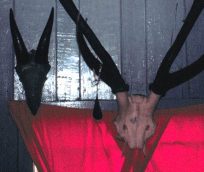
Photo 9. A bear gallbladder hanged (for drying) on the antler. Photo taken in Senmonorom's policeman house.
We
asked Senmonorom's traders for bear bile price (but not for a bile, of
course).
Average price of bear bile in Mondulkiri was $ 10 per dry gramm, which
is same
cost as in Phnom-Penh. (Dealers in
According
to reports of 10 people (1 wildlife trader from Senmonorom, 6 hunters and 3 farmers
from Busra), the bears/bear
parts from Mondulkiri are further find their way to neighboring
Vietnam, as
well as to Korea and China. This market, they said, started to grow
about 7
years ago, and now has achieved such phase, that prices for bear cubs
and bear
parts in Senmonorom are about the same as in Phnom-Penh.
Obviously, it is due to lack of law enforcement, that wildlife traders
and
poachers demonstrated no confusion when were interviewed. The
Senmonorom
policeman himself showed us bear bile drying in his house (above).
Bears as food
As food
bears were of little importance in diet of settlers of small villages
in
Busra's forest. They said it is due to two reasons: 1) ungulates are
more
common and easier to kill in the area, and, 2) it makes more
sense to buy
food with money (hundreds dollars) received from bear sale.
Local
community and the
"jungle"
I already mentioned that poaching and timber trade are two biggest threats to Mondulkiri's ecosystems, as well as to Phnong's culture. The tourism still has limited value there, particularly due to soon after recent war some foreigners lost their lives in these jungles. Every village there still has automatic firearms. On the other hand, only few forested areas remain in Cambodia nowadays. Today, thanks to forest, wild animals, and Phnongs (who still live in their beautiful traditional forest huts, made of bamboo), the province attracts more and more tourists and conservationists from less environmentally rich parts of a world. As for wild animals, Mr. Chan Samchin, who claimed to be the local Director for tourism, said: «Tourism-based conservation of wildlife is hardly possible in our area, because animals inhabit dense jungle, where tourists can hardly see them».
COMMENTS
I agree with Mr. Samchin and disagree
at the
same time. Of course, comparing to illegal trade, tourism still has
little
benefit for local authorities. But we also know value of effort. It is
not
impossible task to organize tourism-based protection of even those
animals, which live in dense jungle. Doesn't India, for example, have
hundreds
of small and large wildlife sanctuaries, which protect and exhibit
animals in
the dense jungle? Visitors in India, Nepal, Thailand and other
countries ride
elephants through the jungle, sighting animals here and there. All one
needs is
some positive effort, as well as understanding and support of
community. In
case of Phnongs, gaining such support wouldn't be problematic at all,
if we
properly explain our goals. Anything can be achieved with persistence.
Of
course, it is a long-term work, but should one give up all effort only
because
trading off the forest and killing last animals takes less time? The
result of
walking the easiest ways is always proportional to the amount of
conducted sin.
With effort, it is possible to show tourists not only footprints and
other sign
of animals (which themselves are interesting), but even to exhibit
these very
animals in their natural surroundings. Such project can be undertaken
even in
case of bears - in the safe and friendly manner - for benefit of all.
PARTICIPANTS
Many people participated in the project in this or some other way, but the trip itself would hardly be possible without financial support from Wildlife Conservation Society (U.S.A.), through personal participation of Dr. Joshua Ginsberg, the WCS Director for Asia.
SOURCES CITED
Mills J., Servheen C. The Asian trade in bears and bear parts: impacts and conservation recommendations. International Conference for Bear Research and Management. Vol. 9(1): pp161-167.